Request a Quote










 LAC Blog
 Export Guides
 Transport Guides
 Logistics Glossary
 Container Types & Sizes
 Incoterms 2020 Rules


TL;DR
- Heavy lift cargo is freight that standard cranes and trailers cannot handle safely.
- Qualification depends on weight, shape, center of gravity, and lifting points, not weight alone.
- Typical pieces include turbines, transformers, pressure vessels, presses, and mining machinery.
- Ocean legs use heavy-lift or breakbulk vessels, RORO, flat-rack or open-top containers.
- Permits, route surveys and equipment booking drive the timeline, so planning starts early.
Heavy lift cargo is freight that standard equipment cannot handle safely, and it needs a plan engineered around the load rather than a booking against a schedule. This guide covers what qualifies, typical freight, equipment and handling, ocean and ground routing, permits and timelines, drawing on the 25+ years of experience LAC™ brings to freight coordination across the Americas.
Heavy Lift Cargo Defined
A practical heavy lift cargo definition is any piece so large, heavy, or irregular that it needs specialized loading equipment and a transport plan built for that item alone. The term belongs to project logistics, and it most often describes pieces headed for infrastructure, energy, mining, or construction projects. Definitions vary by carrier and region, so one provider may call a load heavy lift while another treats it as routine breakbulk. The transport plan, not the label, is what matters.
What Qualifies as Heavy Lift
A load is likely heavy lift if it needs heavy-duty cranes, multi-axle trailers or an engineering plan. Four factors matter:
- Weight beyond standard container crane or trailer capacity
- Irregular shape that resists standard rigging
- A center of gravity that is high or off-center
- Lifting points that must be engineered, not assumed
Not every oversized load is heavy lift, since the heavy lift cargo definition turns on handling, not size alone.
Common Heavy Lift Freight
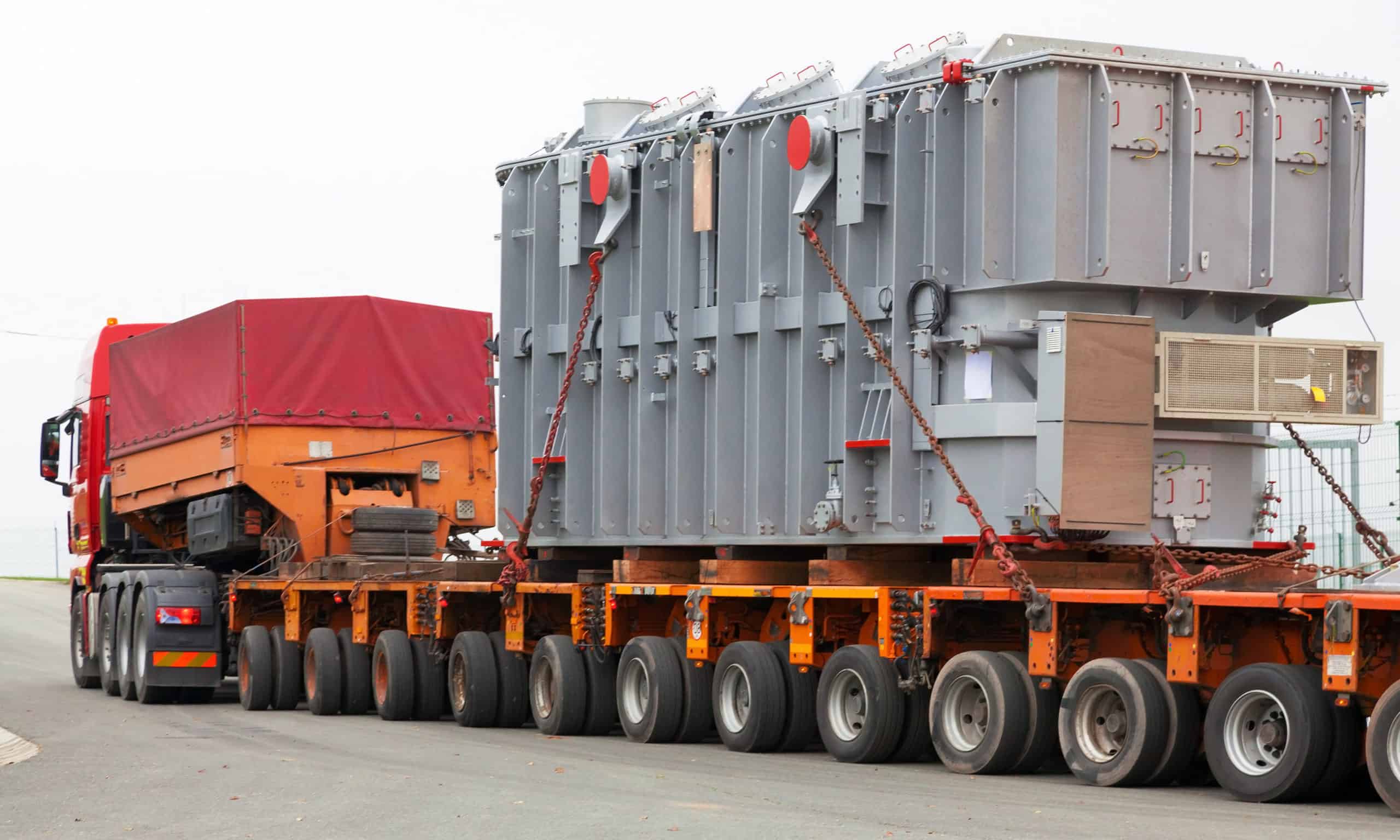
Heavy lift freight groups by function. Power equipment such as turbines, generators, transformers, and wind tower sections is heavy, dense, or very long. Industrial machinery such as presses and boilers concentrates weight in a small footprint. Mining and construction machinery such as excavators and crushing plants combine weight with awkward shape. Process equipment such as pressure vessels is long and hard to brace. Many heavy lift shipments are also breakbulk, or project cargo, but not all breakbulk is heavy lift.
Equipment and Handling Needs
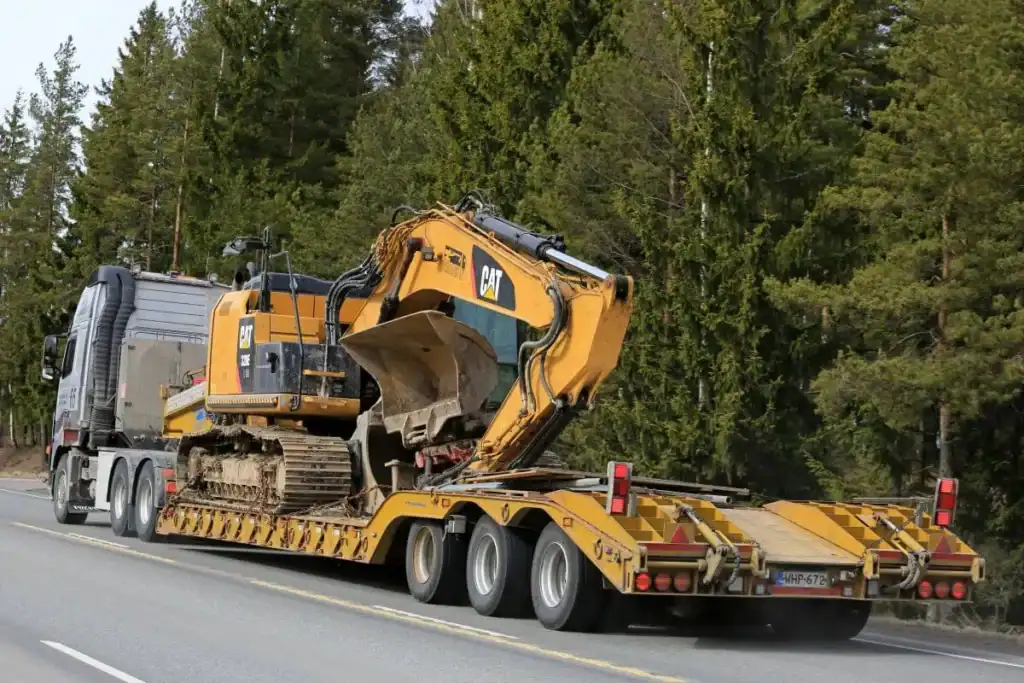
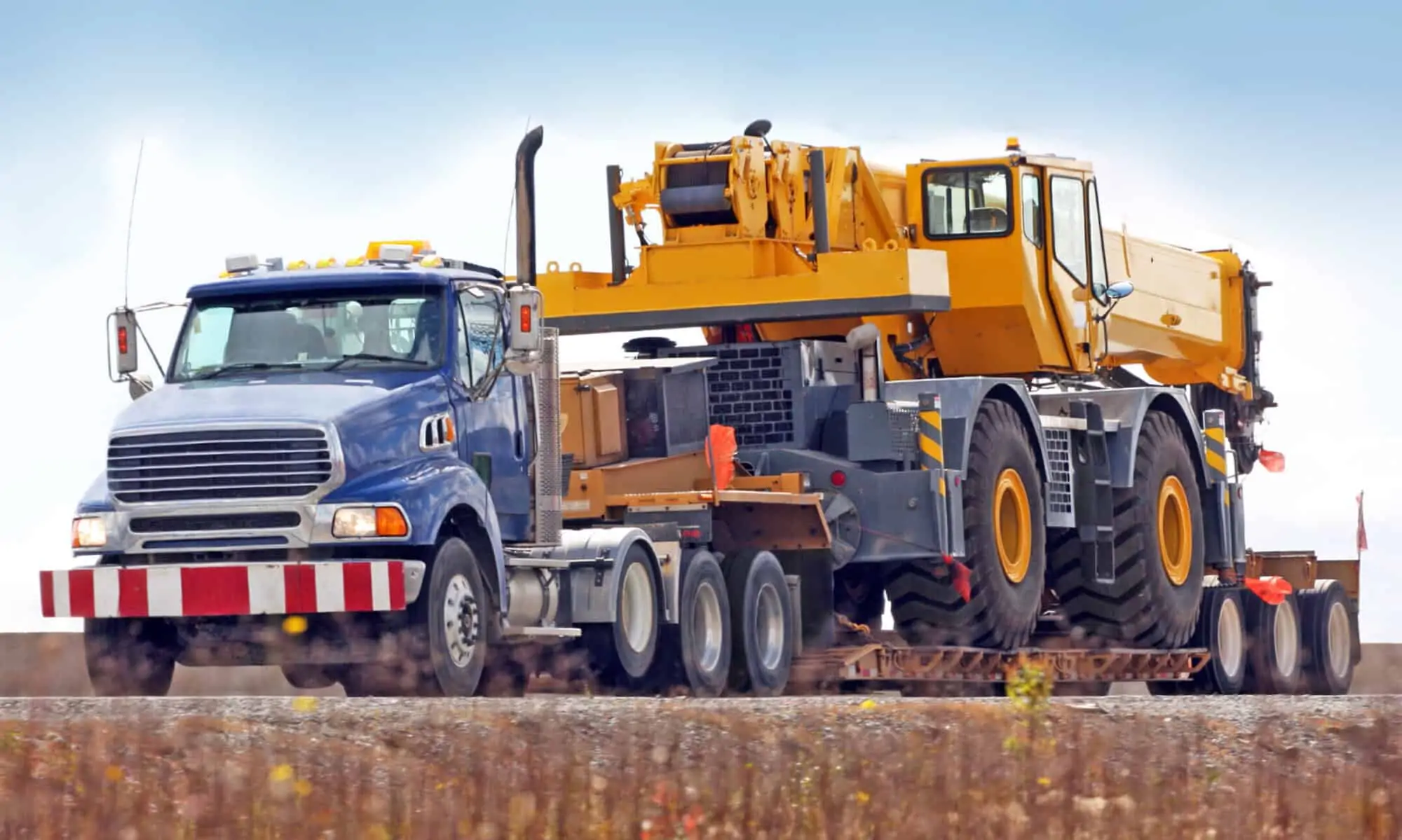
Ground equipment comes from the vetted carriers LAC coordinates. Trailer types include step deck, RGN (removable gooseneck), double drop, Conestoga, and multi-axle trailers. An RGN or lowboy deck sits about 18 to 24 in; some double-drop configurations reach about 30 in, and a step deck lower deck is about 3.5 ft (42 in). A Conestoga tarp rides on a frame and never touches the freight, while a flatbed tarp lies on the load. Lifting uses cranes, rigging, and spreader bars.
Heavy Lift Shipping Routes
Heavy lift shipping routes are chosen around constraints rather than distance. Origin and destination set the endpoints, but port and terminal crane capability determines where the piece can be lifted on and off, inland corridors determine which roads can carry it, bridge and road weight limits determine which cannot, and access at the delivery site determines how the last leg ends. Ports differ in what they can handle, and every one of these factors shifts by route and season.
Ocean and Ground Routing
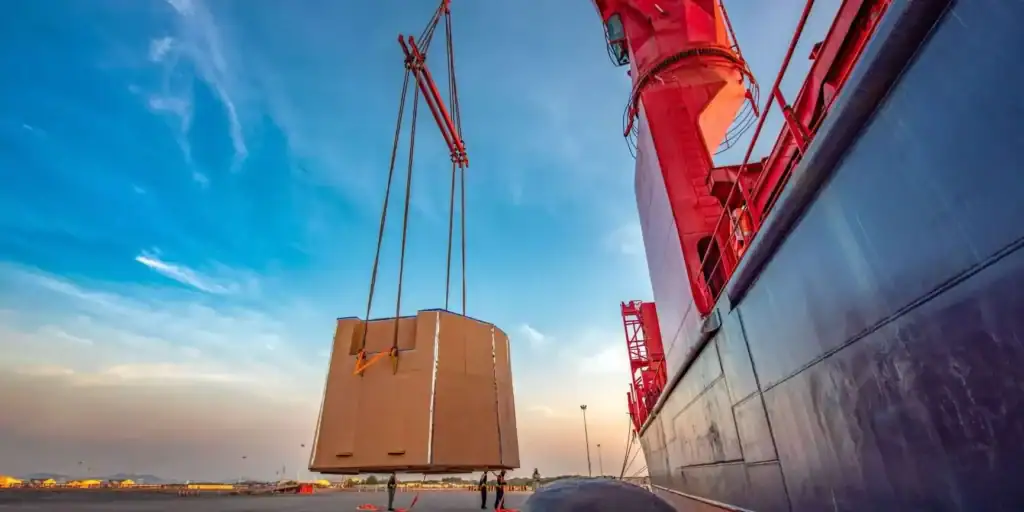
Ocean options for heavy lift transport include heavy-lift vessels with on-board cranes, breakbulk vessels, RORO service for wheeled or trailer-loaded cargo, and flat-rack or open-top containers for pieces just past container limits. On the ground, heavy-haul trucking with specialized trailers carries the piece between port, plant, and site. The handoff at the port is where the two meet, and it needs coordination so that lifting gear, trailer, and permits line up on the same day.
Permit and Route Planning
Permits and escorts vary by state, province, and load. A route survey checks bridges, road weight limits, and turning points before the truck is booked, and authorities may require escorts or restricted travel windows for the heaviest pieces. LAC coordinates police escorts and inland transport permits when required as part of the heavy-lift logistics plan, not as an afterthought. Confirm current rules with the carrier and the issuing authority.
Load Securement Considerations Explained
Securement for heavy-lift cargo means lashing, blocking, bracing, cradles, and rigging matched to the weight and shape of the piece and its center of gravity. It is planned per load, not pulled from a standard kit. It is also checked at each handoff, not only at origin, because a piece that was secure on a vessel deck may need different support on a trailer. Poor securement risks cargo damage and safety incidents for everyone around it.
Working With Vetted Carriers
Carrier vetting for heavy lift focuses on four things: equipment fit for the specific piece, experience with similar loads, permit knowledge for the corridor in question, and communication during the move. LAC coordinates a network of vetted carriers and does not operate the equipment, so vetting is central to how each move is staffed. A reasonable request of any provider is examples of comparable moves, with the equipment used and the route taken.
Planning Timelines for Heavy Moves
Timelines for heavy moves are driven by engineering review, route and site surveys, permits, equipment booking, and port or terminal windows. Each has its own lead time, and several run in sequence rather than in parallel, so a delay in one pushes the others. Plan conservatively, keep a backup route in reserve, and expect durations to vary by cargo, route, and season. The schedule is built from the specific move, not from a standard transit table.
How LAC Supports Heavy Lift
LAC™ has 25+ years of experience and offers break bulk and project cargo shipping for heavy lift and oversized freight to and from North America, South America, and the Caribbean. LAC coordinates a network of vetted carriers, including access to specialized equipment through carrier partners, and does not operate its own trucks or trailers. Support covers route surveys, carrier selection, coordination of police escorts and permits when required, and real-time tracking throughout the move.
Conclusion
Heavy lift cargo needs a plan engineered around the load: equipment matched to the piece, permits and routes checked early, securement designed for each leg, and time built in for surveys and approvals. The label varies by carrier and region, but the method does not. Start with accurate cargo details and the rest of the plan follows.
Speak with a logistics specialist about a heavy lift move, or discuss your shipment with our team once drawings and weights are ready.
FAQs
What is heavy lift cargo?
A single piece that is heavy or awkward enough to require engineered lifting and specialized transport. It differs from oversized cargo, which is defined by dimensions, and from project cargo, which is a coordinated program of shipments tied to one project. A heavy-lift piece can be oversized and part of a project, but the term itself refers to weight and handling. Naming a piece heavy lift early signals that cranes, rigging, and route checks need planning before booking.
Can heavy lift cargo move by air?
Sometimes, when urgency or value justifies it, and the piece fits aircraft size and weight limits. Air is usually an option for urgent or high-value pieces rather than the heaviest loads. LAC coordinates standard air cargo and charter flights matched to cargo dimensions and delivery timelines, with suitability judged by cargo and route. For most heavy-lift pieces, ocean and ground remain the practical route, with air considered only when the delivery date demands it.
Can heavy lift move by ground?
Yes, with heavy-haul trucking and specialized trailers from vetted carriers, as long as route weight limits and permits allow it. Ground legs often pair with an ocean leg, carrying the piece from plant to port or from port to site. Permits and escorts may apply along the way. Site conditions matter too, since loading and unloading often need crane access and firm, level ground at both ends, so confirm them with the carrier before booking.
Does heavy lift need special equipment?
Usually, yes. Cranes rated for the weight, multi-axle or modular trailers, and engineered rigging are the norm, and carriers in the LAC network provide the equipment. The specific combination depends on the piece, the lifting points, and the sites at each end, which is why equipment selection follows the survey rather than preceding it. Sharing lifting points and drawings early lets the carrier confirm crane capacity and trailer configuration before booking the move.
How early should planning start?
As early as the equipment is being specified or purchased, before dates are fixed. Heavy lift generally needs more lead time than standard freight, and decisions made at the design stage, such as whether a piece can be dismantled, affect how it ships. Involving the logistics partner then keeps options open. Waiting until the piece is ready to ship usually leaves less choice and less room to adjust if a survey raises a problem.
What details are needed to plan a move?
Exact dimensions and weight, center of gravity if known, photos or engineering drawings, lifting points, whether the item can be dismantled, origin and destination with site access, any sensitivities such as shock or vibration limits, and the target timeline. These details let heavy lift shipping planning begin with surveys and equipment selection. Measured values are better than estimates, since changes in weight or center of gravity can affect the crane, the trailer, and the permits.