Request a Quote











 LAC Blog
 Export Guides
 Transport Guides
 Logistics Glossary
 Container Types & Sizes
 Incoterms 2020 Rules


TL;DR
- An RGN trailer is a removable gooseneck trailer with a low deck and front loading.
- Deck height is typically about 18 to 24 in., lower than a flatbed or step deck.
- Capacity varies by model; verify the assigned rating for load footprint and configuration.
- Drivable machinery loads from the front once the gooseneck detaches.
- Dimensions, permits, and height limits vary, so confirm each move with the carrier.
What is an RGN trailer, and why does so much tall equipment travel on one? An RGN trailer carries machinery that might exceed height limits on a standard deck. This guide explains what the acronym means, how the gooseneck detaches, typical deck height, dimensions and length, which freight fits, how loading works, and what to check before planning a move.
What RGN Stands For
RGN stands for removable gooseneck. The RGN trailer gets its name from the front section, the gooseneck, which disconnects from the deck so you can load the trailer from the front. The design dates to 1958 and was created for tall or over-length freight that struggled to fit on a standard deck. When people ask what RGN stands for, the answer is a trailer with a detachable front section.
How the Gooseneck Detaches
The gooseneck disconnects from the deck, and the front of the deck lowers to the ground. This creates a shallow ramp straight onto the main deck. Detaching can be hydraulic or mechanical. Hydraulic systems are faster and easier to operate, while mechanical designs can be simpler. After loading, the neck reconnects to the deck and the tractor, and the removable gooseneck trailer is ready for the road. The exact procedure follows the manufacturer.
RGN Trailer Deck Height
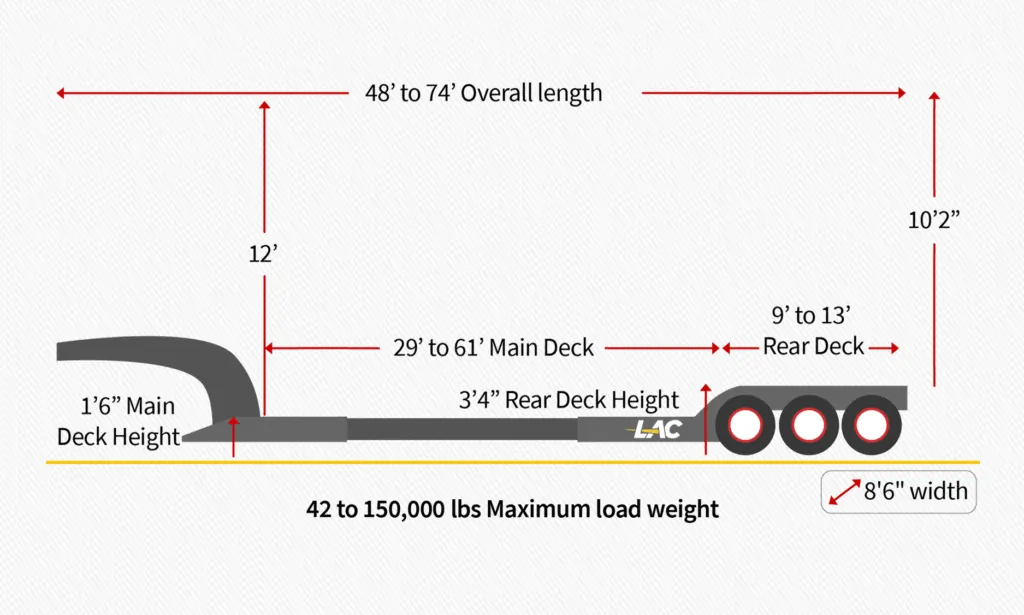
RGN deck height is about 18 to 24 in, with some double-drop configurations up to about 30 in. Heights are often quoted loaded, so ask a carrier which figure is meant before planning. A lower deck is one reason tall equipment moves on an RGN trailer. It keeps the top of the load closer to the road and helps the shipment stay within route height limits. Confirm the figure with the carrier.
Typical RGN Trailer Dimensions
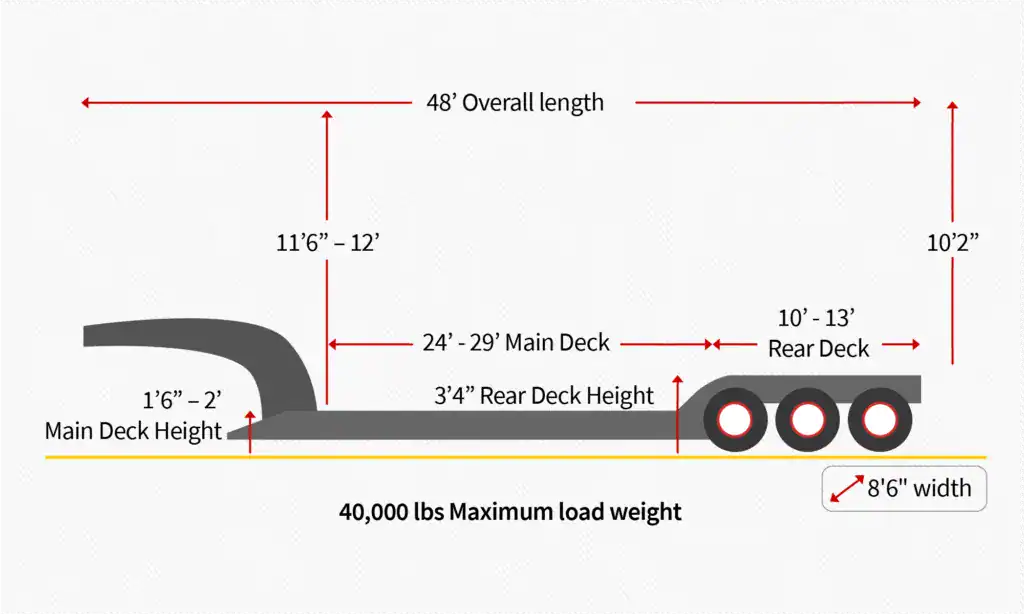
RGN trailer dimensions vary by manufacturer and configuration, so treat published figures as a checklist, not a standard. Common reference points include:
- Width: 102 in (8.5 ft), commonly cited as the legal width without a permit
- Deck height: about 18 to 24 in
- Capacity: model-specific; check the assigned trailer’s rating for load footprint and configuration
- Well length and axle count: vary by design
Ask for the spec sheet of the exact trailer assigned.
RGN Trailer Length Basics
RGN trailer length is described two ways, and the difference matters. Overall length covers the whole trailer from neck to rear. Well length covers only the lowered main deck where the freight sits. About 29 to 30 ft of well is cited for a standard RGN, and stretch designs extend beyond that. One carrier resource describes an extended drop deck of 61 ft with a maximum overall length of 74 ft. Treat these as examples, not fixed standards.
Freight Suited to RGN
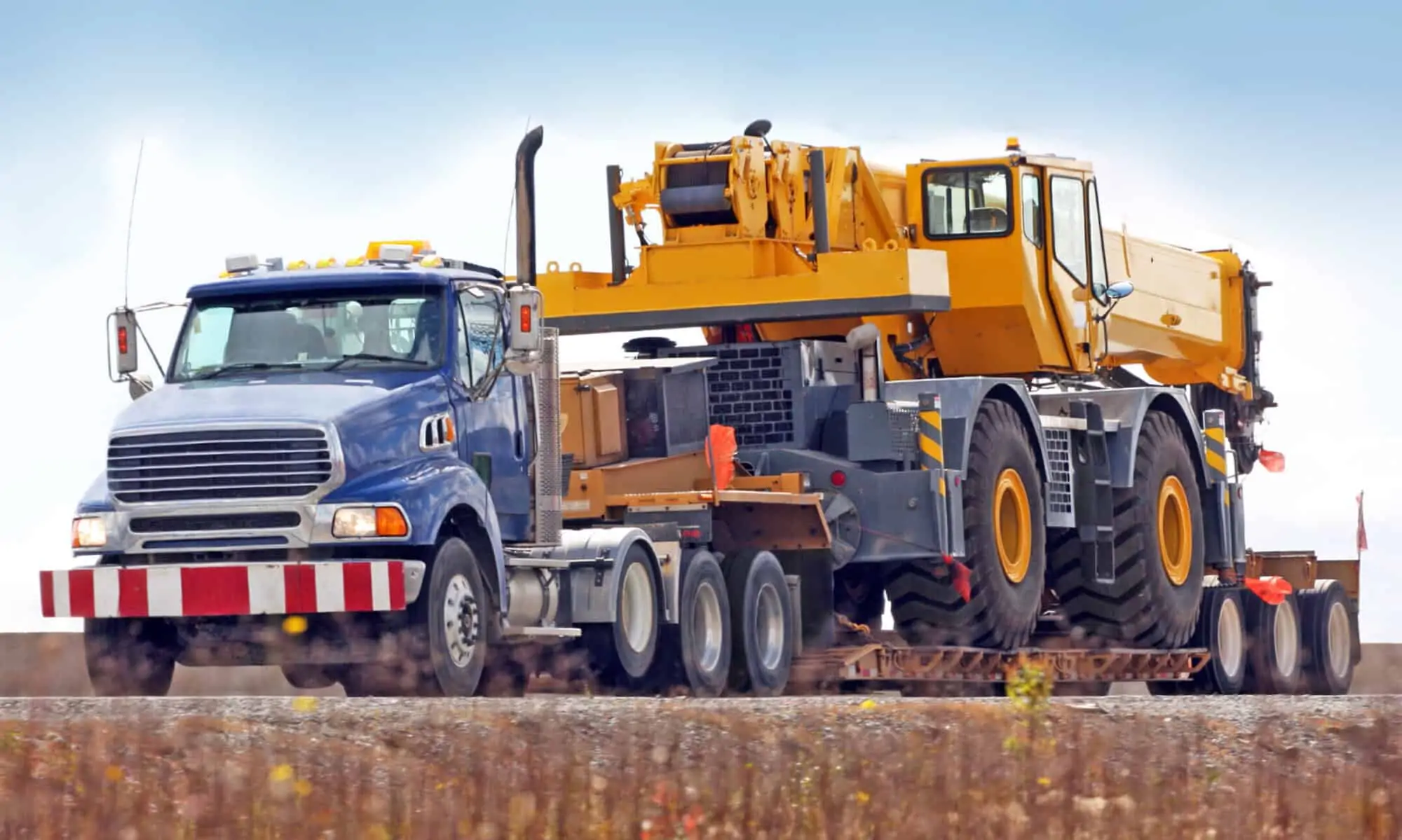
RGN trailers are commonly used for drivable machinery that is not rated for highway travel. Typical examples include excavators, dozers, wheel loaders, pavers, tractors, and combine harvesters. These machines are tall, heavy, or both, and they can usually move under their own power for a short distance. That combination suits a low deck with front access. Tracked machines such as excavators and dozers and wheeled machines such as wheel loaders and tractors both fit this profile.
RGN Loading Methods Explained
With the neck detached, drivable equipment moves onto the deck from the front over a shallow angle. Units that cannot run under their own power may be winched on. Other freight may need lifting equipment at origin and destination. The method depends on the freight and the site, so confirm it when booking. Drive-on loading can reduce the need for extra loading equipment, depending on the site, which is one reason an RGN trailer is chosen for machinery.
Permits for Tall Loads
Commonly cited oversize reference points are over about 8.5 ft wide, over about 13.5 ft tall, or over 80,000 lb gross. Limits and permits vary by state or province. The United States has no national vehicle height limit, and most states set limits between 13 ft 6 in and 14 ft. A pilot car is commonly required for vehicles over about 12 ft wide, depending on the state. A low deck helps, but it does not replace checking every jurisdiction on the route.
RGN vs Other Trailers
Where does an RGN trailer sit among the common open-deck options?
- Standard flatbed: 48 to 53 ft long, 8.5 ft wide, about 48,000 to 52,000 lb
- Conestoga: 48 to 53 ft long, tarp rides on a frame and never touches the freight, unlike a tarped flatbed
- Step deck: Lower deck about 3.5 ft (42 in), usually needs ramps for equipment
- Double drop: Low center deck with a fixed gooseneck
- RGN: Deck typically lower, about 18 to 24 in, front drive-on loading
The right choice depends on the freight, not on a ranking.
Planning an RGN Move
Measure the machine as it will be hauled, including boom position, attachments, and anything that adds height or length. Share the weight, the pickup and delivery site access, and the loading method needed. Confirm legal limits for each state or province on the route, since one strict jurisdiction can change the plan. Sending photos and a spec sheet early helps the carrier confirm the assigned RGN trailer matches the load.
Heavy Haul Support From LAC
LAC™ is a freight forwarder with 25+ years of experience serving commercial and B2B shippers across the Americas. LAC coordinates a network of vetted carriers, matching trailer type and lane experience to each shipment rather than fixing them in advance. Ground freight within the United States-Mexico-Canada Agreement (USMCA) region includes flatbed and heavy haul, with bilingual English and Spanish support from booking through delivery.
Conclusion
An RGN trailer is a removable gooseneck trailer built for tall and heavy machinery that needs a low deck and front access. The detachable neck allows drive-on loading, and the low deck helps keep tall loads within height limits. Deck height, length, capacity, and permit thresholds all vary by configuration and route, so confirm them with the carrier for each move rather than relying on a single published figure.
FAQs
What are the common RGN trailer types?
Three configurations come up most often. A fixed-deck RGN has a single well at one height. A double-drop RGN adds a second drop for a lower center section. An extendable RGN stretches the well to carry longer pieces. Each removable gooseneck trailer type suits different freight, so confirm the configuration with the carrier before booking the load. Sharing the freight’s height, length, and weight early helps the carrier match the right configuration.
How low is an RGN deck?
About 18 to 24 in is typical, with some double-drop configurations up to about 30 in. Because the machine sits on top of the deck, every inch of deck height adds to the total height of the load as hauled. That is why a few inches can decide whether a tall machine fits the route. Ask the carrier for the loaded deck figure of the assigned trailer, not a general range.
Can equipment drive onto an RGN?
Yes, for drivable equipment, once the neck is detached and the front of the deck rests on the ground. Drive-on loading also depends on the machine being able to run and steer at pickup, and on enough clear space in front of the trailer at the site. Units that cannot run need a different plan, so share the machine’s running condition with the carrier when the move is booked.
How long is a typical RGN trailer?
A standard RGN typically has about 29 to 30 ft of main deck. Because sources mix overall length and well length, a quoted figure can look longer or shorter than the space the freight will actually use. When comparing trailers, ask which measurement is meant and match the machine footprint to the well length, not the overall trailer length. Lengths vary by manufacturer, so request the spec sheet.
Are RGN loads oversize?
Not automatically. Whether a load is oversize depends on its dimensions and weight as hauled, plus route limits. The low deck helps tall equipment stay within height limits, but you still need to check width and gross weight. Some RGN moves stay within legal limits, while others need permits. Because limits vary by state or province, a load legal on one leg of the route may need a permit on the next.
Who arranges an RGN move?
A shipper can book a carrier directly or work through a freight forwarder. Booking directly means the shipper finds, vets, and manages the carrier for each move. A forwarder such as LAC arranges the carrier, trailer, and schedule through a network of vetted carriers. LAC does not operate the trailer. Either way, the shipper supplies accurate dimensions, weight, and site details, since the trailer and route plan depend on them.