
 Request a Quote









 LAC Blog
 Export Guides
 Transport Guides
 Logistics Glossary
 Container Types & Sizes
 Incoterms 2020 Rules


Shipping from Canada to Mexico is a two-border, multi-country move, not a single direct crossing, and that structural reality shapes every decision from mode to documentation. This guide previews the ground and intermodal options available, realistic transit expectations by origin, the border crossings involved, and the Canada-United States-Mexico Agreement (CUSMA) documentation shippers need before freight leaves the dock and heads south.
Ways to Ship Canada-Mexico
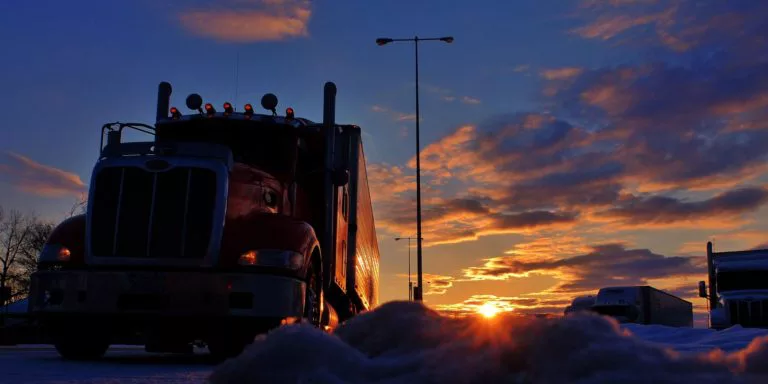
Freight typically moves by ground, either Full Truckload (FTL) or Less-Than-Truckload (LTL), traveling through the US on its way south. Intermodal combinations of rail and truck suit high-volume, longer-haul freight where transit time is more flexible and cost efficiency over distance matters more than speed. The right mode depends on shipment size and urgency, much like any other cross-border lane, but the added distance and two-border structure changes the overall calculation somewhat compared to a single-border move.
Typical Transit Times by Lane
Transit time varies significantly depending on the shipment’s origin. Ontario and Quebec-origin freight typically runs several days longer than western Canada lanes routed through southern US border crossings, largely due to the total distance those eastern lanes cover. Toronto and Montreal shipments generally take longer to reach Mexico than freight originating in Vancouver, since western routes often connect more directly to the busiest US-Mexico crossings, with less east-west travel required first.
US Transit and Two Borders
Canada-Mexico freight is not a direct move; it transits the United States, crossing the Canada-US border first and the US-Mexico border second. Each crossing has its own clearance process, its own documentation checkpoint, and its own potential for delay. Shippers moving freight on this particular lane need to plan for two separate customs events rather than one, since a hold at either individual border can affect the timing of the entire overall journey.
Two Key Border Crossings
The northern leg of the route typically clears at a major Canada-US crossing serving the shipment’s origin region. The southern leg most often routes through a high-volume US-Mexico crossing such as Laredo, chosen for its established cross-border infrastructure and carrier familiarity. Which specific crossings a given shipment uses depends heavily on origin city and destination in Mexico, since routing efficiency varies considerably by lane, origin, and the available carrier network on both sides.
CUSMA Documents You Need
The Canada-United States-Mexico Agreement (CUSMA), Canada’s own name for the USMCA, can offer preferential tariff treatment for qualifying goods moving across all three countries. Supporting documentation typically includes a commercial invoice and a packing list for every shipment, and where duty-free treatment is being sought, a valid certificate of origin as well. Missing or incomplete versions of these documents remain a common, entirely avoidable source of delay somewhere along this specific two-border lane.
Meeting CUSMA Rules of Origin
To qualify for preferential treatment under USMCA, goods generally need to meet the agreement’s rules of origin, which assess how much of a product’s content and production genuinely originates within Canada, the US, or Mexico. This is not simply a checkbox exercise; it depends heavily on the specific product involved and its full supply chain. Shippers should confirm origin qualification early on, well before a shipment reaches either border, rather than simply assuming eligibility.
What Drives Long-Lane Costs
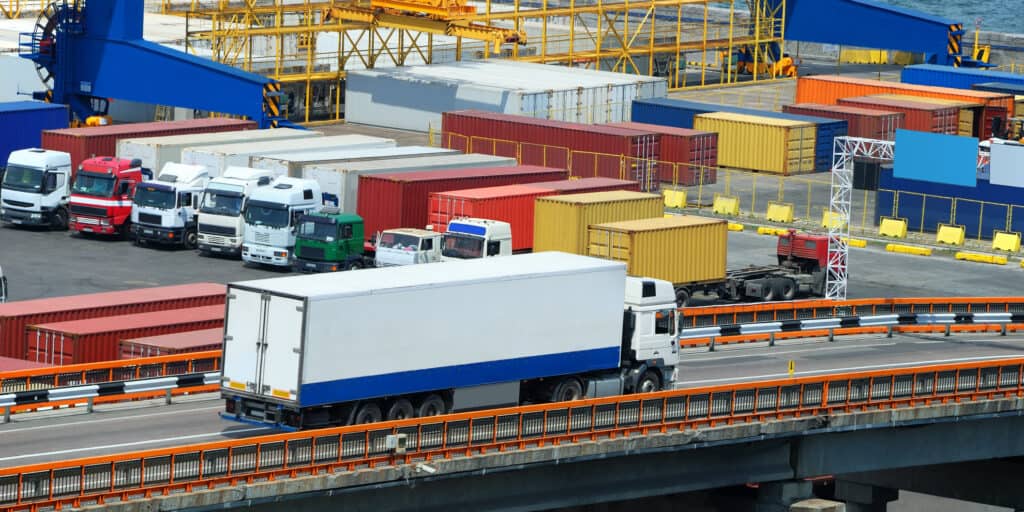
Total distance is the single most obvious cost driver on this lane, but it certainly is not the only one. The number of border crossings involved adds handling and clearance time at each stop. Cargo type matters too, since temperature-controlled or hazardous freight adds handling requirements and equipment needs. Seasonal capacity also plays a meaningful role, as demand fluctuations across all three countries can noticeably affect available trucking capacity in any given week or month.
LAC™’s Trilateral Network Coverage
LAC™ offers genuine trilateral coverage, with consolidation options available from major cities across Canada, the US, and Mexico, backed by over 25 years of cross-border experience specifically on these corridors. The team includes bilingual coordinators experienced with both USMCA and CUSMA documentation and broader compliance support, helping shippers manage the cross-border complexity this particular lane genuinely involves, without ever needing to coordinate each individual leg entirely on their own from scratch.
How Forwarders Coordinate the Move
International freight forwarding on this specific corridor means coordinating carrier handoffs, documentation, and customs communication across two separate border crossings as one single managed process, rather than treating it as two entirely disconnected legs handled by completely different parties. That kind of hands-on coordination matters considerably more here than on an ordinary single-border lane, since a single miscommunication at one crossing can create downstream problems at the second crossing that follows it shortly after.
Working With a Customs Broker
A licensed customs broker is typically involved at each relevant point of clearance along this route. Canadian and US brokerage generally covers the northern leg crossing into the United States, while a completely separate licensed Mexican customs broker, or agente aduanal, handles entry into Mexico specifically. Coordinating carefully between these two brokers, rather than treating them as entirely separate, unconnected relationships, helps keep documentation consistent across both distinct legs of the overall journey.
Avoiding Cross-Border Delay Risk
With two entirely separate borders involved, documentation errors compound in ways they simply don’t when crossing a single lane. A mismatch caught at the first crossing can easily cascade into delays at the second, even when the second border’s own paperwork is otherwise perfectly accurate and complete. Accurate, consistent paperwork prepared carefully for both legs well in advance, not just the first one, meaningfully reduces this compounding risk across the entire two-border Canada-Mexico route.
Conclusion
Shipping from Canada to Mexico is fundamentally a two-border move requiring careful mode selection, CUSMA documentation prepared well in advance, and coordination across both crossings rather than treating each leg in isolation. Transit time, overall shipping cost, and delay risk all trace back directly to this two-border structure. Shippers who plan carefully for both crossings together, not sequentially as two separate isolated problems, tend to see smoother, more predictable freight movement from Canada to Mexico overall.
FAQs
What is the fastest way to ship from Canada to Mexico?
Ground transport is generally the fastest option for time-sensitive freight on established lanes, particularly Full Truckload service, which moves point-to-point without consolidation stops. That said, overall transit time still depends heavily on the origin province and the specific US border crossing used southbound, so western Canada shipments routed efficiently often move faster overall than eastern origins that cover greater total distance to reach the same US-Mexico crossing.
Does freight from Canada to Mexico pass through the United States?
Yes, nearly all commercial surface freight between Canada and Mexico transits the US on its way south or north. This means the shipment clears two entirely separate international borders rather than one direct crossing, each with its own documentation requirements and potential for delay. Shippers should plan and budget their overall transit time accordingly, treating the move as two genuinely connected legs rather than one single continuous crossing.
What is CUSMA and how is it different from USMCA?
CUSMA and USMCA refer to the exact same trade agreement between Canada, the US, and Mexico; CUSMA is simply the term used in Canada, while USMCA is the term used in the US. Mexico, for its own part, refers to the same agreement as T-MEC. The underlying rules, including rules of origin and preferential tariff provisions, remain identical regardless of which country’s specific name is used to reference it.
Can Canadian freight qualify for duty-free treatment under CUSMA?
Goods that fully meet CUSMA’s rules of origin and are supported by a valid certificate of origin may qualify for reduced or duty-free treatment when entering Mexico or the US. Qualification depends heavily on the specific product and on how much of its content and production genuinely originate in these three member countries, so shippers should confirm eligibility for their particular goods well before booking any shipment.
What is the difference between a through-trailer move and a transload at the border?
A through-trailer move keeps freight in the exact same sealed trailer across a border crossing, minimizing handling and typically speeding up overall transit. A transload transfers freight to an entirely different carrier’s trailer at the border instead, adding one handling step but often broadening carrier availability considerably. On a two-border Canada-Mexico route, this choice can be applied independently at each crossing, depending on carrier availability.
Do I need a customs broker for both the US and Mexico legs?
In most cases, yes. Brokerage is typically required for the US portion of the move, since goods are formally entering that country’s customs jurisdiction, and again for entry into Mexico through a separate licensed Mexican broker. Each leg represents a genuinely distinct customs jurisdiction with its own separate requirements, so one single broker generally cannot handle both sides of this specific two-border route alone.