

 Request a Quote
Start shipping now
Request a Quote 
Start shipping now
Request a Quote
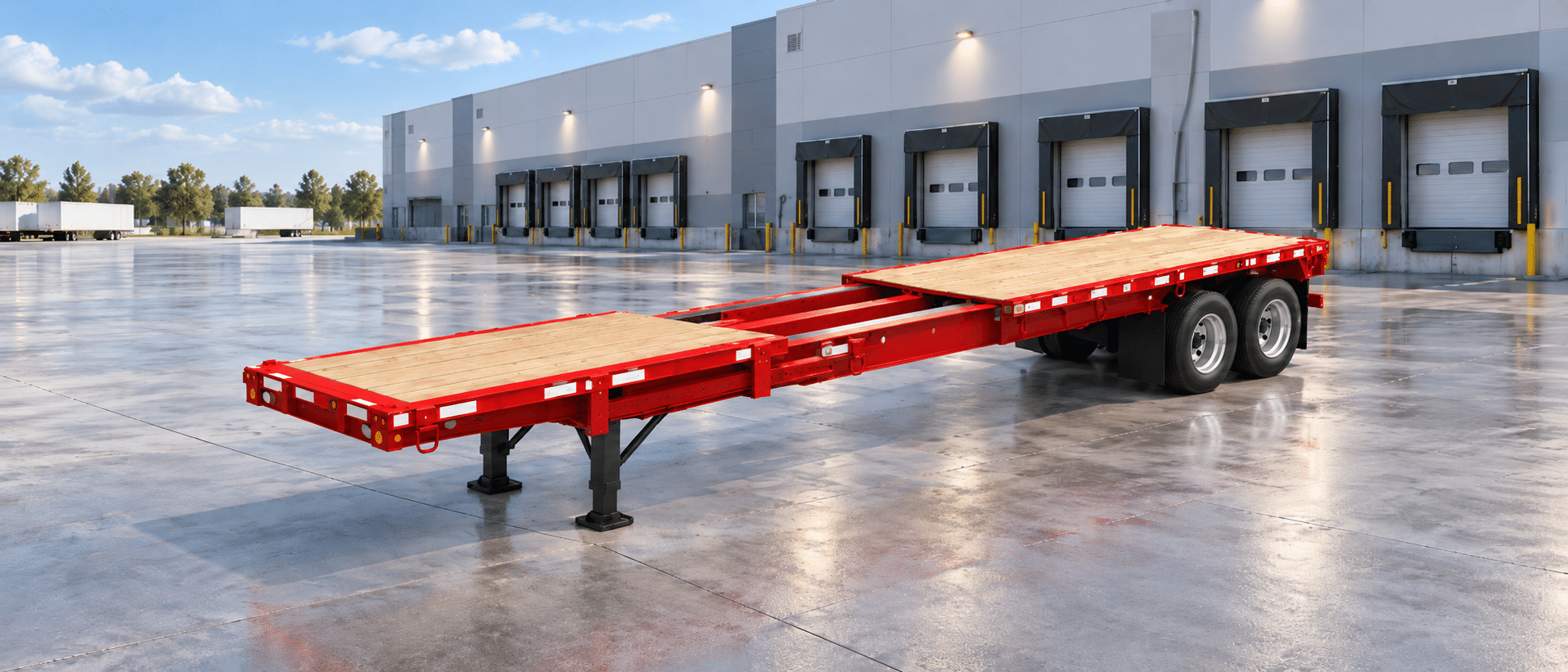
Extendable Flatbed trailers are open-deck trailers designed to transport cargo that is too long for a standard Flatbed. Their telescoping deck can be extended when additional cargo length is required and retracted for standard-length loads.
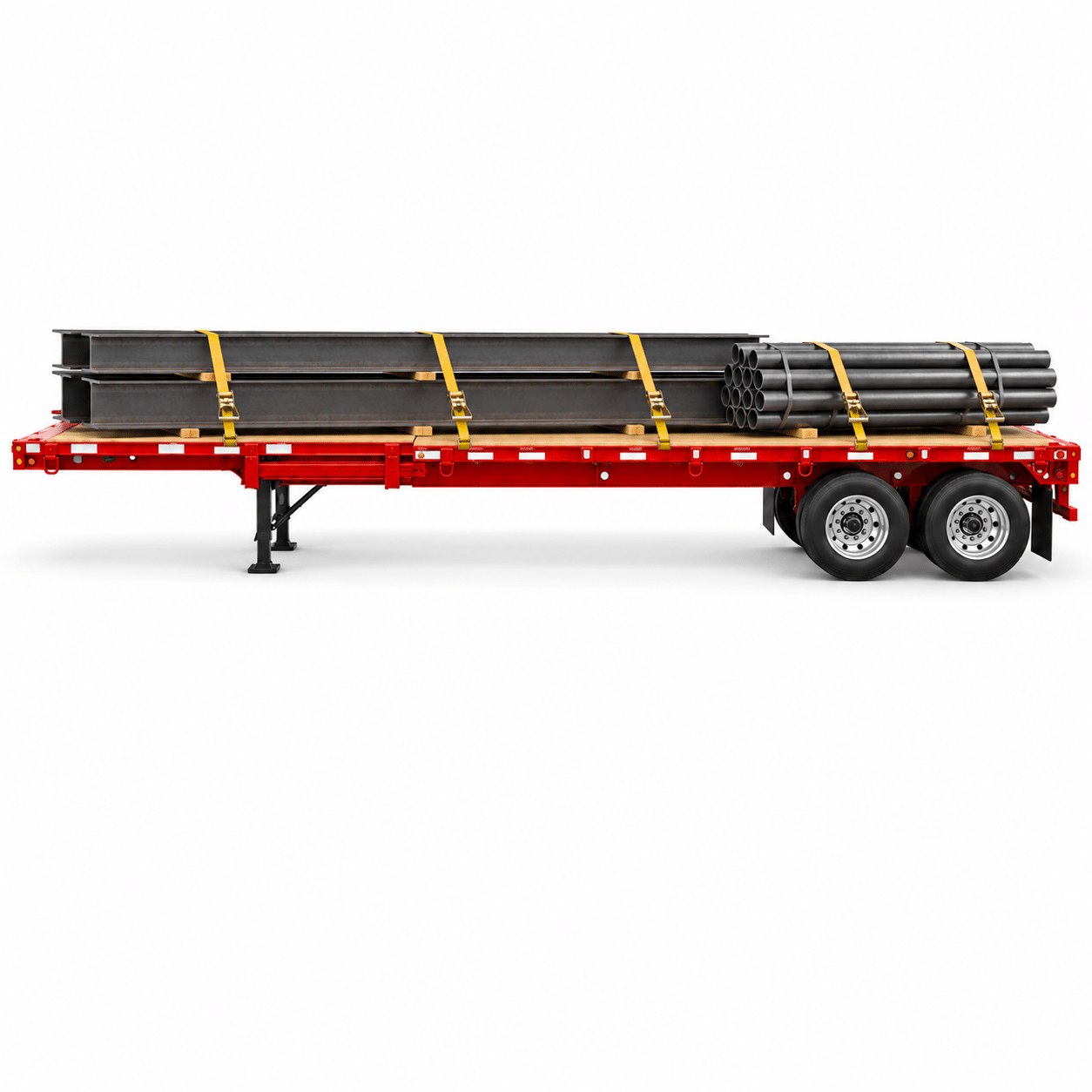
Like standard Flatbeds, they allow side and top loading, making them useful for long freight that can be handled by crane, forklift, or other loading equipment.
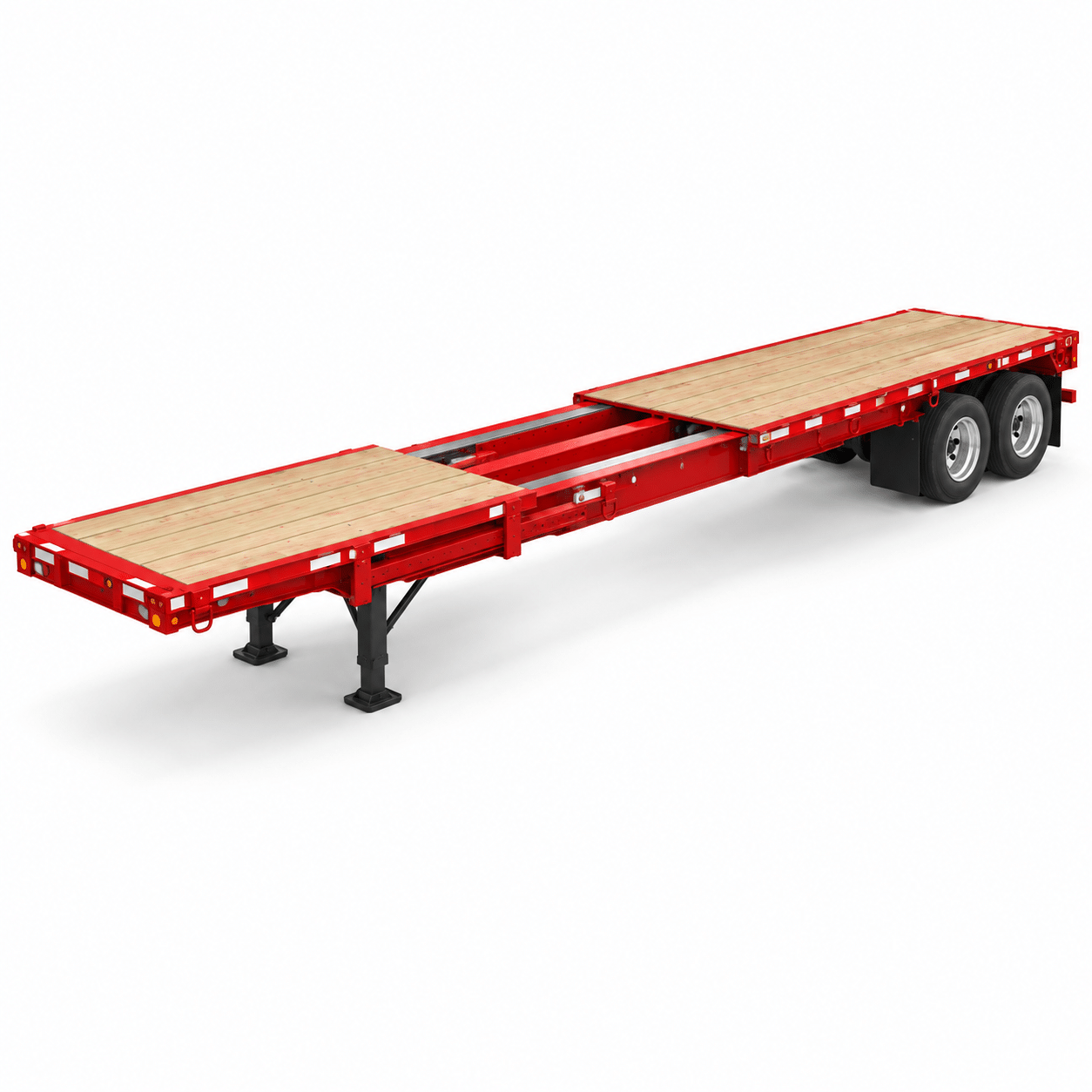
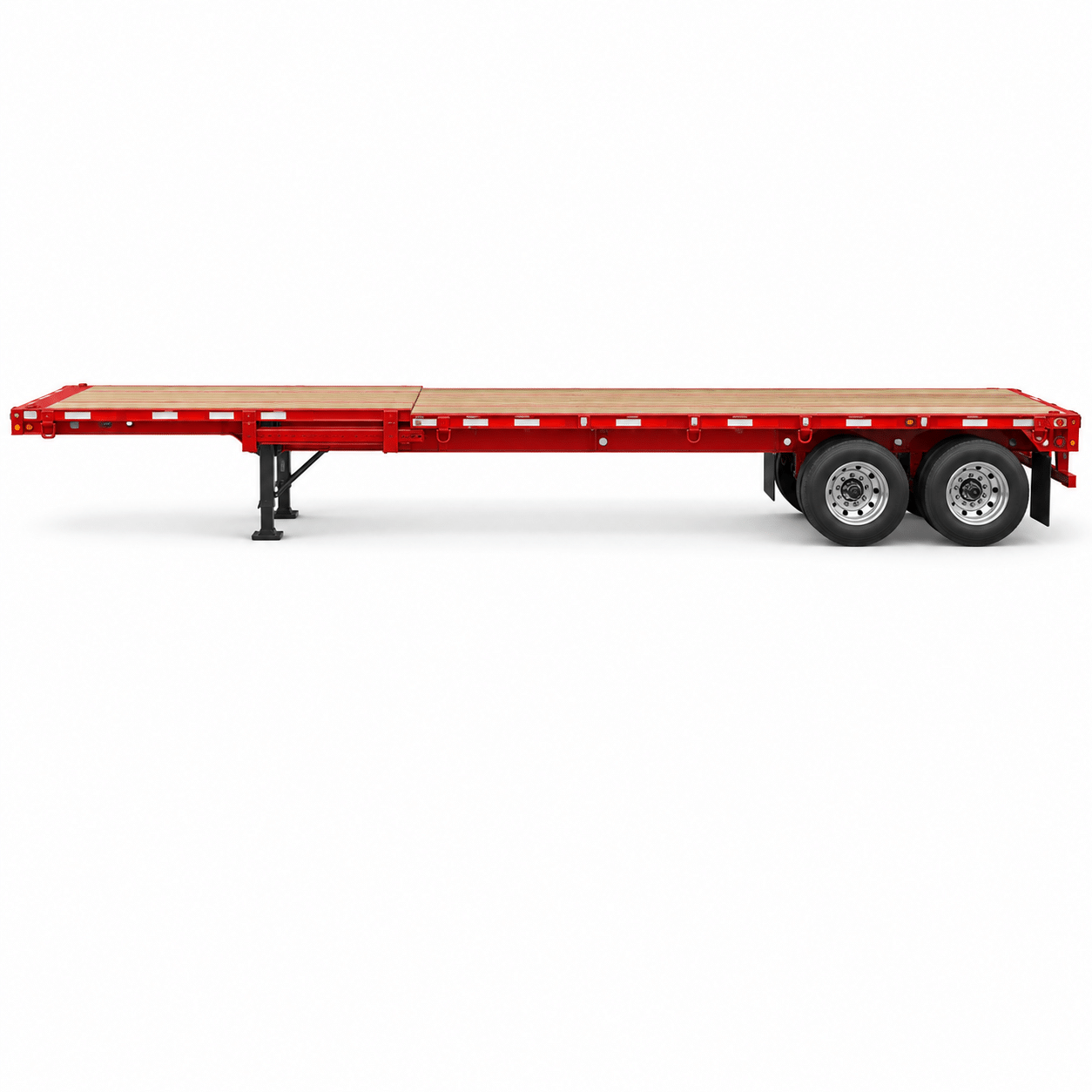
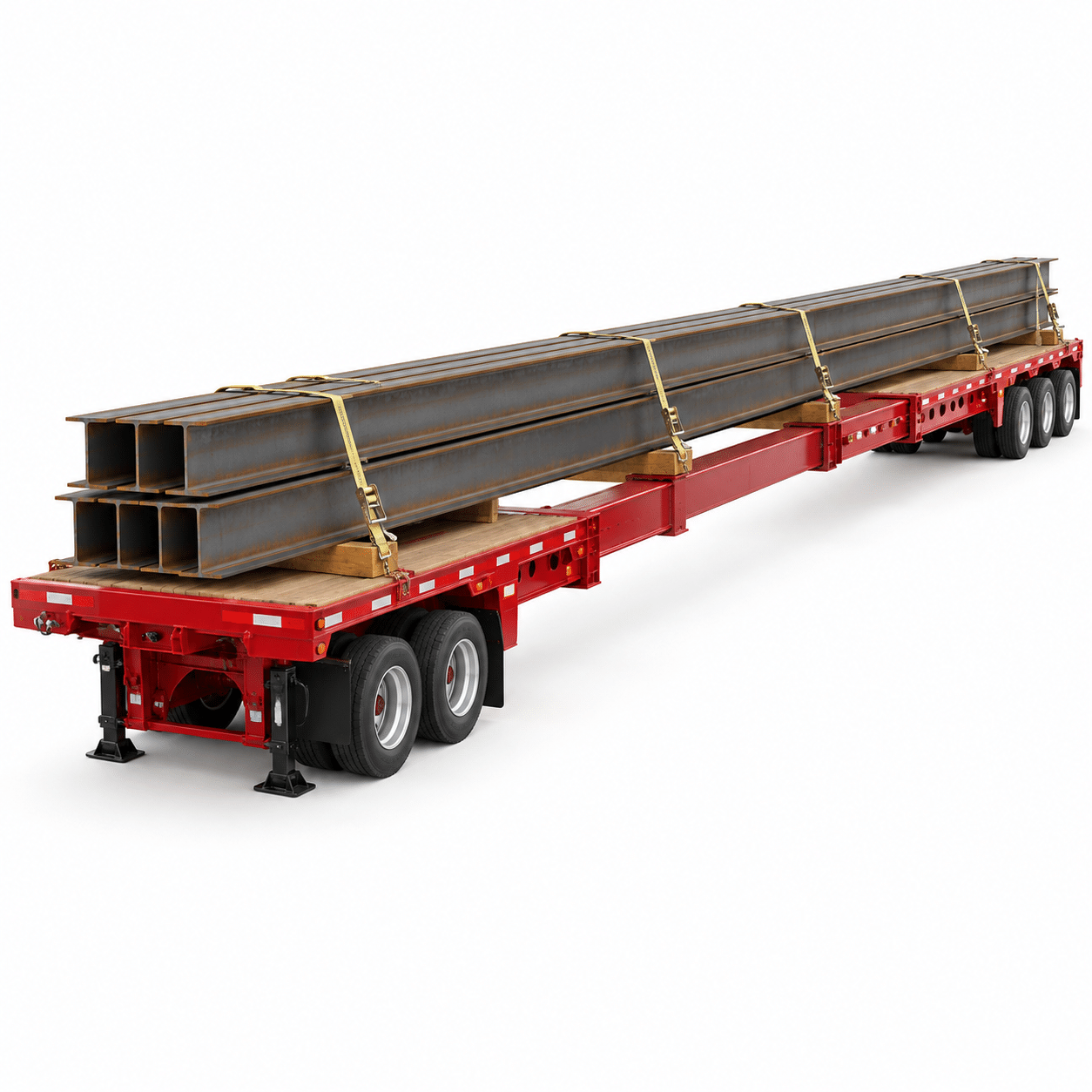
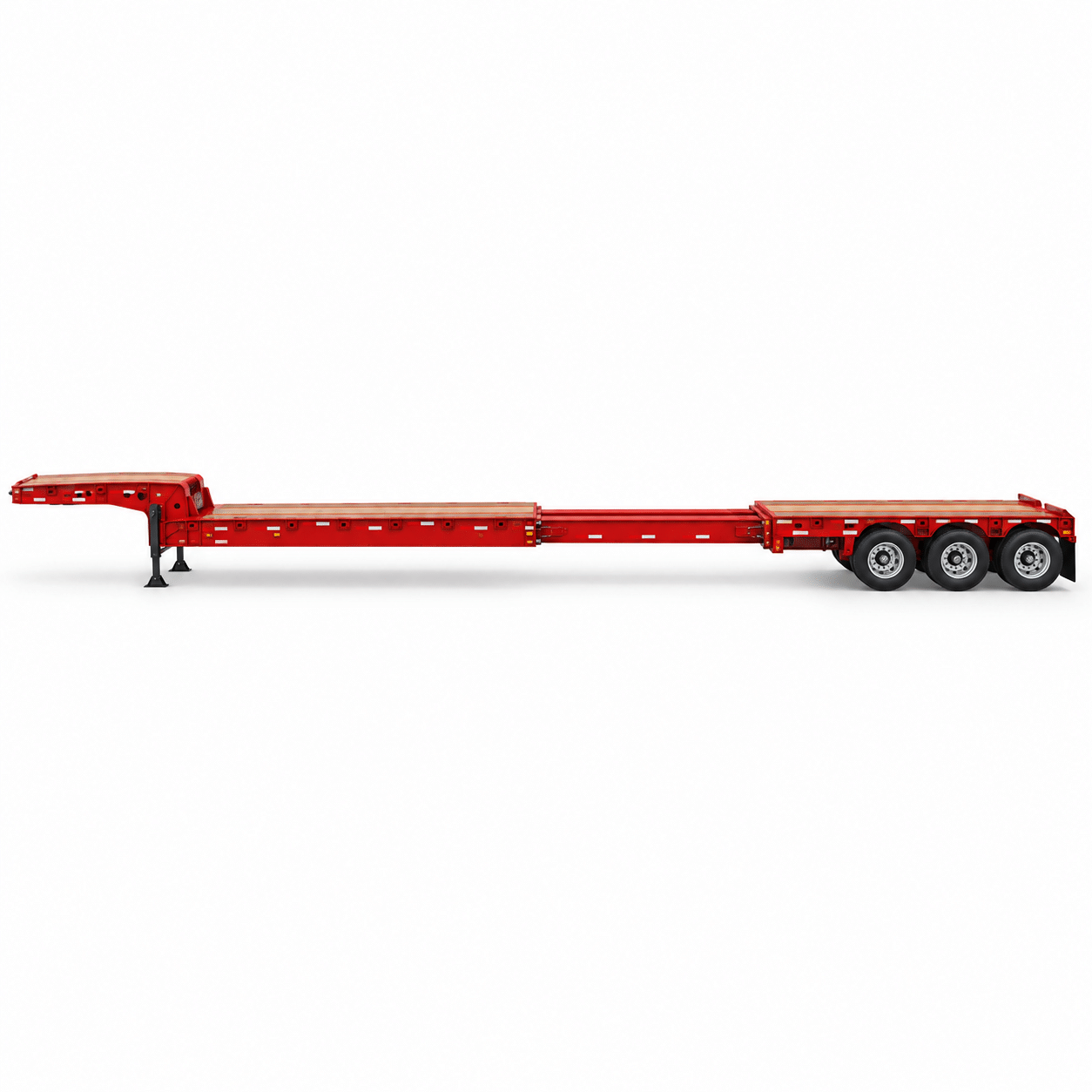
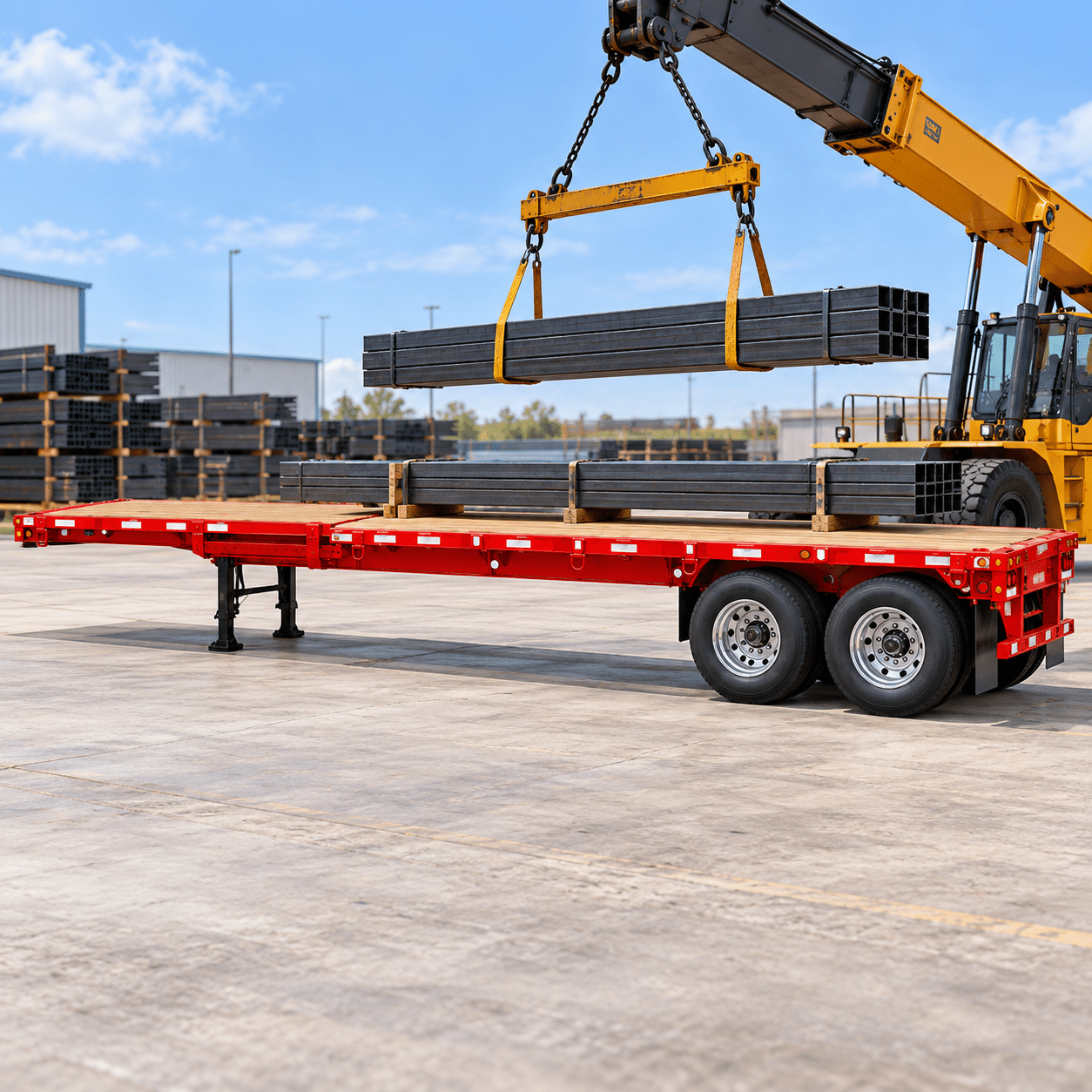
Extendable Flatbed trailers are commonly available in closed lengths such as:
Depending on the specific trailer model, the deck may extend significantly beyond its closed length. Manufacturer examples include configurations extending from approximately 48 ft to 80–81 ft and from 53 ft to approximately 90 ft.
Available configurations may also differ by:
The required configuration should be selected based on cargo dimensions, weight distribution, route, and applicable transportation requirements.
| Specification | Typical Range |
|---|---|
| Closed Trailer Length | 48–53 ft |
| Extended Length | Approx. 80–90 ft, depending on model |
| Exterior Width | About 102 in |
| Loaded Deck Height | Approx. 58–60 in |
| Standard Axles | Commonly 2–3, depending on model |
| Rated Trailer Capacity | Varies by configuration and manufacturer |
Current manufacturer examples include 48 ft trailers extending to about 80–81 ft and 53 ft configurations extending to approximately 90 ft. Deck heights around 58–60 in are also common among the referenced models.
|
✅ Best For |
❌ Not Ideal For |
|---|---|
|
Extra-long freight |
Temperature-controlled cargo |
|
Structural steel and beams |
Freight requiring enclosed protection |
|
Long pipes and tubing |
Standard palletized freight that fits a Dry Van |
|
Long fabricated components |
Cargo requiring a lower deck height |
|
Utility poles and similar long cargo |
Cargo requiring ground-level loading |
|
Long industrial materials |
Freight exceeding trailer or route limitations |
Extendable Flatbeds are best suited for cargo where length is the primary challenge but the shipment can still move on a conventional-height flat deck.
Taller or heavier specialized cargo may be better suited to Step Deck, Double Drop, RGN, or other specialized equipment.
Extendable Flatbed trailers are commonly used for industries that move long materials or fabricated components.
Construction & Infrastructure
Energy & Utilities
Manufacturing & Industrial
Specialized Projects
Before booking an Extendable Flatbed, confirm:
When evaluating the use of an Extendable Flatbed, always consider:
An Extendable Flatbed is usually a good option when your shipment:
A different trailer may be more appropriate when the primary challenge is cargo height, extreme weight, ground-level loading, or enclosed protection rather than cargo length.
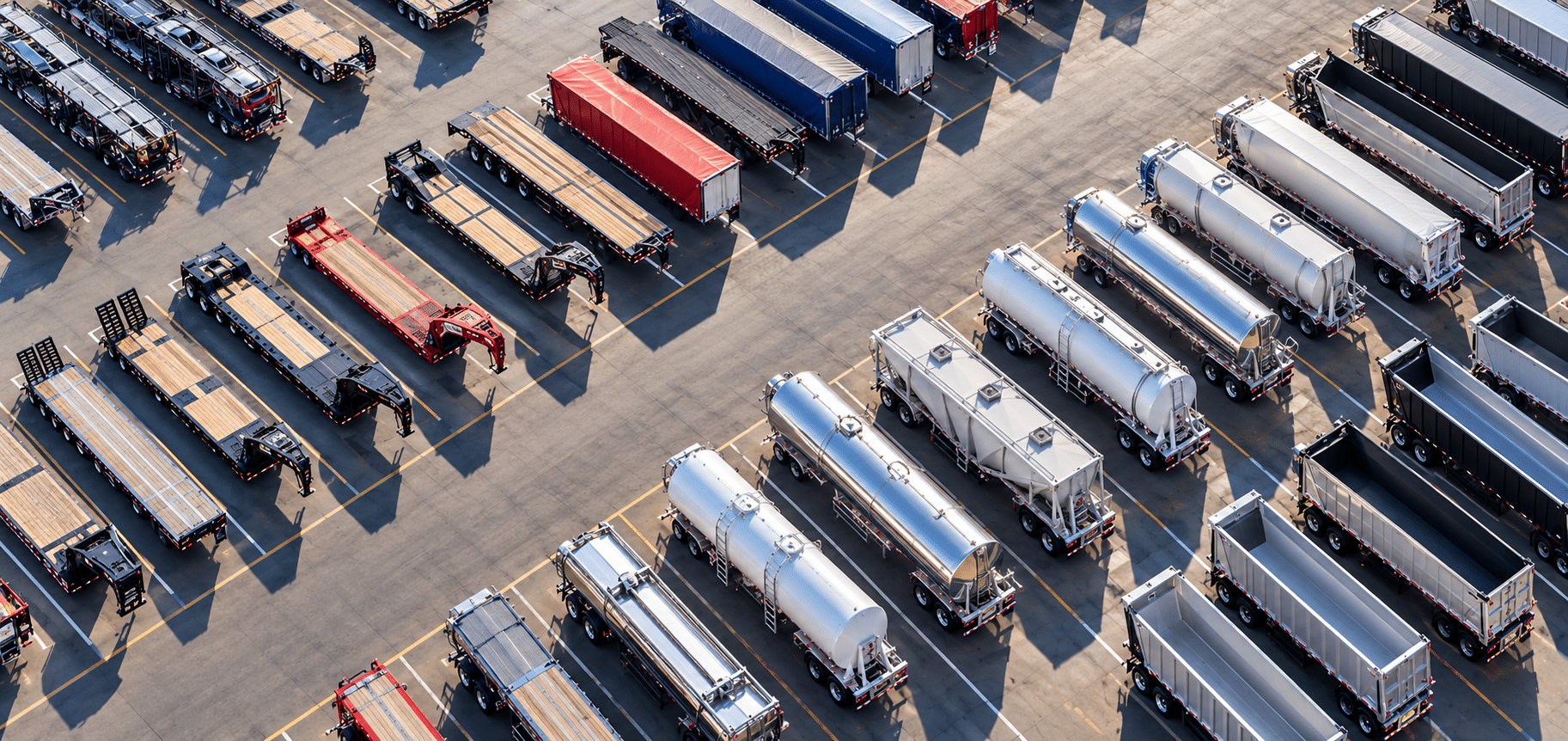
LAC coordinates Extendable Flatbed and other Ground Freight solutions across North America based on your cargo dimensions, weight, route, timing, and equipment requirements.
Learn from the experiences of those who matter most: our customers








 LAC Blog
 Export Guides
 Transport Guides
 Logistics Glossary
 Container Types Guide
 Trailers Types Guide
 Incoterms 2020 Rules