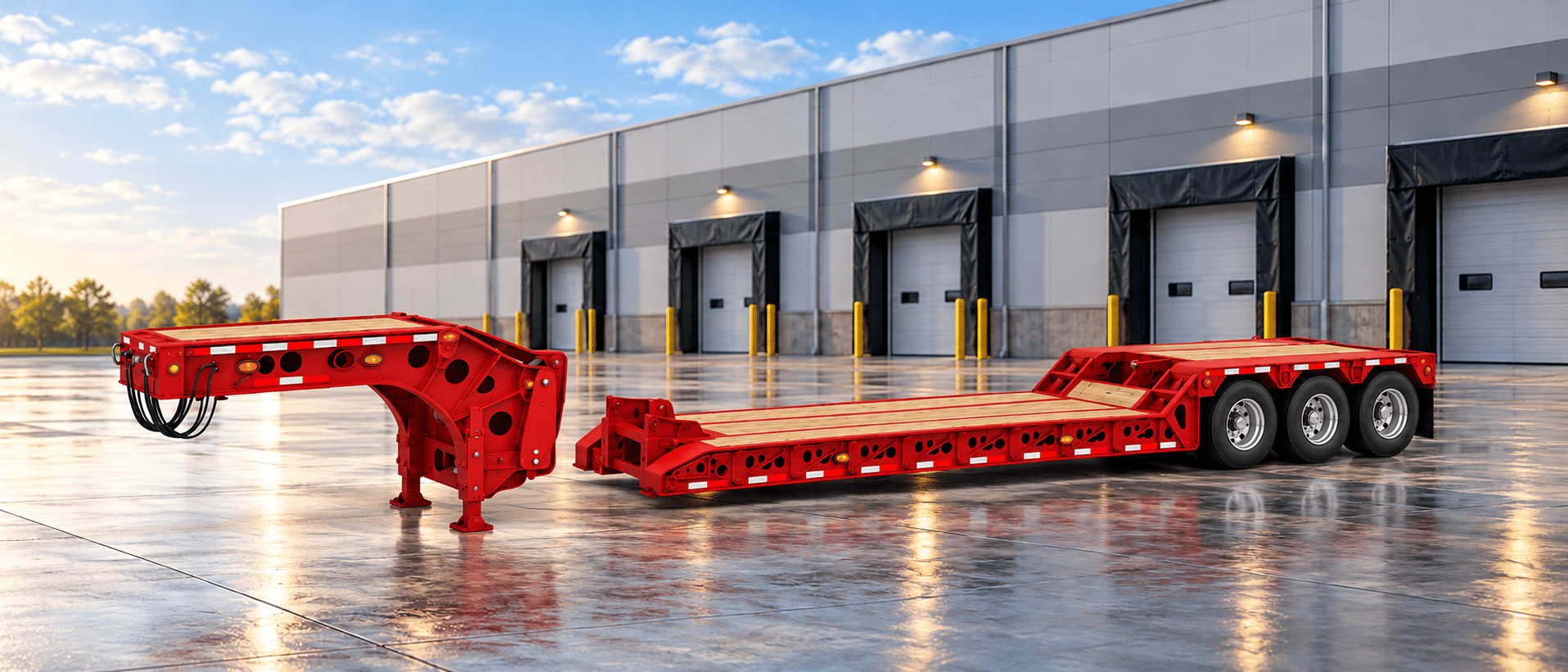
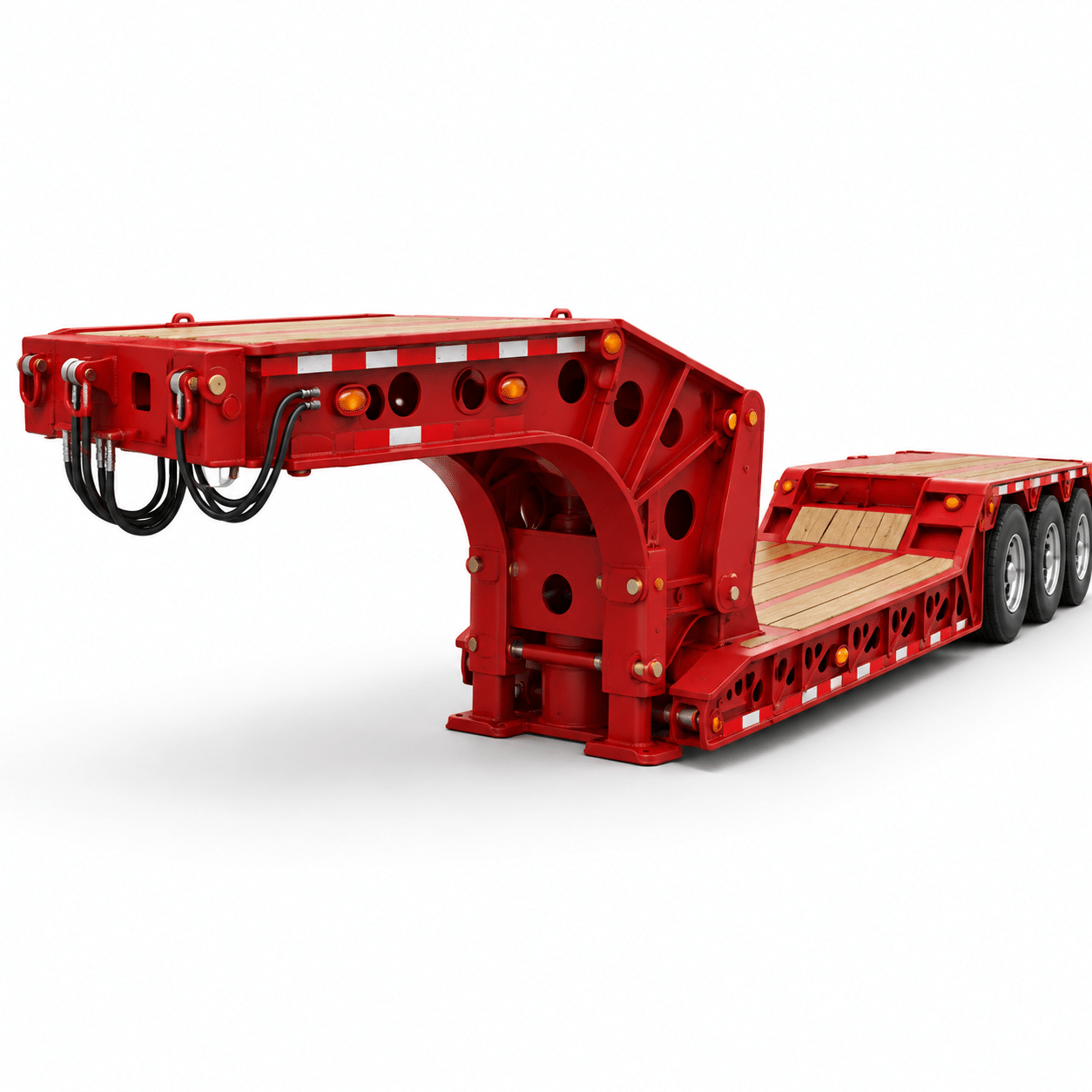
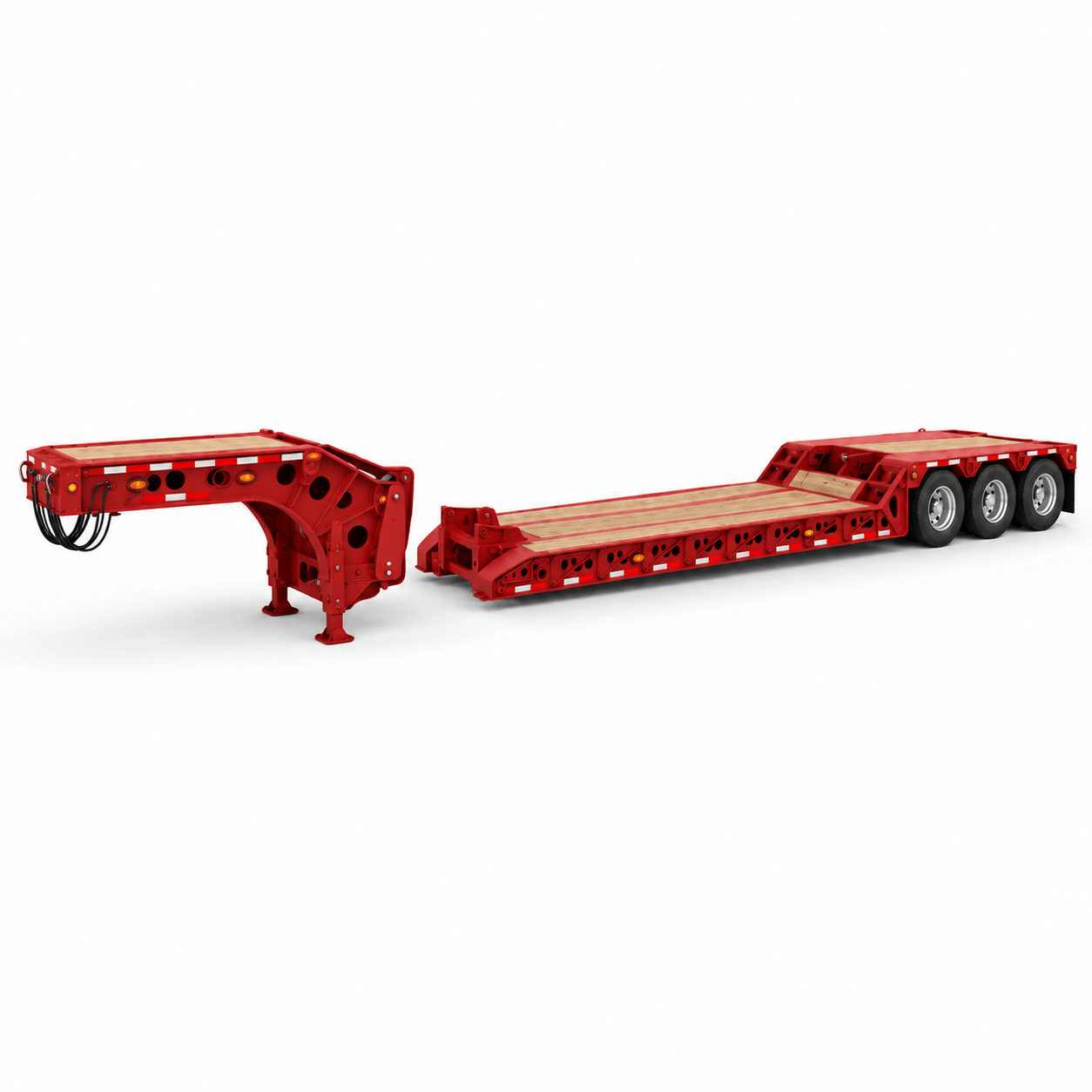
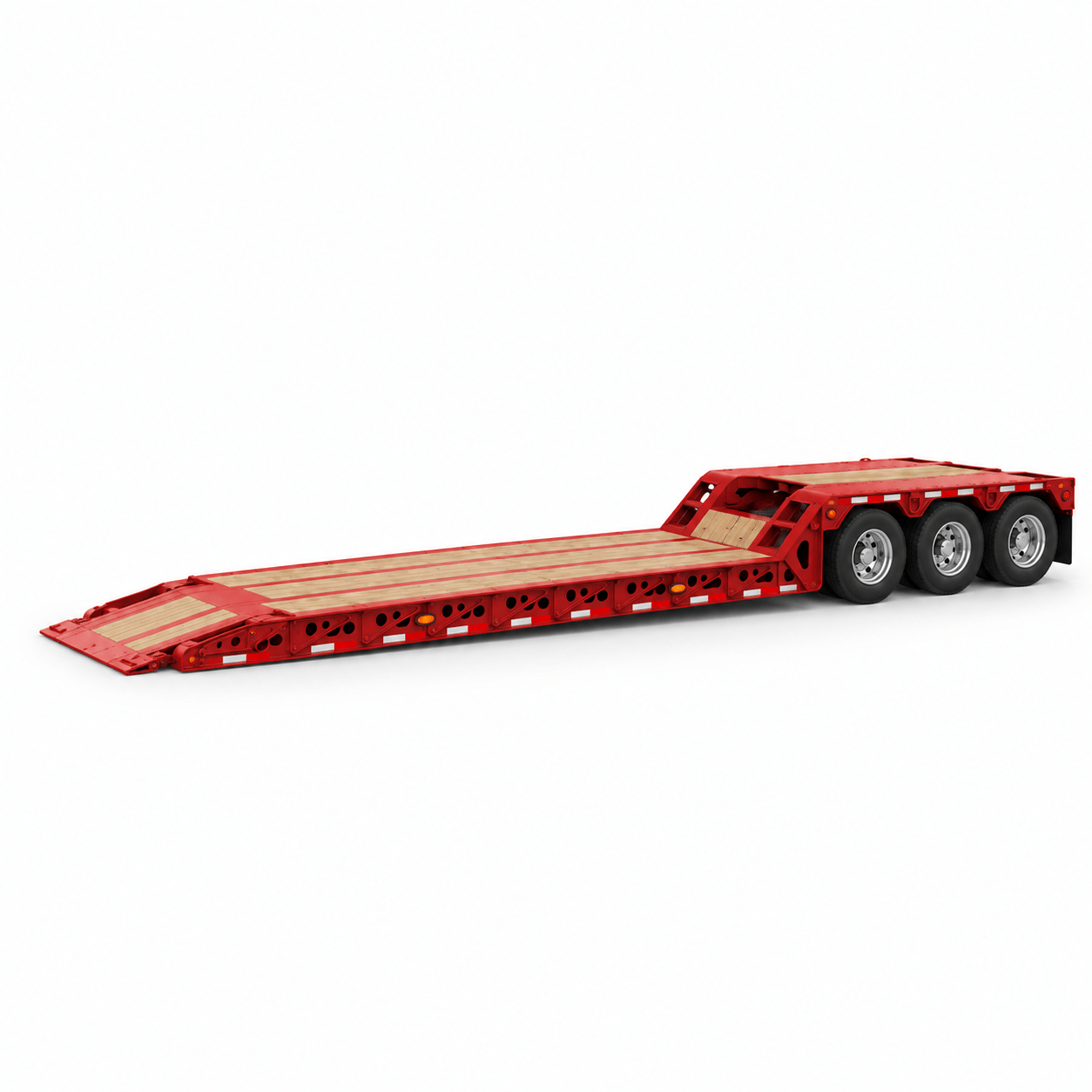
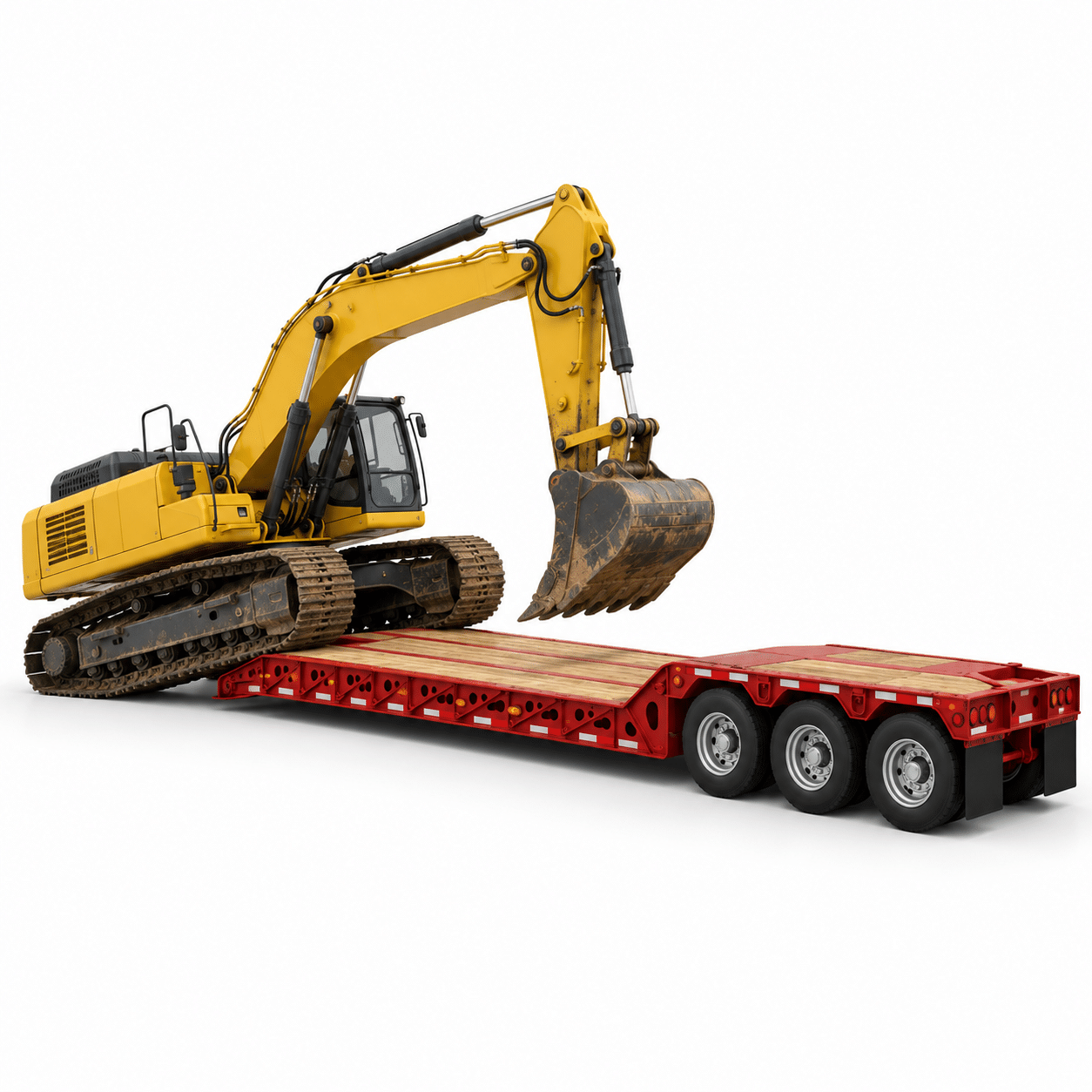
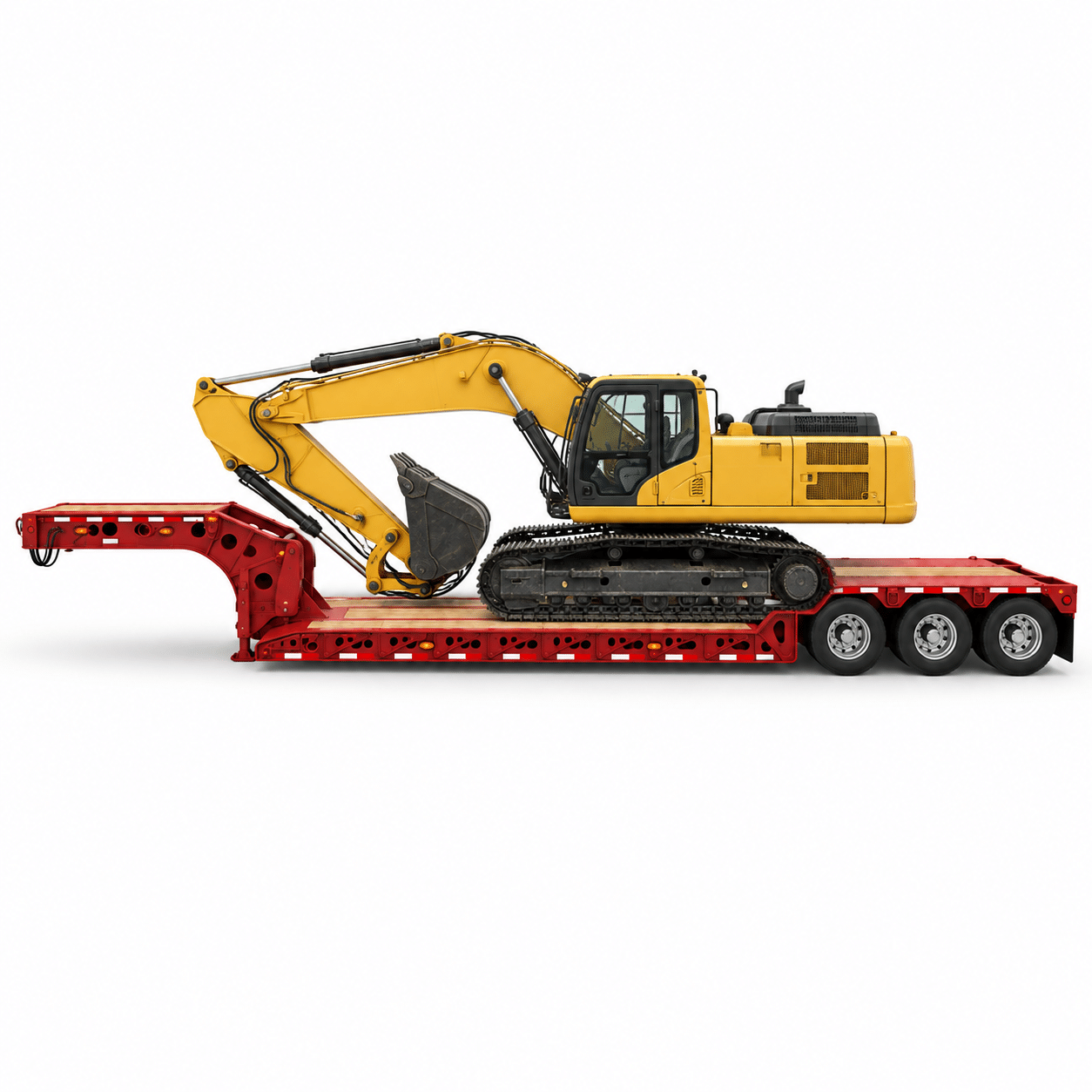
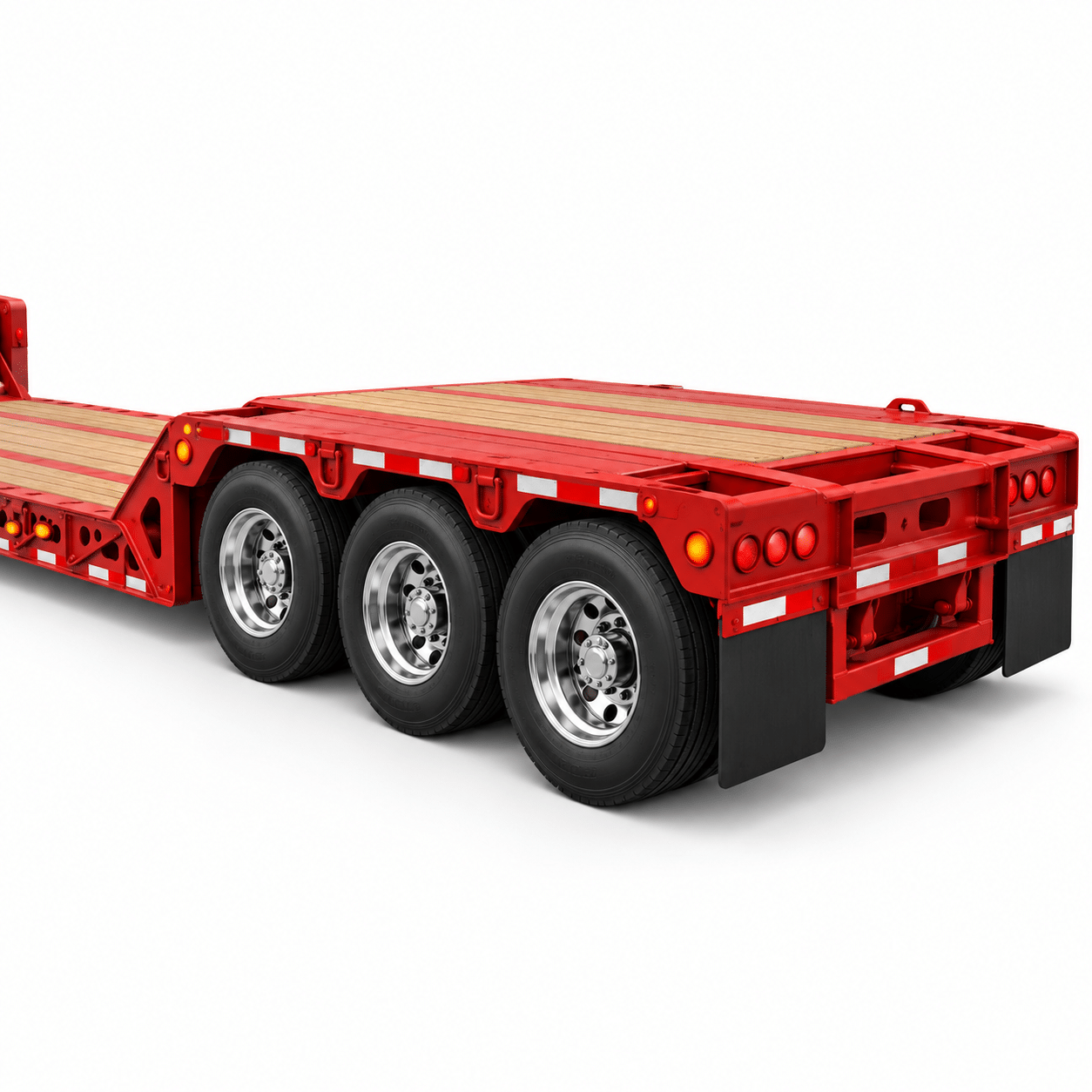
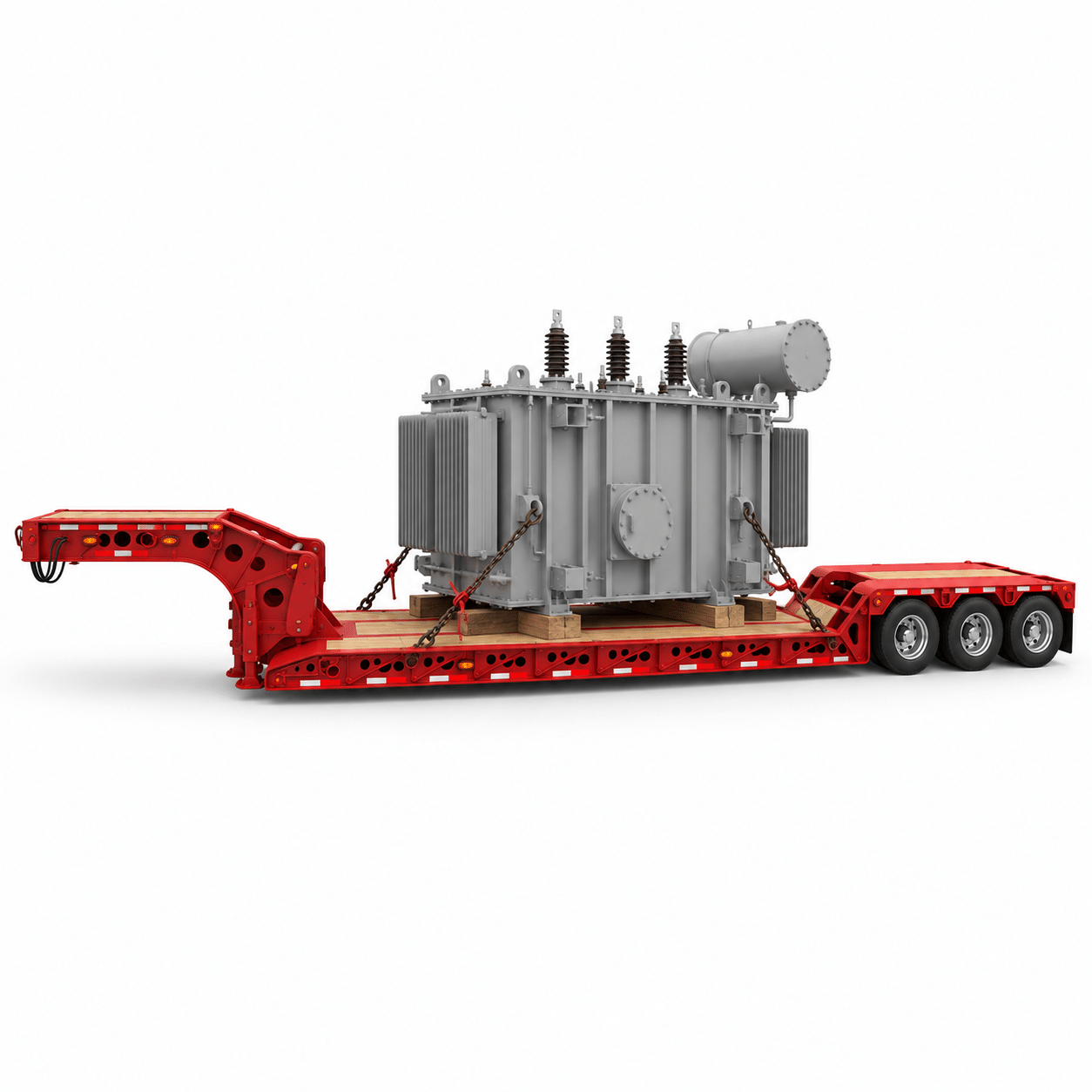
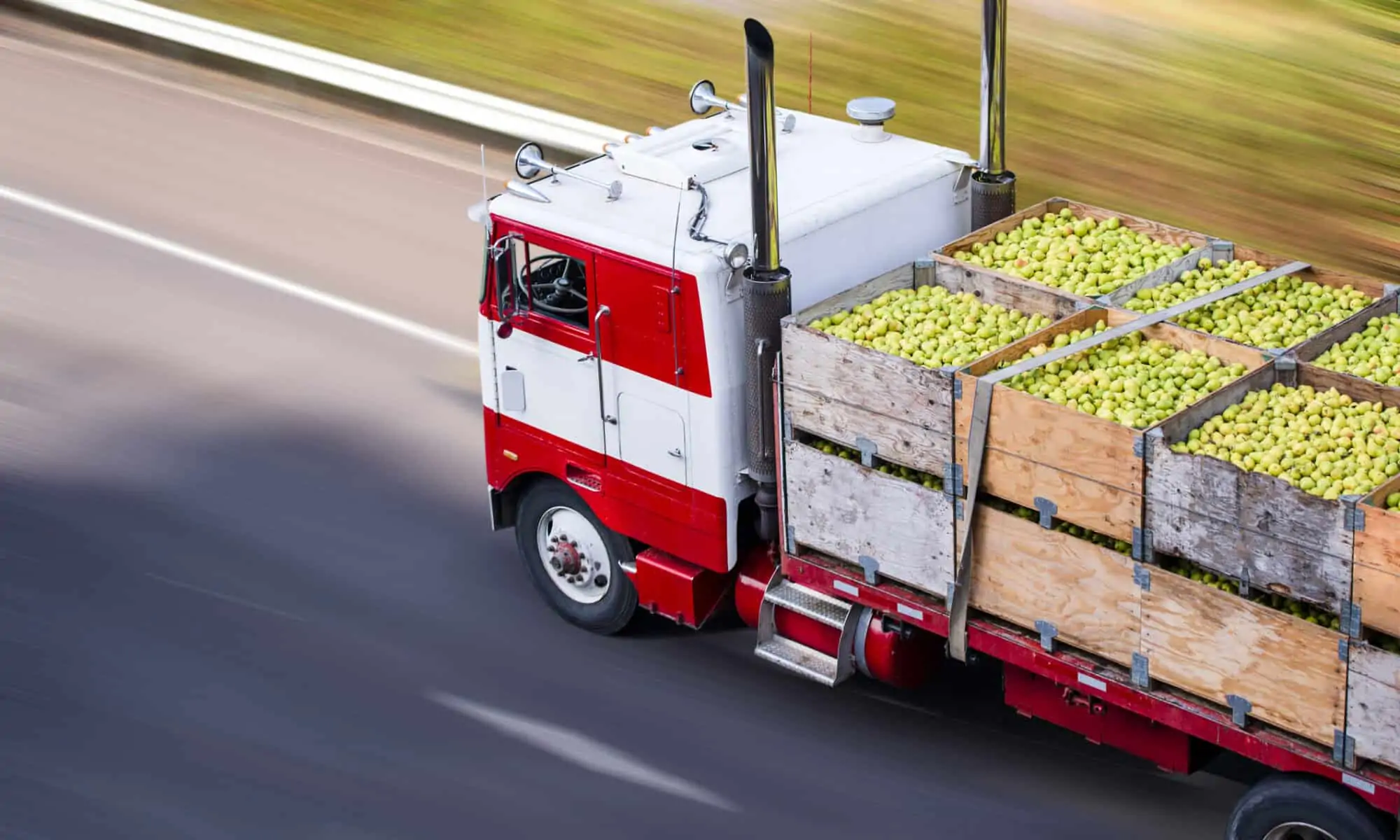
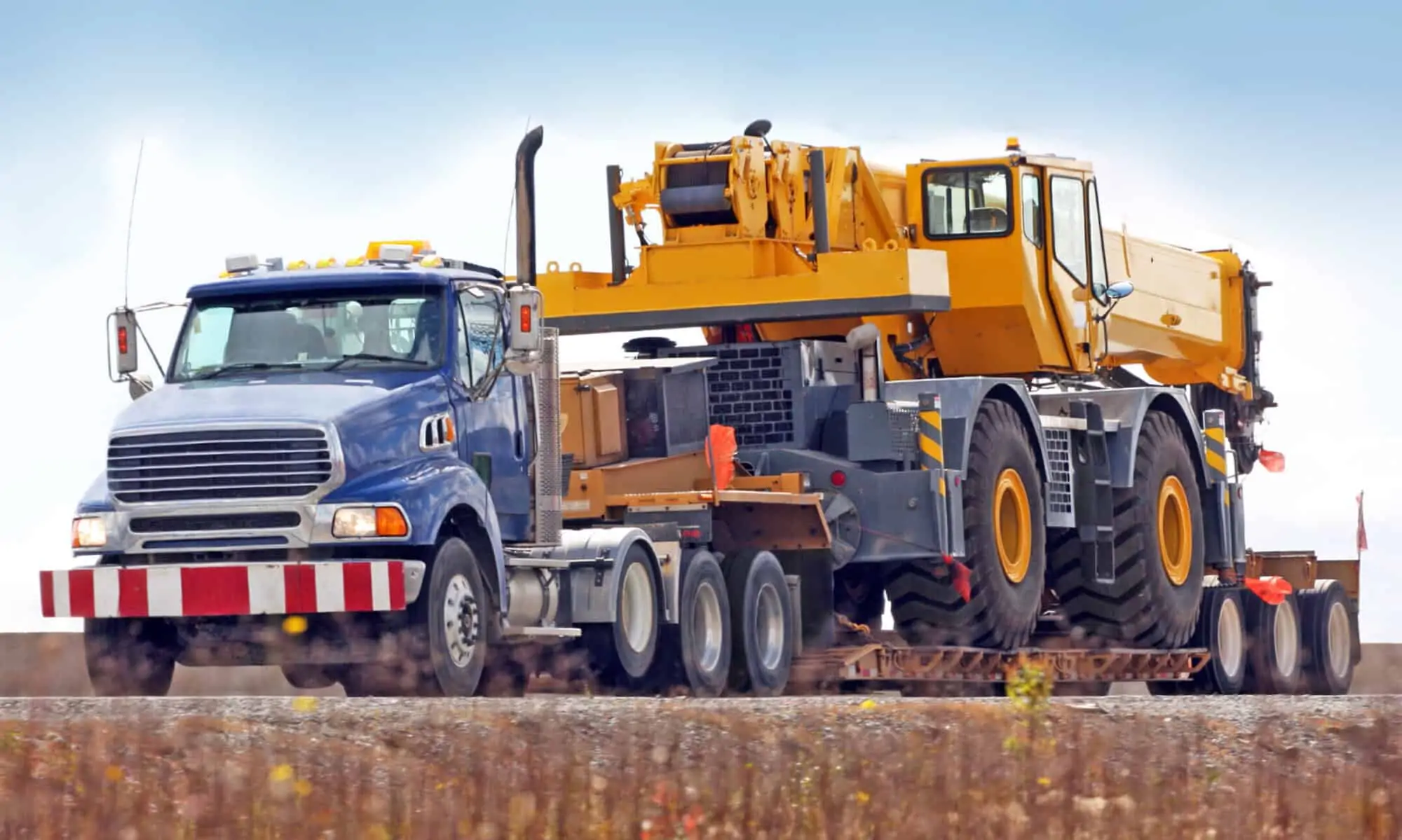
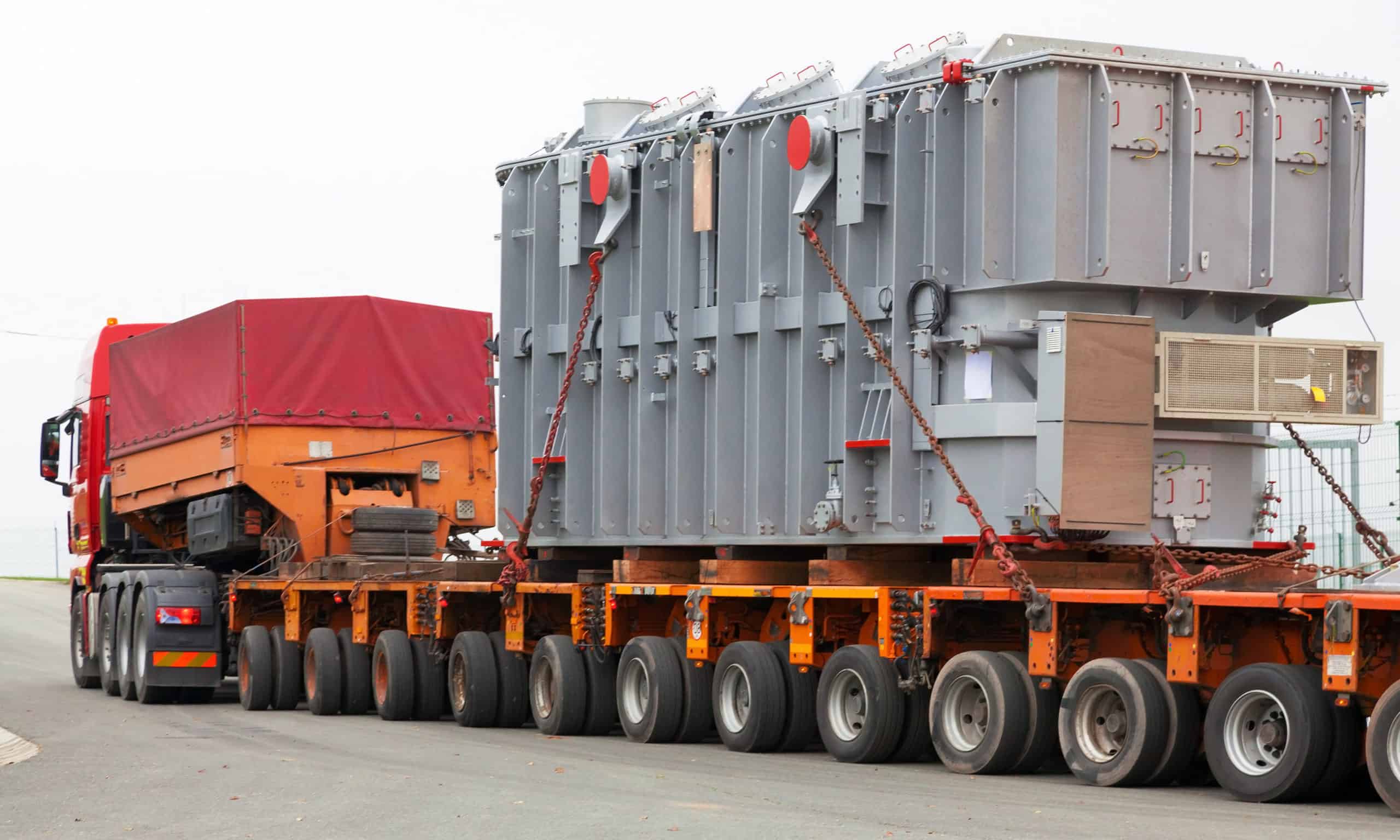
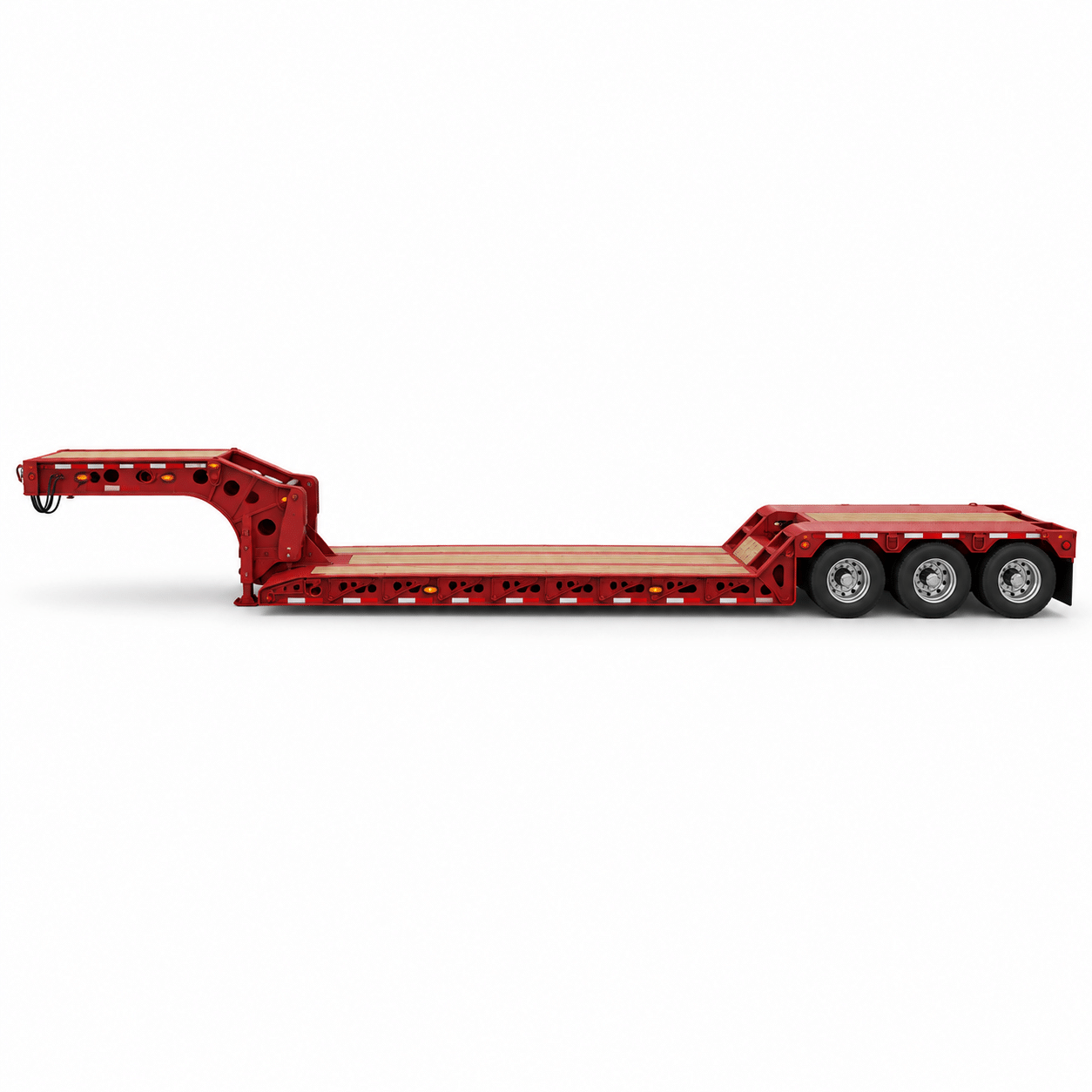
RGN trailers, or Removable Gooseneck trailers, are specialized low-deck trailers designed for heavy, tall, and oversized equipment.
Their defining feature is a detachable front gooseneck. When the gooseneck is removed, the front of the main deck can be lowered, allowing machinery and other mobile equipment to be driven or moved directly onto the trailer without relying exclusively on a crane.
The low main deck also provides additional vertical clearance for taller cargo compared with Flatbed or Step Deck equipment.
Key characteristics:
Removable front gooseneck
Very low main cargo deck
Front-loading capability
Open-deck configuration
Designed for heavy and oversized equipment
Additional vertical clearance for tall cargo
Side and top loading access
Available in hydraulic and mechanical gooseneck configurations
Available with multiple axle configurations
No enclosed weather protection
Current Talbert removable-gooseneck models include hydraulic and mechanical configurations with loaded deck heights as low as approximately 18 in.
RGN Trailer Image Gallery
Available Sizes & Configurations
RGN trailers are specialized equipment and are available in different configurations rather than one universal size.
Common configurations include:
2-axle RGN
3-axle RGN
Multi-axle heavy-haul configurations
Hydraulic Removable Gooseneck
Mechanical Removable Gooseneck
Flat deck
Beam deck
Raised-center deck
Additional removable axles or boosters
The required configuration depends on cargo weight, dimensions, center of gravity, loading method, route, and applicable transportation requirements.
Current Talbert RGN examples offer capacities from 30 to 55 tons, with optional third-axle configurations and different deck styles.
Typical Dimensions & Capacity
Specification
Typical Example / Range
Main Deck Length
Approx. 25–29 ft
Deck Width
About 102 in
Loaded Deck Height
Approx. 18–22 in on current examples
Loaded Road Clearance
Approx. 6 in
Axle Configuration
2, 3, or multiple axles
Rated Trailer Capacity
Approx. 60,000–110,000 lbs on current manufacturer series
Talbert’s current 30–55 ton removable-gooseneck series lists a 29 ft deck, 102 in width, 18 in loaded deck height, and 6 in loaded road clearance. A current tri-axle 55-ton example uses a 25 ft 6 in clear deck at the same 18 in loaded height. Note: Dimensions, deck height, rated capacity, and allowable cargo weight vary by trailer configuration, manufacturer, tractor, axle arrangement, cargo distribution, and applicable weight regulations. Confirm the specific equipment before booking.
Best For / Not Ideal For
✅ Best For
❌ Not Ideal For
Heavy machinery
Temperature-controlled cargo
Construction equipment
Freight requiring enclosed protection
Self-propelled equipment
Standard palletized freight
Excavators and loaders
Lightweight general freight
Agricultural machinery
Extra-long freight requiring an extendable trailer
Heavy industrial equipment
Cargo incompatible with low road clearance
Tall oversized cargo
Freight that can move efficiently on standard equipment
RGN trailers are particularly useful when heavy equipment needs to be loaded from the front of the trailer without depending entirely on lifting equipment.
For cargo that requires additional deck length as well as RGN loading capability, an Extendable RGN may be more appropriate.
Industries & Typical Cargo
RGN trailers are commonly used for heavy machinery, mobile equipment, and specialized oversized freight.
Construction & Heavy Equipment
Excavators
Bulldozers
Loaders
Pavers
Rollers
Construction machinery
Agriculture
Tractors
Harvesting equipment
Large agricultural machinery
Specialized farm equipment
Manufacturing & Industrial
Heavy machinery
Industrial equipment
Production equipment
Large fabricated assemblies
Energy & Specialized Projects
Heavy energy-sector equipment
Industrial components
Specialized project cargo
Oversized machinery
Loading & Handling Considerations
Before booking an RGN, confirm:
Total cargo weight
Cargo length
Cargo width
Cargo height
Center of gravity
Required main deck length
Required deck height
Weight distribution
Axle configuration
Whether the cargo can be driven or moved onto the trailer
Gooseneck type and loading requirements
Cargo securement requirements
Ground clearance
Origin and destination access
Route restrictions
Permit or escort requirements, when applicable
Turning and maneuvering space
Keep note of these critical points when using RGNs:
When the gooseneck is detached, the front of the trailer can be lowered for loading. This makes RGN equipment particularly useful for machinery that can move under its own power or be driven onto the deck.
Because RGNs frequently transport heavy or oversized freight, axle loading and cargo weight distribution should be reviewed carefully before dispatch.
Low road clearance should also be considered when evaluating ramps, railroad crossings, uneven surfaces, and facility access.
When Should You Choose an RGN Trailer?
An RGN is usually a good option when your shipment:
Includes heavy machinery or mobile equipment
Benefits from front-loading capability
Can be driven or moved onto the trailer
Requires a very low main deck
Is too tall for standard Flatbed or Step Deck equipment
Requires specialized heavy-haul transportation
Does not require enclosed or temperature-controlled transportation
A different trailer may be more appropriate when cargo does not require front loading, fits conventional open-deck equipment, or primarily requires additional deck length.

FAQs
What does RGN mean?
RGN stands for Removable Gooseneck. The front section connecting the trailer to the tractor can be detached so the main deck can be lowered for loading.
How is an RGN trailer loaded?
After the gooseneck is removed, the front of the trailer is lowered. Machinery or equipment can then be driven or moved onto the main deck before the gooseneck is reconnected.
What is the difference between an RGN and a Lowboy?
Both may use very low main decks for tall and heavy cargo. An RGN specifically uses a removable gooseneck that provides front-loading access, while Lowboy configurations may use fixed or removable goosenecks depending on the equipment.
How low is an RGN trailer?
Deck height varies by model. Current Talbert removable-gooseneck examples include loaded main deck heights around 18 in, while other configurations may be higher.
What type of cargo can move on an RGN?
Common cargo includes excavators, bulldozers, loaders, construction machinery, agricultural equipment, industrial machinery, and other heavy or oversized equipment.
Can oversized cargo move on an RGN?
Yes. RGNs are commonly used for oversized and heavy cargo. Shipments exceeding applicable legal dimensions or weights may require permits, route planning, escorts, or other arrangements.
How much weight can an RGN carry?
Capacity depends heavily on the trailer, axle configuration, tractor, and load distribution. Current Talbert removable-gooseneck models include rated capacities between approximately 60,000 and 110,000 lbs depending on configuration.
LAC coordinates RGN and other Ground Freight solutions across North America based on your cargo dimensions, weight, loading requirements, route, timing, and equipment needs.
Learn from the experiences of those who matter most: our customers

This website uses cookies to improve your experience. We'll assume you're ok with this, but you can opt-out if you wish. Read our cookies policyACCEPT
Cookies Policy
Privacy Overview
This website uses cookies to improve your experience while you navigate through the website. Out of these cookies, the cookies that are categorized as necessary are stored on your browser as they are essential for the working of basic functionalities of the website. We also use third-party cookies that help us analyze and understand how you use this website. These cookies will be stored in your browser only with your consent. You also have the option to opt-out of these cookies. But opting out of some of these cookies may have an effect on your browsing experience.
Necessary cookies are absolutely essential for the website to function properly. This category only includes cookies that ensures basic functionalities and security features of the website. These cookies do not store any personal information.
Any cookies that may not be particularly necessary for the website to function and is used specifically to collect user personal data via analytics, ads, other embedded contents are termed as non-necessary cookies. It is mandatory to procure user consent prior to running these cookies on your website.