

 Get a Quote
Start shipping now
Get a Quote 
Start shipping now
Get a Quote

Moving freight into Colombia from the USA and Canada can be complex: two ocean coasts, mountainous inland cities like Bogotá and Medellín, evolving customs rules, and security and infrastructure considerations. LAC specializes in this region, combining 25+ years of experience with tailored ocean and air solutions to help you ship cargo to Colombia smoothly and cost-effectively.
From full containers and breakbulk to urgent air shipments, we coordinate every step—from pickup at origin, to final delivery to your consignee. As an expert freight forwarder when shipping to Colombia, we focus on reliability, proactive communication, and minimizing total landed cost, not just the freight rate.
Remember, at LAC we also offer a full range of specialized freight services to Colombia that your company needs to expand its business:
With LAC you get:
Ready to move your next load to Colombia?
Get in touch with our experts for a tailored shipping plan and competitive rates. Request a quote today and we’ll help you choose the best route, mode, and budget for your shipment.
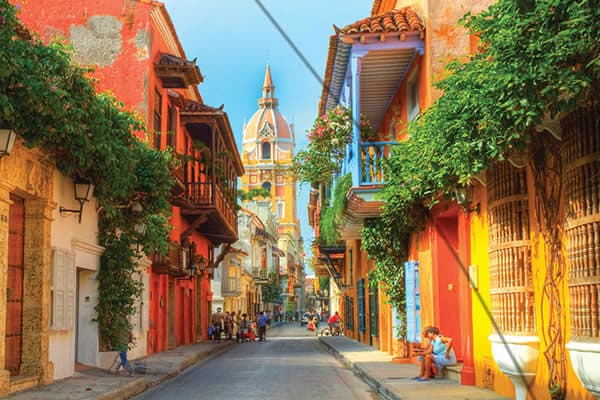
Colombia is a large, diversified Latin American economy with GDP now exceeding US$1 trillion and key sectors in services, mining, agriculture, and manufacturing.
The country also holds a strategic position as the only South American nation with coastlines on both the Caribbean (Atlantic) and Pacific, giving fast access to North American, European, and Asian trade lanes.
Goods trade between the United States and Colombia reached about US$36.6 billion in 2024, covering industrial supplies, foodstuffs, and capital equipment. Canada’s merchandise imports from Colombia were roughly US$1.4 billion in 2023, led by energy products and coffee, with growing two-way trade in services.
Several trade agreements—such as the U.S.–Colombia Trade Promotion Agreement and the Canada–Colombia FTA—facilitate reduced tariffs and predictable rules of origin, making Colombia an attractive destination for nearshoring and long-term supply partnerships.
Opportunities exist for companies shipping to Colombia across multiple sectors, including:
Shipping freight to Colombia is not just about transit times and rates. Success comes from understanding how local business culture, logistics, and regulation actually work on the ground—and having a freight forwarder that can bridge those differences for you when shipping to Colombia.
Spanish is the official business language, and while many logistics and corporate contacts in major cities speak English, it’s not guaranteed at all levels of the supply chain. Providing bilingual documentation and having a partner who can communicate clearly in both English and Spanish reduces errors and speeds up problem-solving.
In terms of etiquette and time:
LAC’s multilingual team and long presence in the region help you navigate these nuances while keeping your logistics conversations efficient and to the point.
Colombia’s geography makes logistics more challenging than it looks on a map. The main ocean gateways—Cartagena, Barranquilla, Santa Marta on the Caribbean and Buenaventura on the Pacific—are far from major inland consumer and industrial centers such as Bogotá, Medellín, and Cali, separated by the Andes and long road corridors.
This setup creates several realities North American shippers must plan for:
LAC manages this by coordinating your ocean freight to Colombia or air freight to Colombia together with vetted inland carriers, bonded warehouse options when needed, and local customs brokers who understand your product profile.
Customs is often where shipments to Colombia gain or lose days. Common delay triggers include:
Because customs and cargo security issues are known challenges in the Colombian logistics market, shippers that treat documentation as an afterthought often see their shipping costs to Colombia rise through storage, demurrage, and additional handling.
Here’s how LAC helps mitigate those risks before your freight even leaves North America:
Accurate documentation and proper HS classification are the single best “insurance policy” against customs problems in Colombia. With LAC’s regional expertise and long-standing local partnerships, you can focus on growing sales while we take care of the logistics.
As a specialized freight forwarder for shipping to Colombia, LAC – Latin American Cargo plans flexible multimodal solutions from the United States and Canada into Colombia’s main ports and airports. Whether you need to ship cargo to Colombia regularly or just a single project, we combine routing, mode, and service level to balance speed and total landed cost.
We coordinate ocean and air options, inland trucking, and customs clearance Colombia side so your team deals with one point of contact instead of multiple providers. Our goal is to keep your supply chain predictable—even on the most complex lanes.
For heavy, non-urgent or bulk shipments, ocean freight to Colombia (also known as sea freight) is usually the most cost-effective option. LAC offers:
We serve Colombia’s main seaports—Cartagena, Barranquilla, Santa Marta on the Caribbean and Buenaventura on the Pacific—leveraging our vast carrier network. Additionally, if you need door-to-door service, we can arrange inland trucking to your final destination.
When deadlines are tight or cargo is high value, air freight to Colombia keeps your supply chain moving. We work with main North American airlines to move your shipment into Colombia’s primary cargo airports in Bogotá, Medellín, Cali, Cartagena and Barranquilla.
Our air services include:
LAC’s freight shipping solutions are built around the country’s key import needs. We routinely ship:
If your cargo doesn’t fit neatly into a standard category, our team can still design a custom plan to ship cargo to Colombia safely and compliantly.
Understanding shipping costs to Colombia and realistic transit times is essential for planning inventory, sales commitments, and cash flow. Market conditions change, but LAC helps you benchmark options at the quote stage and select the most efficient alternative.
Below is a reference price table based on recent market rates for standard commercial cargo from major US and Canadian gateways to Colombia. These are approximate freight-only ranges (not a full quote) and exclude duties, customs fees, insurance, and most local origin/destination charges.
| Mode & Service | Shipment Example | Approx. Freight* (USD) |
| Ocean FCL – 20′ container | 15–25 CBM, up to ~20,000 kg, port-to-port | 1,500 – 4,000+ |
| Ocean FCL – 40′ container | 40–55 CBM, up to ~26,000 kg, port-to-port | 2,500 – 6,000+ |
| Ocean LCL – consolidated cargo | 3–10 CBM of palletized cargo, port-to-port | 150 – 200+ / CBM |
| Air freight – standard | ~300 kg pallet, airport-to-airport | ~2.50 – 6.00 / kg |
| Air freight – express | 30–70 kg time-critical shipment, often door-to-door or with priority | ~8.00 – 15.00+ / kg |
| Origin Region | Destination Port | Approx. Transit Time* | Notes |
| US East/Gulf Coast (e.g. Miami, Houston) | Cartagena / Barranquilla | ~5–10 days | Transit time varies by carrier, service, and schedule |
| Eastern Canada (e.g. Montréal, Halifax) | Cartagena | ~10–14 days | Often involves transshipment, depending on service |
| US West Coast | Buenaventura | ~12–20 days | Typically routed via Panama |
*These ranges are referential only and can go lower or higher based on origin, destination, season, fuel, capacity, Incoterms, and value-added services.
When you request a tailored quote from LAC, we calculate precise pricing for your specific lane, commodity, and volume, and break down all components so you understand your full landed cost.
Many variables influence your final shipping costs to Colombia:
When you request a quote from LAC, we walk through these factors with you and propose alternatives, so you can choose the cost–service combination that fits your priorities.
Our team of logistics experts is ready to optimize your supply chain and deliver seamless shipping solutions.

Customs is where well-planned freight shipping to Colombia either moves smoothly—or gets delayed with unexpected costs. Colombia’s customs authority, DIAN (Dirección de Impuestos y Aduanas Nacionales), applies specific rules for import declarations, documentation, and valuation.
LAC coordinates closely with licensed customs brokers and your importer of record to keep the Colombian customs clearance process predictable, helping you avoid delays, fines, and unplanned storage charges.
For most commercial imports, the standard documentation set includes:
LAC’s team can review your paperwork before the shipment leaves, reducing the risk of customs holds and added shipping costs to Colombia.
Colombia applies additional controls for certain products and risk categories. Key points to consider include:
Regulations can change, so LAC coordinates with your local customer and customs broker to verify current rules before you ship cargo to Colombia.
Although each shipment is unique, the customs clearance Colombia process typically follows these steps:
For most commercial imports, working through a licensed customs broker is mandatory.
Correct HS classification and valuation are critical for controlling total import costs:
Understanding Colombia’s main gateways helps you choose the best routes and manage transit times when you ship cargo to Colombia.
Colombia relies heavily on seaborne trade, with most international cargo moving through a handful of major ports on the Caribbean and Pacific coasts.
| Seaport | Location | Cargo Profile & Typical Use |
| Port of Cartagena | Caribbean coast (northern Colombia) | Colombia’s leading container and transshipment hub, linking North America, Europe, and Asia via the Panama Canal; primary gateway for FCL and LCL imports from the U.S. East/Gulf Coast and Eastern Canada. |
| Port of Buenaventura | Pacific coast | Main Pacific gateway for Asia-linked trade; handles containers, bulk, and project cargo. Preferred for U.S. West Coast and Asia routes serving inland industrial zones such as Cali and the Cauca Valley. |
| Port of Barranquilla | Caribbean coast (mouth of Magdalena River) | Multipurpose port handling containers, bulk, and breakbulk; strategic for cargo serving northern Colombia and inland regions via the Magdalena River corridor. |
| Port of Santa Marta | Caribbean coast | Deep-water terminal handling containers, coal, liquid bulk, and refrigerated exports (notably fruit); well-suited for reefer cargo requiring specialized temperature-controlled infrastructure. |
For air freight to Colombia, one airport dominates cargo flows, with several secondary ones.
| Airport | IATA Code | City / Region | Role / Typical Use |
| El Dorado International Airport | BOG | Bogotá / central Colombia | Colombia’s primary air-cargo hub and one of Latin America’s largest (>800,000 tons/year); main gateway for most freight from the U.S. and Canada, especially high-value and time-critical shipments. |
| José María Córdova International Airport | MDE | Medellín / Antioquia | Second-largest cargo airport; key export hub for flowers and perishables, serving Medellín and the broader Antioquia region. |
| Alfonso Bonilla Aragón International Airport | CLO | Cali / Cauca Valley | Major cargo node for the Cauca Valley industrial corridor; supports manufacturing inputs, agro-industrial exports, and distribution across southwest Colombia. |
| Ernesto Cortissoz International Airport | BAQ | Barranquilla / Caribbean coast | Coastal regional gateway handling mixed passenger and cargo operations; alternative entry point for freight serving Barranquilla and the Caribbean region. |
| Rafael Núñez International Airport | CTG | Cartagena / Caribbean coast | Secondary coastal cargo gateway supporting regional import/export flows, particularly shipments linked to Cartagena and nearby free-trade zones. |
Because Colombia’s terrain makes inland transport complex, choosing the right final hub is as important as choosing the right port or airport.
Main logistics and industrial centers include:
With more than 25 years of experience specializing in Latin American logistics, LAC provides the regional expertise required to ship cargo to Colombia efficiently and without unexpected delays. Our teams understand Colombia’s import regulations, port infrastructure, and customs procedures, ensuring your shipment moves seamlessly from origin to final delivery.
What sets LAC apart:
Shipping to Colombia becomes simpler, more predictable, and cost-effective when you have a regional logistics expert managing every detail.
Below are clear answers to the questions North American shippers most often ask about freight shipping to Colombia.
LAC combines regional expertise, strong carrier networks, and hands-on support to make freight shipping to Colombia from the USA and Canada simpler and more predictable. Whether you need ocean, air, or a mix of both, we’ll help you find the right option.
Request your quote today and let us take care of the logistics.

When it comes to shipping cargo to Colombia, LAC is your best logistics partner Contact us today and get the most competitive shipping solutions
Learn from the experiences of those who matter most: our customers









 LAC Blog
 Export Guides
 Transport Guides
 Logistics Glossary
 Container Types & Sizes
 Incoterms 2020 Rules