

 Request a Quote
Start shipping now
Request a Quote 
Start shipping now
Request a Quote
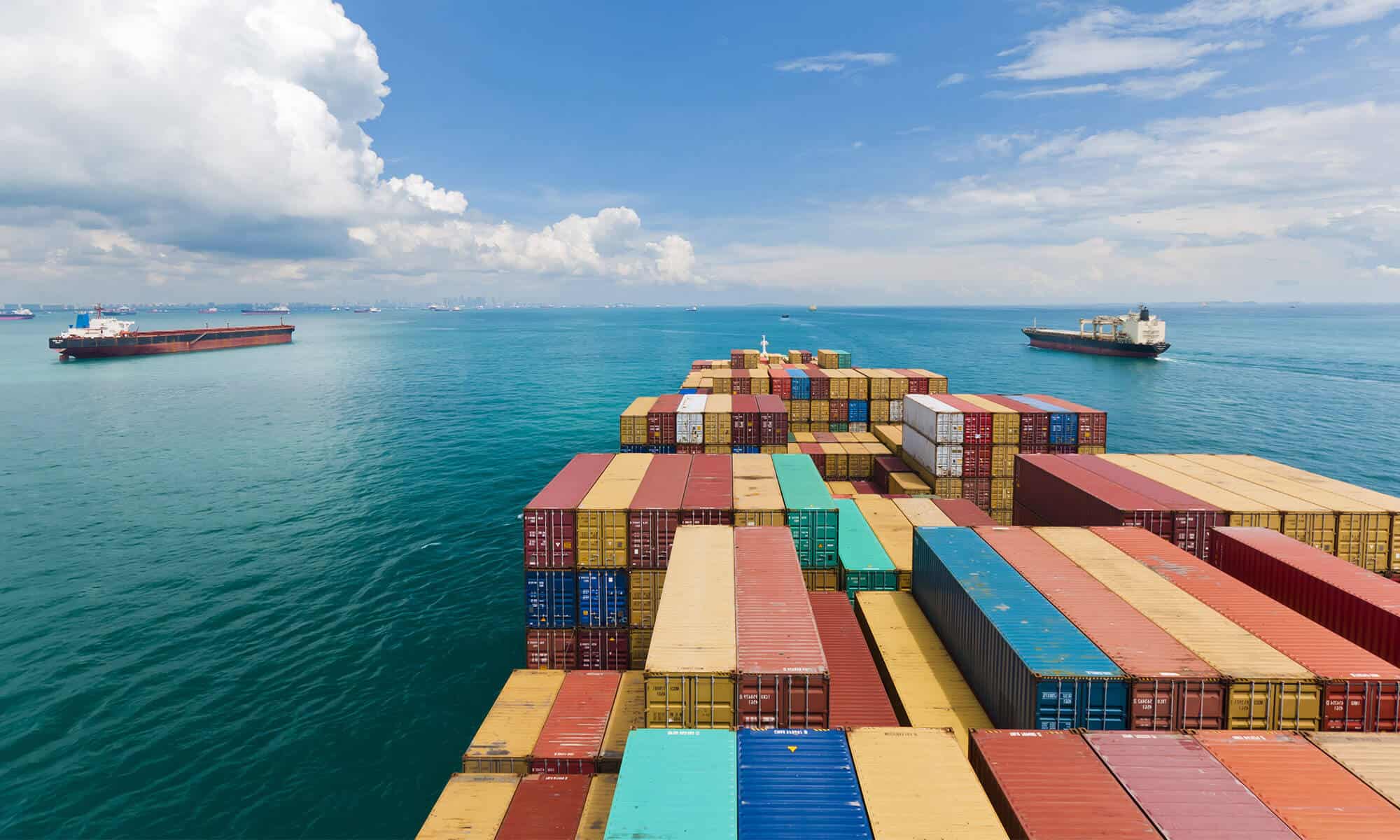
If you’re planning container shipping operations to Colombia, you need reliable transit times, competitive rates, and a freight forwarder that understands the local market. LAC – Latin American Cargo specializes in ocean freight between North America and Latin America, helping shippers move everything from single pallets to full container loads safely and cost-effectively.
We support exporters and importers across the United States and Canada with flexible FCL and LCL services to and from all major Colombian ports across the Caribbean and Pacific oceans. Our team combines regional expertise, bilingual support, and a strong carrier network to simplify your logistics, end-to-end.
Remember, at LAC we also offer a full range of specialized freight services to Colombia that your company needs to expand its business:
Container shipping to Colombia is an ideal solution if you need:
With more than 25 years of experience in LATAM logistics, LAC helps shippers navigate Colombia’s port systems, routing options, and regulatory requirements. Our team delivers tailored container shipping solutions with full visibility, proactive communication, and end-to-end coordination.
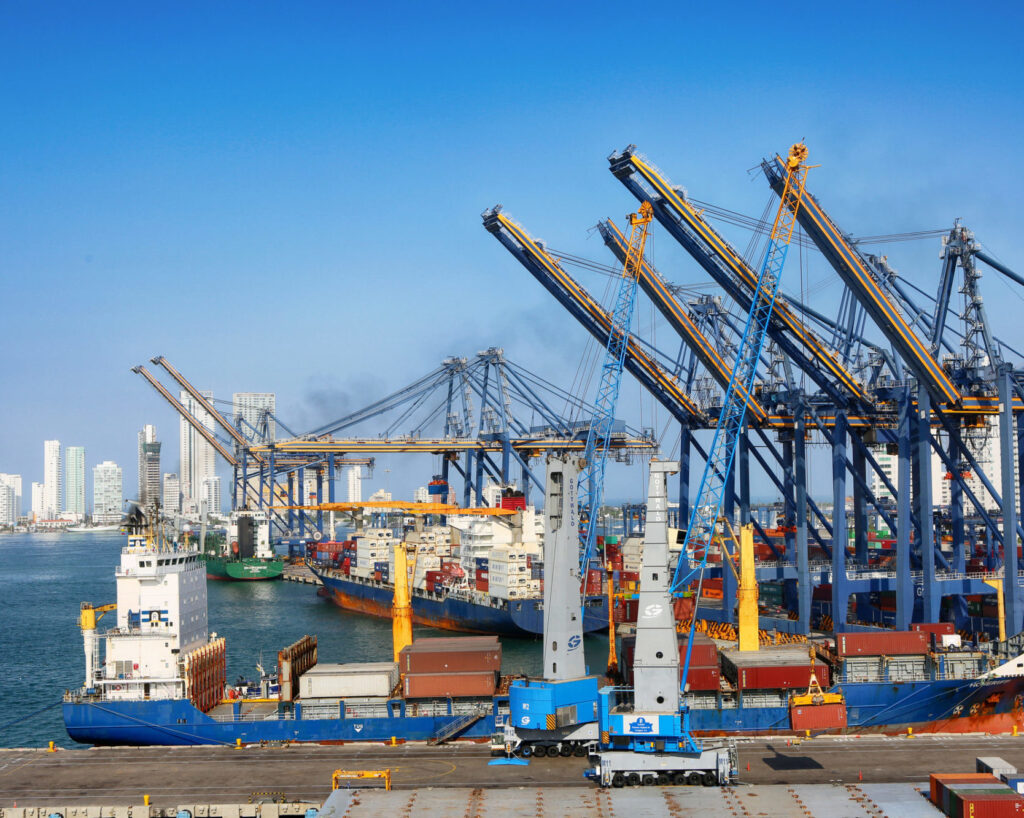
We offer the full range of ocean freight solutions from the USA and Canada to Colombia, tailored to your volume, lead time, and budget.
FCL is ideal if you:
Typical use cases include:
LCL is ideal when your volume doesn’t justify a full container. With LCL freight service to Colombia, your cargo shares container space with other shippers, and you pay only for the volume (CBM) and weight you use.
LCL works well for:
We consolidate cargo at main North American hubs and move it in weekly or regular LCL services into Colombia. Our operations team focuses on reducing delays during deconsolidation and customs clearance so your LCL shipments still move smoothly.
Container shipping to Colombia is usually planned around two routing patterns: Caribbean access and Pacific access. As a rule of thumb, cargo moving from the U.S. East Coast, Gulf Coast, and Eastern Canada is often evaluated through Colombia’s Caribbean gateways, while shipments from the U.S. West Coast and Western Canada may be better aligned with Pacific routings through Buenaventura. That routing choice depends on carrier coverage, final inland destination, cargo type, and whether the shipment is moving as FCL or LCL.
Cartagena is one of the country’s most important container gateways and a strong option for importers looking for frequent service connections on Colombia’s Caribbean side.
For many shippers, Cartagena is a practical choice when cargo is moving from North America into Colombia with a need for reliable container handling and solid network access. It is often considered for both FCL shipping to Colombia and LCL cargo that benefits from strong consolidation and deconsolidation infrastructure.
Buenaventura is Colombia’s leading Pacific gateway for containerized cargo and is especially relevant when the service plan favors west coast access.
For shippers evaluating cargo from western North America, Buenaventura is often the first port to consider. It can be a strong fit for companies that want Pacific routing options or need a gateway that aligns better with carrier services originating on the U.S. West Coast or from Western Canada.
Barranquilla is another important Colombian gateway and serves as a multipurpose logistics platform on the Caribbean side. The port highlights its logistics role and container-related services, including an inspection yard for containers, which can be relevant for importers that need an alternative to Cartagena depending on route availability, cargo profile, or inland delivery strategy.
Santa Marta is a useful option for certain container flows into Colombia, especially when shippers need a northern gateway with dedicated container infrastructure. The Port of Santa Marta states that its container terminal includes gantry cranes, RTGs, reefer capacity, CFS capability, and a static storage capacity of 7,350 TEUs, making it a credible choice for containerized imports and temperature-sensitive cargo.
Santa Marta may be worth considering when cargo requirements, equipment needs, or port operations make it a better fit than other Caribbean entries. For businesses comparing container shipping rates to Colombia, looking at Santa Marta alongside Cartagena and Barranquilla can sometimes uncover more suitable routing combinations.
| Main route | Main Colombia port | Indicative ocean transit time | Practical takeaway |
| South Florida / U.S. Gulf / U.S. East Coast → Colombia Caribbean | Cartagena | 4–8 days direct. | Best fit for fast Caribbean-side access; Cartagena is one of Colombia’s main container and logistics hubs. |
| U.S. East Coast / U.S. Gulf → Northern Colombia | Barranquilla | ~12–22 days, depending on origin. | Good alternative northern gateway; the port highlights 117 bays for authorities’ container inspection. |
| U.S. West Coast → Pacific Colombia | Buenaventura | ~2–3 weeks typical. | Main Pacific option; Buenaventura’s terminal is about 16 hours from the Panama Canal. |
| Atlantic Canada → Colombia Caribbean | Cartagena | ~14–23 days from Halifax on representative services. | Useful benchmark for Canadian cargo when routing through Atlantic Canada. |
| Central / Eastern Canada → Colombia Caribbean | Cartagena | ~32–33 days from Montréal/Toronto on representative services. | Good planning baseline for shippers moving containers from central and eastern Canada. |
The best route into Colombia depends on more than just the ocean freight rate. Shippers should compare origin location, carrier schedules, container type, LCL versus FCL strategy, destination delivery requirements, and the strengths of each Colombian port before booking. For example, a company looking to ship a 40ft container to Colombia from Canada may reach a different routing decision than a U.S. exporter moving smaller LCL cargo into the market.
Working with an experienced logistics partner helps narrow those choices quickly. Instead of defaulting to the cheapest port on paper, shippers can select the route that offers the best balance of transit efficiency, port handling capability, and final delivery performance in Colombia.
Our team of logistics experts is ready to optimize your supply chain and deliver seamless shipping solutions.

When shippers search for container shipping rates to Colombia, they usually want to understand what drives cost. The main factors include:
When you request a quote, LAC provides route-specific rates that reflect current carrier prices and local charges. For many lanes, we can benchmark your costs and suggest whether FCL or LCL is more economical at your current volume.
A wide range of cargo can be shipped to Colombia by container from the USA and Canada. For many businesses, container shipping is a practical solution for moving commercial goods safely, efficiently, and at scale.
Common cargo types include:
Both FCL and LCL services can support these shipment types, depending on volume, cargo characteristics, and delivery requirements. Businesses shipping larger or more sensitive loads often choose FCL for better control and reduced handling, while smaller shipments may be better suited for LCL.
Some products can also be shipped to Colombia by container but may require additional review before import. This often applies to food products, beverages, cosmetics, pharmaceuticals, medical-related items, agricultural goods, and animal-origin products. In these cases, importers may need specific permits, registrations, health approvals, or other supporting documentation before the cargo can be cleared.
Because import rules vary by product, it is important to confirm requirements before the shipment is booked. This helps avoid customs delays, unexpected costs, or problems at destination.
A knowledgeable freight forwarder can help you determine:
For companies planning regular shipments, taking these steps early can make container shipping to Colombia more predictable and cost-effective.
Here’s how a typical container shipment with LAC flows from the USA or Canada to Colombia:
At each step, our team proactively manages timelines and communicates any schedule changes, so you maintain visibility and control.
Choosing the right freight forwarder for shipping to Colombia is critical when you rely on just-in-time flows and must manage local regulations and infrastructure.
Working with LAC gives you:
Our goal is to make your Colombia trade lane predictable, transparent, and scalable as your volumes grow.
Learn from the experiences of those who matter most: our customers









 LAC Blog
 Export Guides
 Transport Guides
 Logistics Glossary
 Container Types & Sizes
 Incoterms 2020 Rules