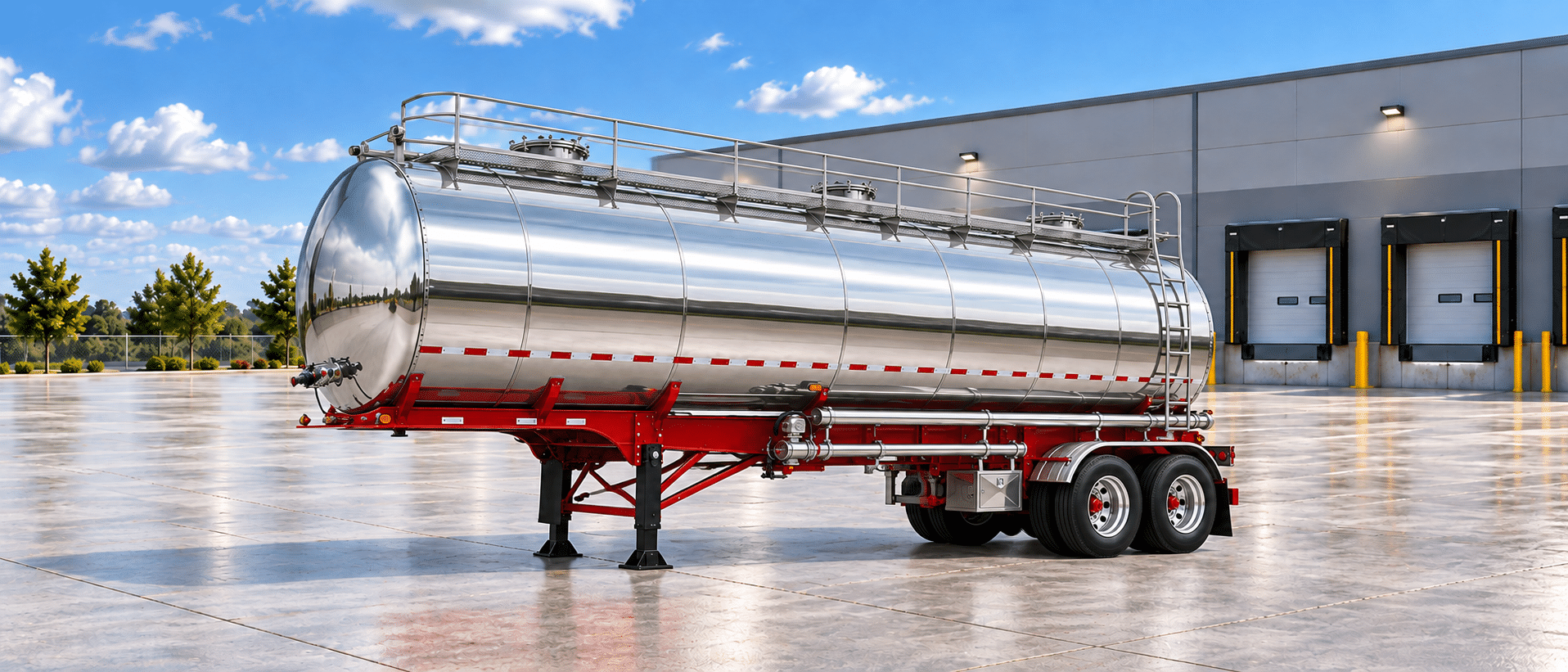
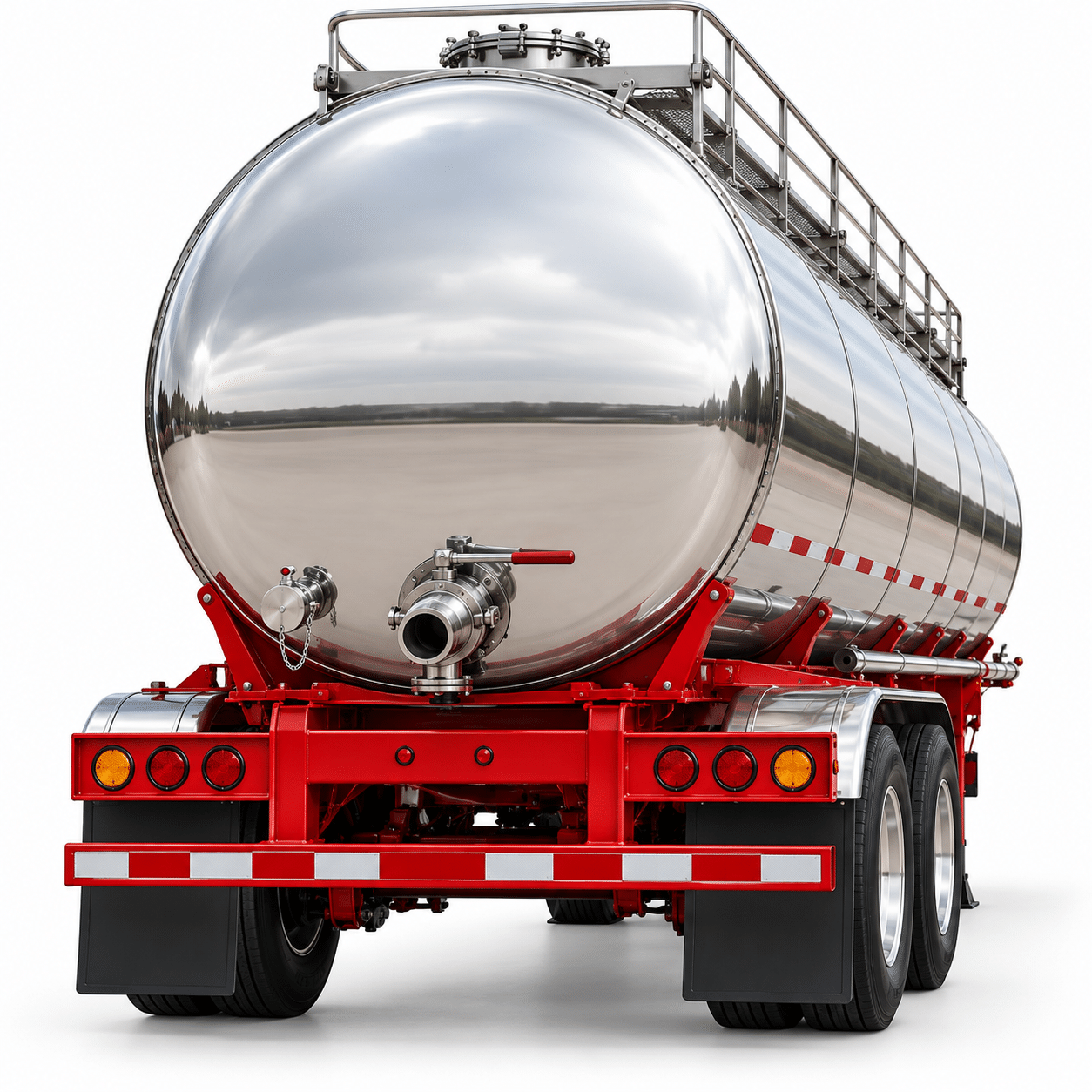
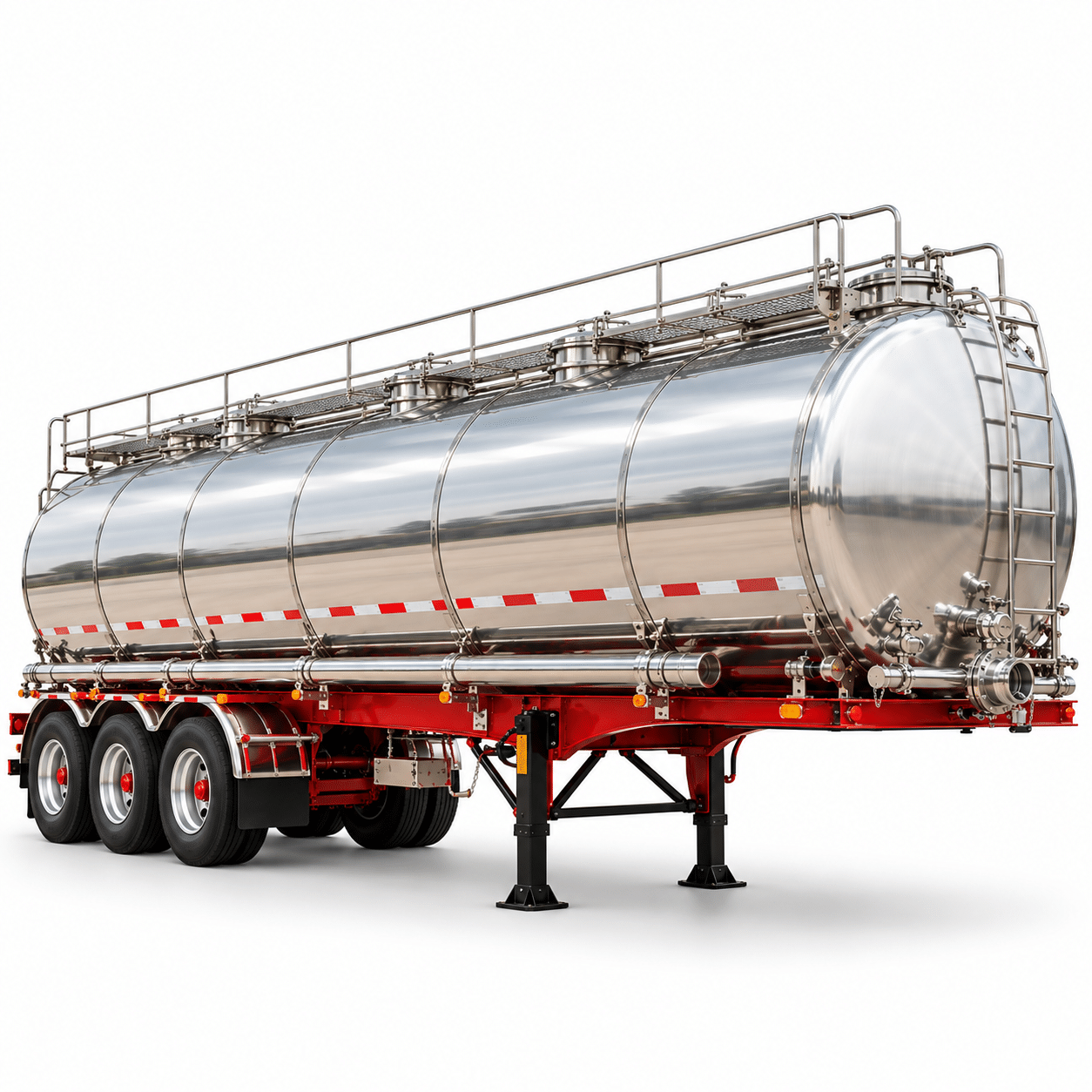
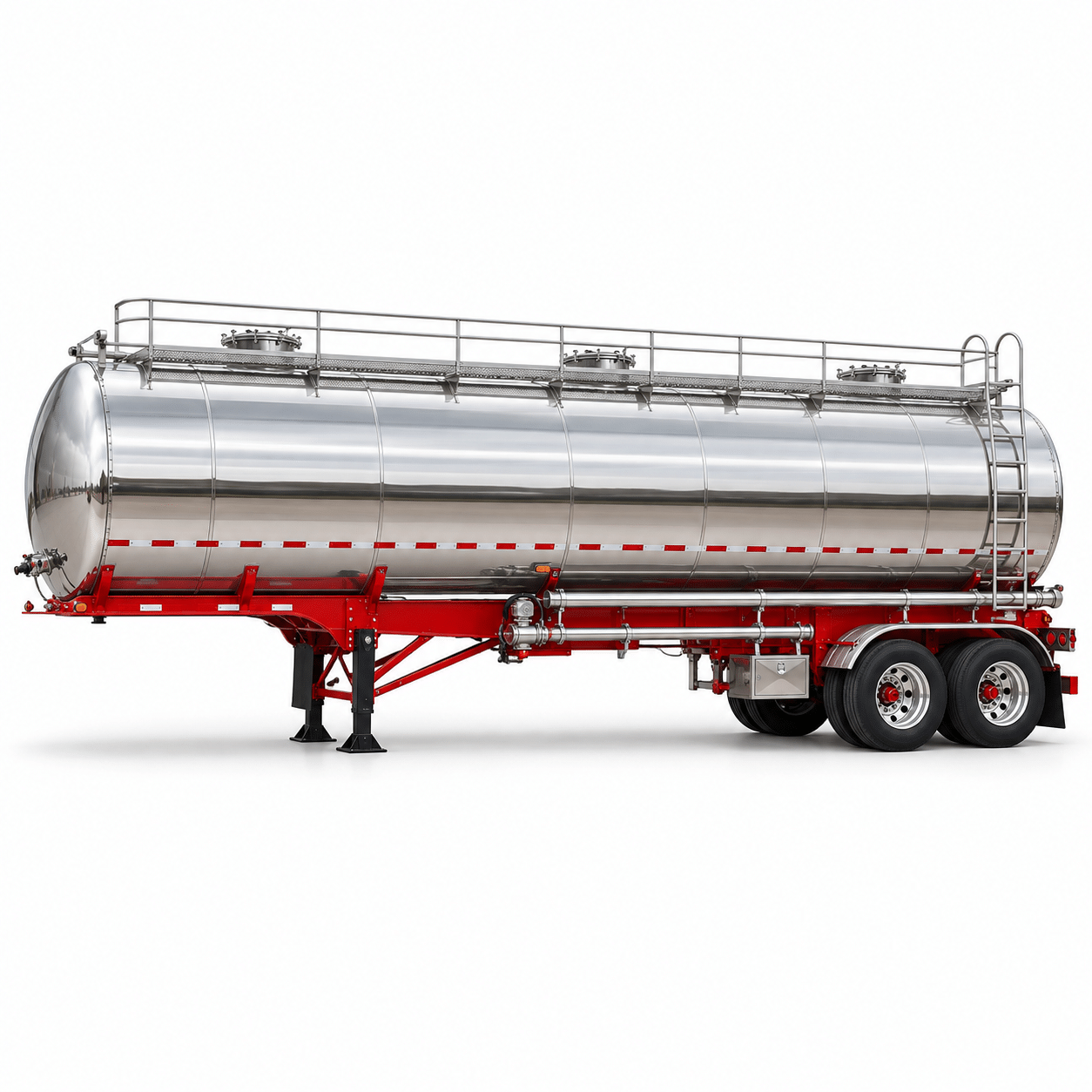
Liquid Bulk Tanker trailers are specialized trailers designed to transport liquids in bulk rather than in individual drums, totes, or other packaged units.
The cargo is carried directly inside a sealed tank mounted to the trailer chassis. Tank construction, material, capacity, insulation, compartment configuration, and discharge equipment vary according to the specific liquid being transported.
Because different liquids have different density, sanitation, temperature, and compatibility requirements, the exact tanker configuration should always be selected based on the commodity.
Key characteristics:
Enclosed tank designed for bulk liquids
Cargo transported directly inside the tank
Available in stainless steel and other application-specific materials
Single- or multi-compartment configurations available
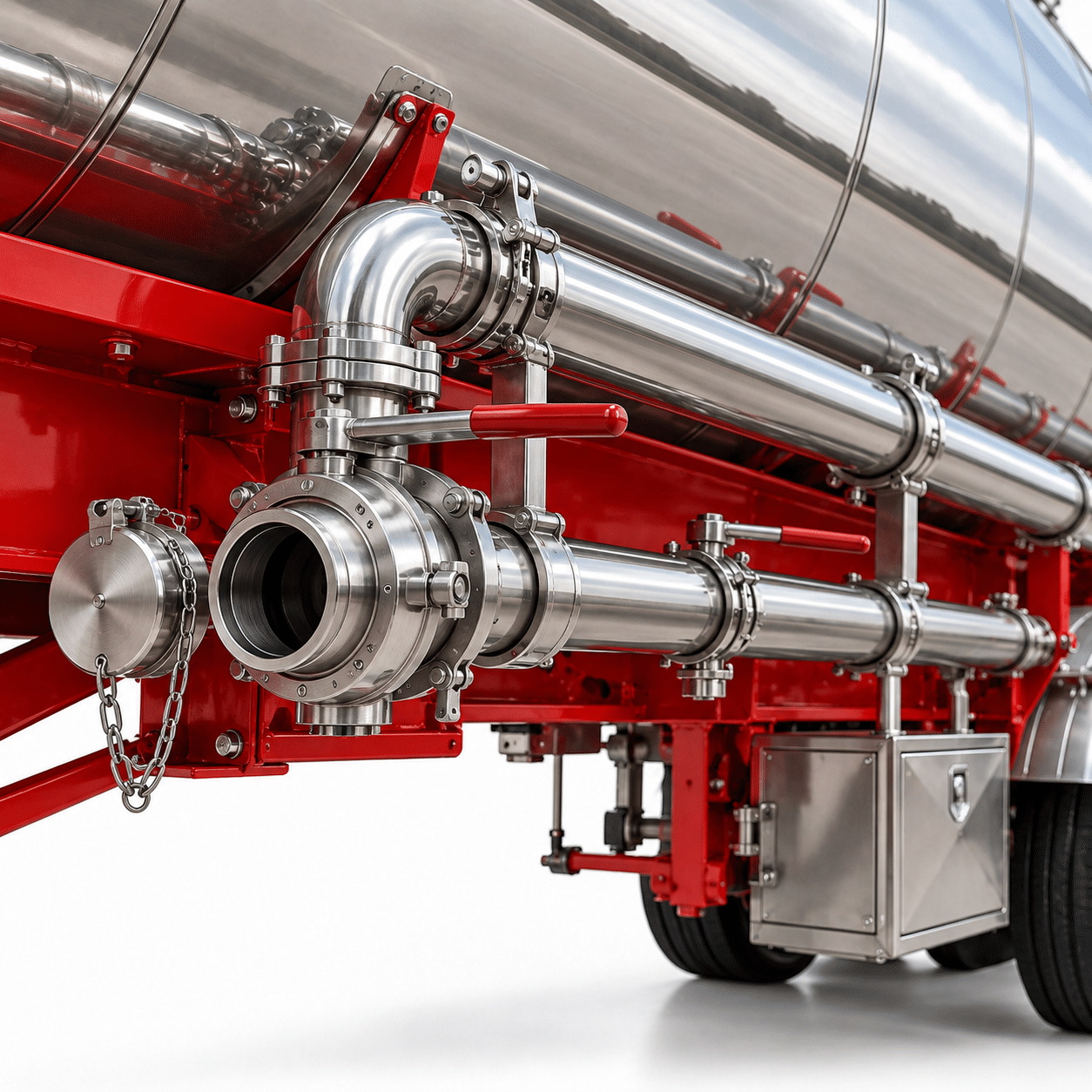
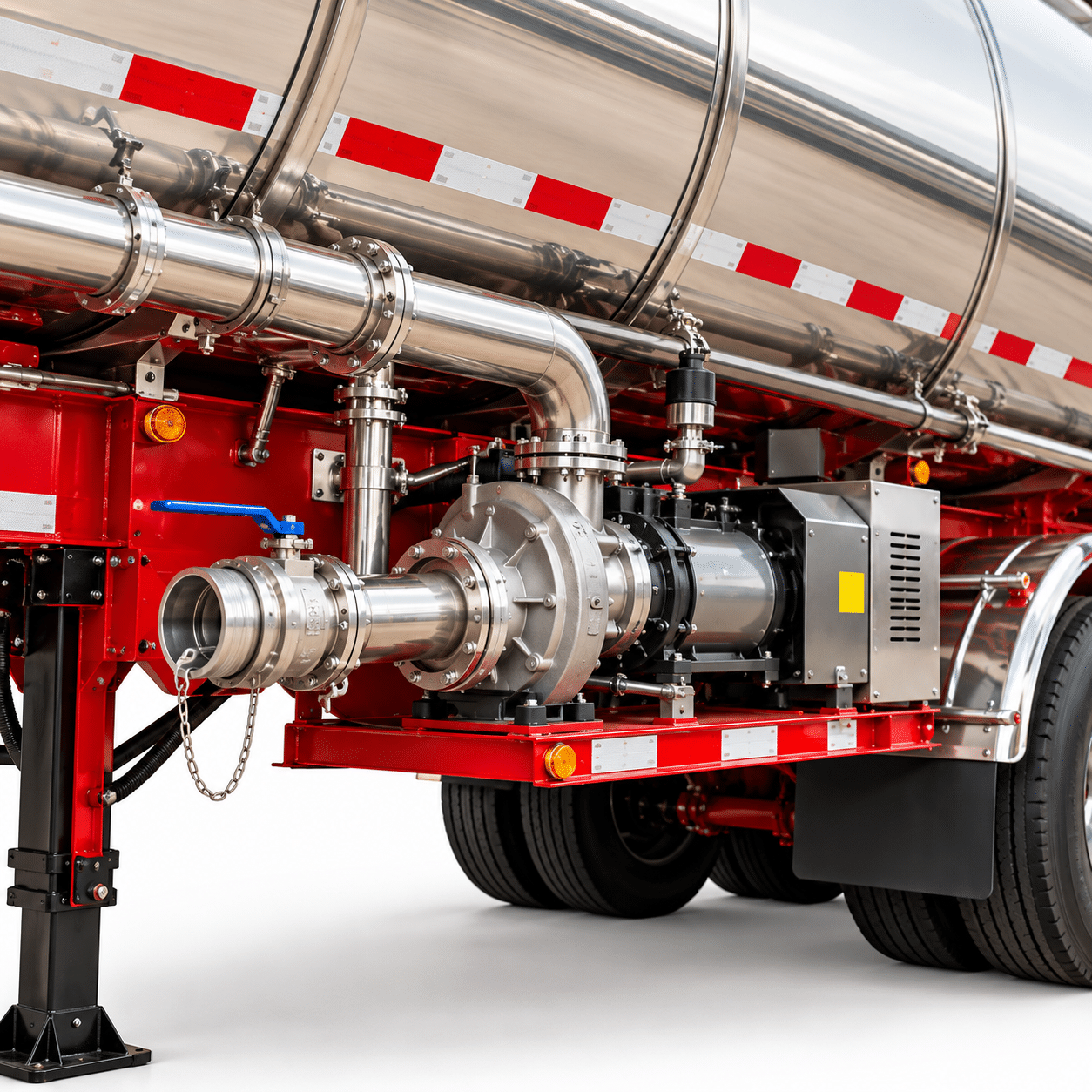
Pump, gravity, or other discharge systems depending on equipment
Insulated or heated configurations available for certain products
Available in different axle configurations
Equipment requirements vary significantly by commodity
Commonly used for food-grade, industrial, and other compatible liquid products
Food-grade tanker manufacturers commonly use stainless steel construction, while capacity and equipment vary according to the product and application.
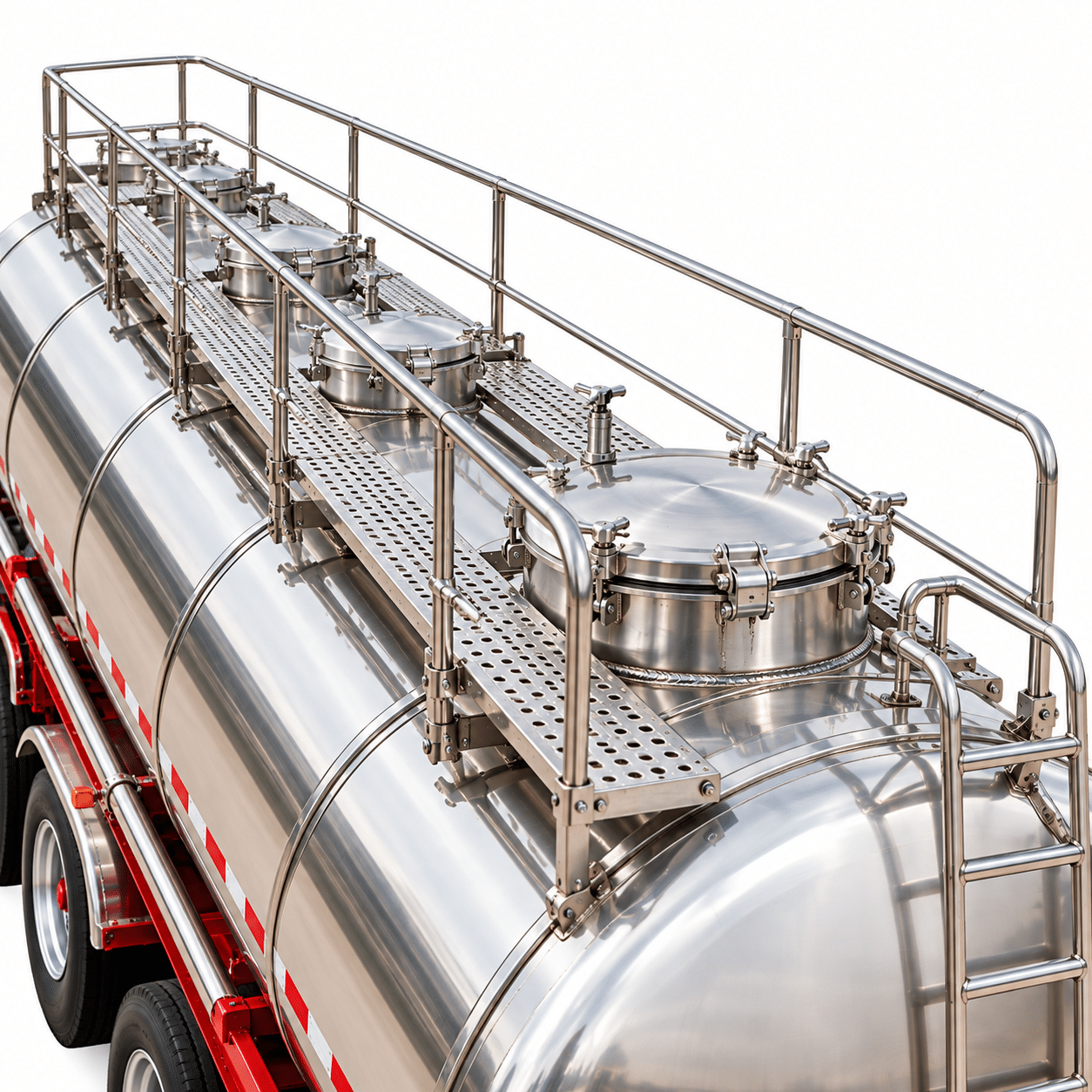
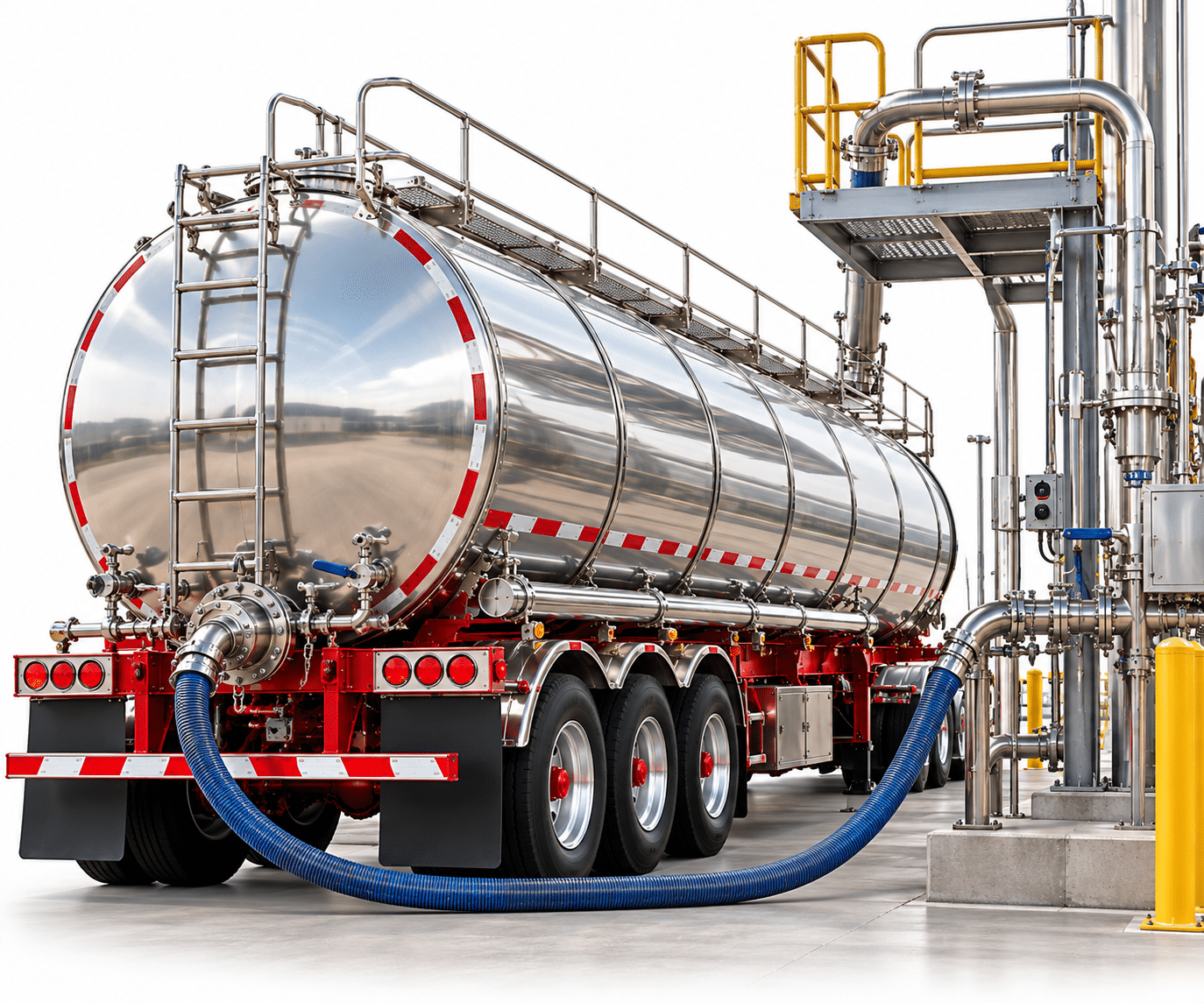
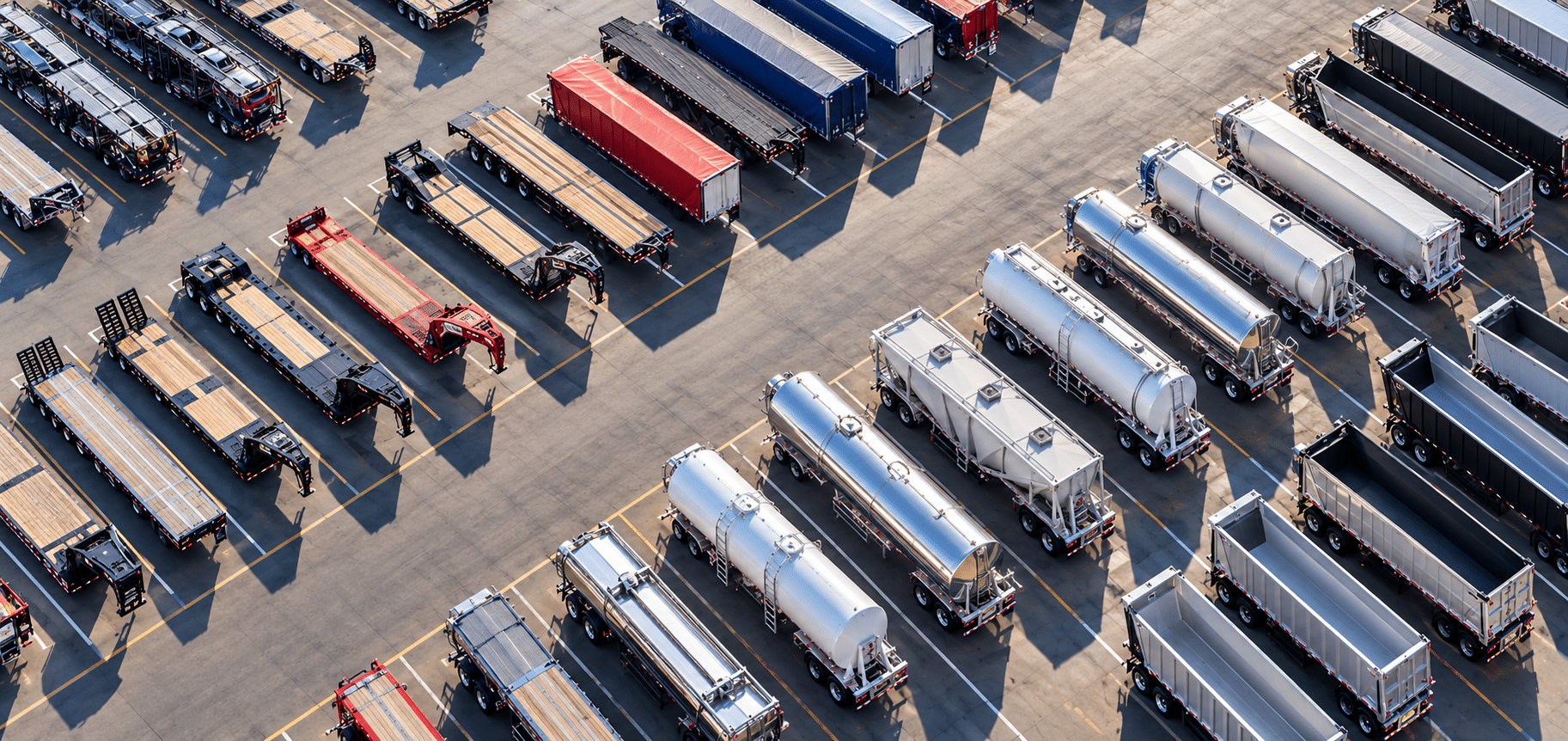
Liquid Bulk Tanker Trailer Image Gallery
Available Sizes & Configurations
Liquid Bulk Tankers are available in many configurations because the required equipment depends heavily on the product being transported.
Common configurations may include:
Food-Grade Tanker
Chemical Tanker
Insulated Tanker
Heated Tanker
Single-Compartment Tanker
Multi-Compartment Tanker
Tandem-Axle Tanker
Tri-Axle Tanker
Food-grade examples currently available in North America include stainless steel trailers with capacities around 6,000–6,800 gallons, while other liquid tanker categories can differ substantially in volume and design.
The required configuration should be selected according to:
Liquid type
Product density
Required tank material
Temperature requirements
Sanitation requirements
Tank capacity
Loading and unloading method
Applicable transportation regulations
Typical Dimensions & Capacity
Specification
Typical Example / Range
Tank Capacity
Approx. 6,000–6,800 gal on current food-grade examples
Tank Material
Stainless steel common for food-grade applications
Compartments
Single or multiple depending on tanker design
Axle Configuration
Tandem, tri-axle, or other configuration
Insulation
Available depending on commodity and equipment
Heating System
Available on certain configurations
Payload Capacity
Depends on liquid density, equipment tare weight, axle configuration, and regulations
Current food-grade equipment examples include 6,000-gallon tri-axle milk tankers, 6,400-gallon juice tankers, and 6,800-gallon stainless steel food-grade trailers.
Note: Tank volume does not automatically equal allowable cargo payload. The actual quantity that can be loaded depends on product density, tanker tare weight, axle configuration, cargo distribution, and applicable road weight regulations.
Liquid Bulk Tankers are best suited for shipments where the product can move efficiently and safely as an unpackaged bulk liquid.
The exact tank should be matched to the commodity rather than treating all liquid tanker equipment as interchangeable.
Industries & Typical Cargo
Liquid Bulk Tankers support different industries depending on the tank material, previous cargo history, sanitation requirements, and equipment configuration.
Food & Beverage
Edible oils
Juice
Milk and dairy liquids
Food ingredients
Other compatible food-grade liquids
Agriculture
Edible agricultural oils
Liquid food ingredients
Compatible agricultural products
Manufacturing & Industrial
Industrial liquids
Liquid raw materials
Process ingredients
Compatible non-food liquid products
Specialized Liquid Cargo
Products requiring insulated tanks
Products requiring heating during transportation
Products requiring dedicated or sanitary equipment
LAC’s current operating procedures include liquid cargo movements involving coconut oil, including heating, transloading, and final delivery.
Loading & Handling Considerations
Before booking a Liquid Bulk Tanker, confirm:
Exact commodity
Total product weight
Product density
Required volume
Tank material compatibility
Food-grade or other sanitation requirements
Required temperature
Heating or insulation requirements
Loading method
Discharge method
Pump or hose requirements
Tank cleaning requirements
Previous-load restrictions, when applicable
Required seals
Number of compartments, when relevant
Origin and destination facility capabilities
Applicable regulatory requirements
Keep note of these critical factors when using tankers:
For sensitive or food-grade commodities, equipment history and cleanliness may be critical. For example, LAC’s existing coconut oil procedures require confirmation of the trailer, seals, wash documentation, clean hoses and equipment, and review of previous loads before the product is transferred into the tanker. Those requirements are specific to that operation and should not automatically be applied to every liquid shipment.
Temperature planning may also be necessary for products that must remain within a specific condition for loading, transit, or discharge. LAC’s current coconut oil workflows include coordination with heating facilities before transloading and delivery.
When Should You Choose a Liquid Bulk Tanker Trailer?
A Liquid Bulk Tanker is usually a good option when your shipment:
Consists of liquid cargo moving in bulk
Does not need to remain in drums, totes, or other individual packaging
Requires dedicated liquid-handling equipment
Requires food-grade or other commodity-compatible tank construction
May require insulation or heating
Requires controlled loading and discharge procedures
Has sufficient volume to justify bulk transportation
A different transportation method may be more appropriate when the liquid moves in smaller packaged quantities, must remain inside an ISO Tank container, or is incompatible with available road tanker equipment.
FAQs
What is a Liquid Bulk Tanker trailer?
A Liquid Bulk Tanker is a trailer with an integrated tank designed to transport liquids directly in bulk rather than as packaged cargo.
What type of cargo can move in a Liquid Bulk Tanker?
Depending on the tanker configuration, cargo may include edible oils, milk, juice, food ingredients, industrial liquids, and other compatible liquid products.
How much liquid can a tanker trailer carry?
Capacity varies according to the tanker design and commodity. Current North American food-grade examples include approximately 6,000–6,800 gallons, but tanker capacities outside this category may differ significantly.
Are all Liquid Bulk Tankers food grade?
No. Tankers are designed for different commodities and applications. Food-grade equipment requires appropriate materials and sanitary specifications, while industrial or chemical liquids may require different tank materials and systems.
Can a Liquid Bulk Tanker be heated or insulated?
Yes. Some tanker configurations include insulation or heating systems for commodities that require temperature management. One current food-grade tanker example includes polyurethane insulation and an in-transit heating system.
Why does previous cargo matter for some tanker shipments?
For products with strict sanitation or contamination requirements, previous loads may affect whether a tanker is suitable for the next commodity. The exact acceptance criteria depend on the product and customer requirements. LAC’s coconut oil procedures, for example, require review of documented previous loads before transloading.
How much weight can a Liquid Bulk Tanker carry?
Allowable cargo weight depends on the liquid’s density, tank capacity, trailer tare weight, tractor and axle configuration, weight distribution, and applicable road regulations. The specific equipment and planned quantity should therefore be confirmed before booking.
LAC coordinates Liquid Bulk Tanker and other Ground Freight solutions across North America based on your commodity, volume, equipment requirements, route, timing, and handling needs.
Learn from the experiences of those who matter most: our customers
This website uses cookies to improve your experience. We'll assume you're ok with this, but you can opt-out if you wish. Read our cookies policyACCEPT
Cookies Policy
Privacy Overview
This website uses cookies to improve your experience while you navigate through the website. Out of these cookies, the cookies that are categorized as necessary are stored on your browser as they are essential for the working of basic functionalities of the website. We also use third-party cookies that help us analyze and understand how you use this website. These cookies will be stored in your browser only with your consent. You also have the option to opt-out of these cookies. But opting out of some of these cookies may have an effect on your browsing experience.
Necessary cookies are absolutely essential for the website to function properly. This category only includes cookies that ensures basic functionalities and security features of the website. These cookies do not store any personal information.
Any cookies that may not be particularly necessary for the website to function and is used specifically to collect user personal data via analytics, ads, other embedded contents are termed as non-necessary cookies. It is mandatory to procure user consent prior to running these cookies on your website.