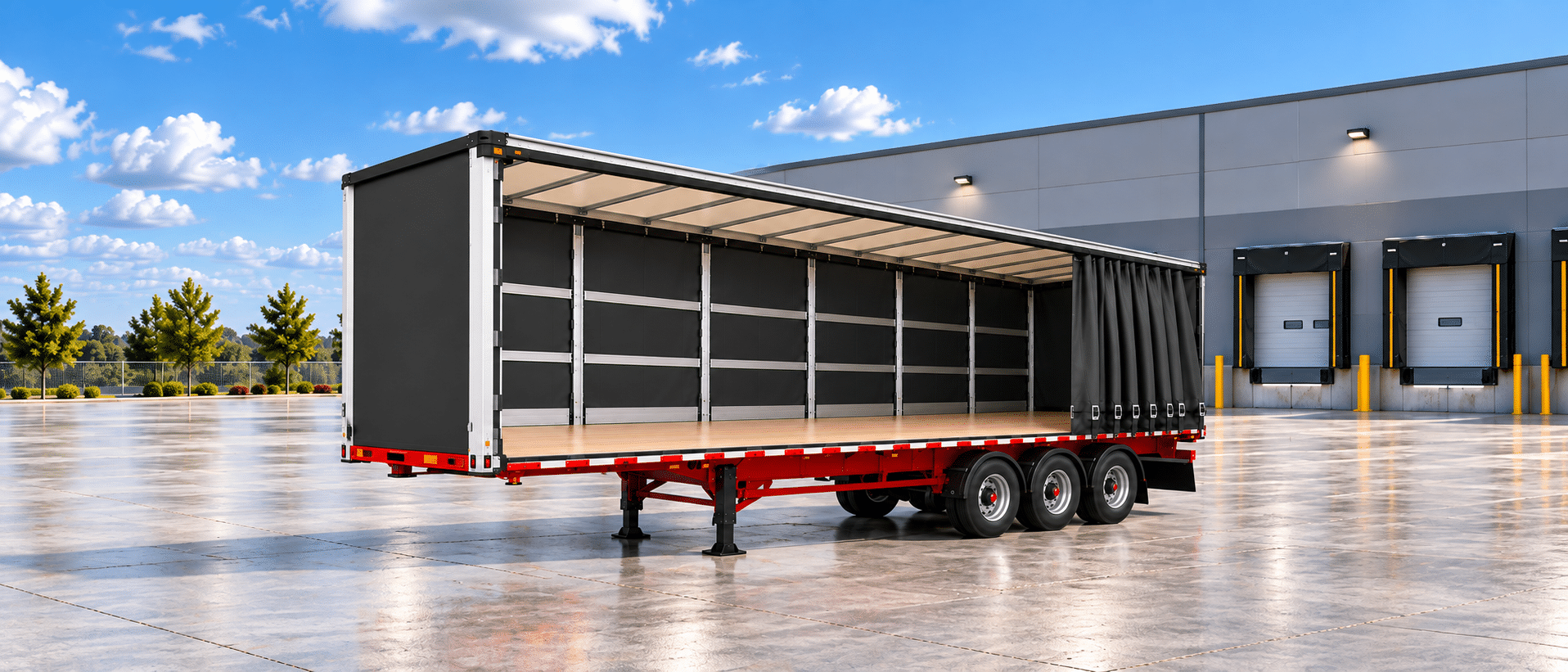
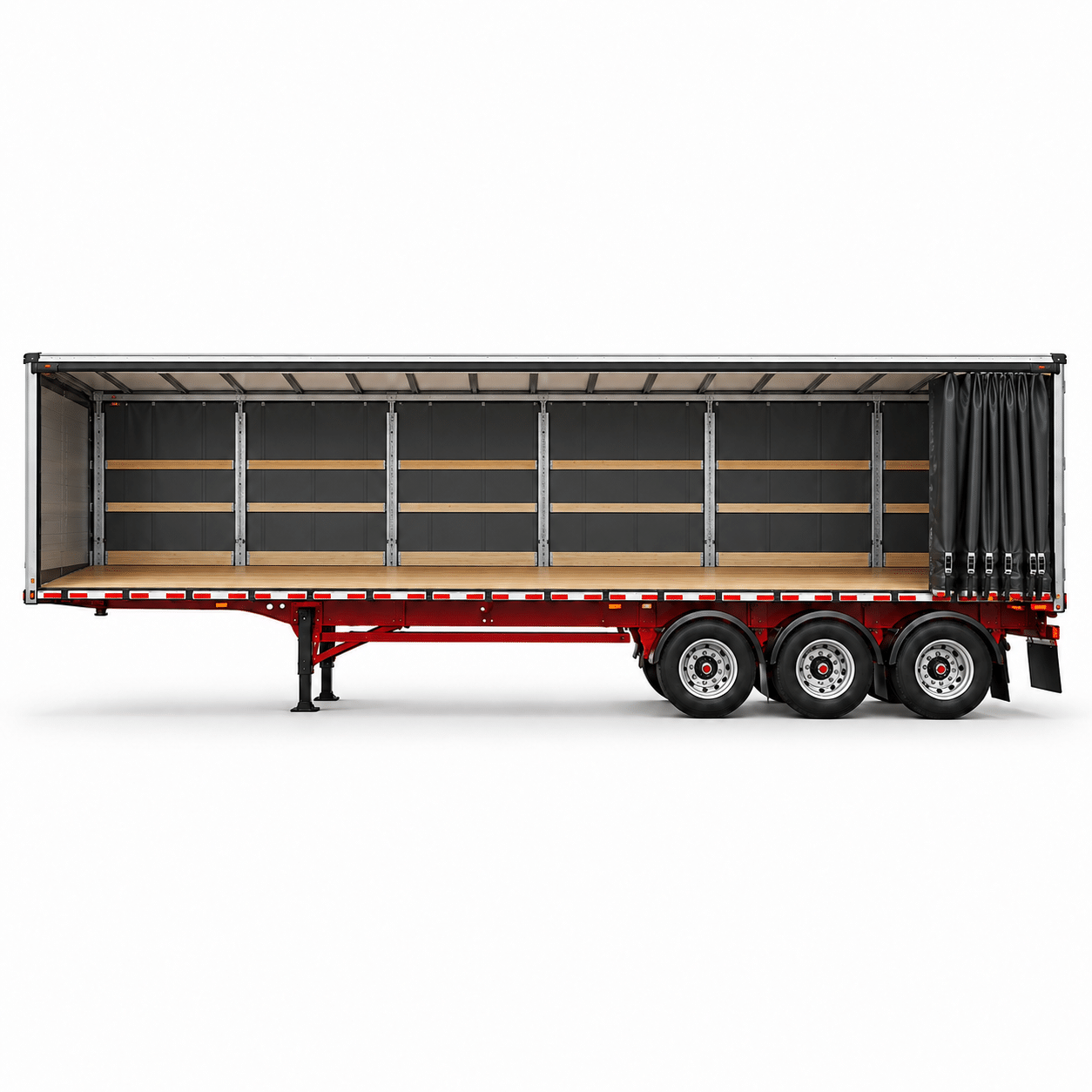
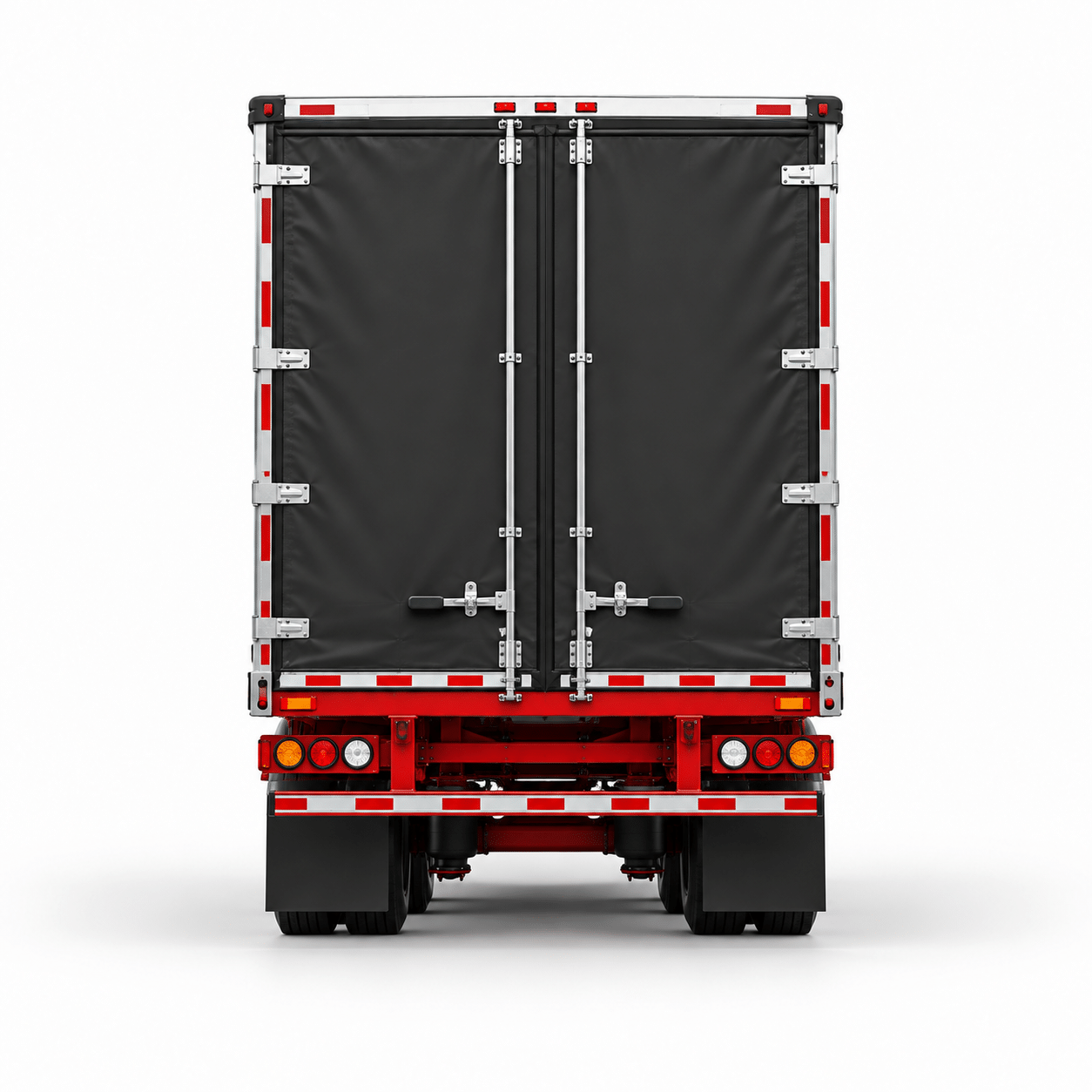
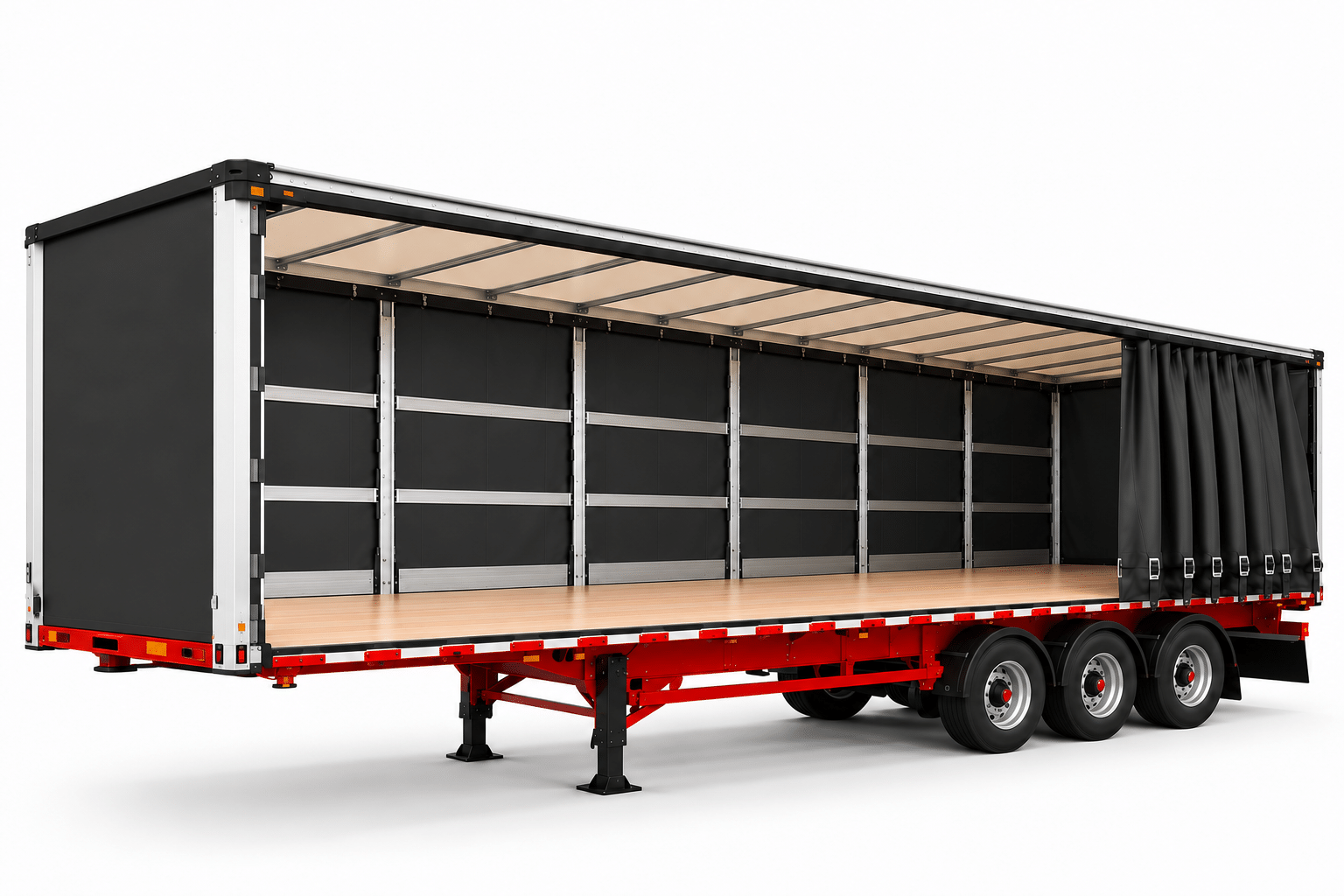
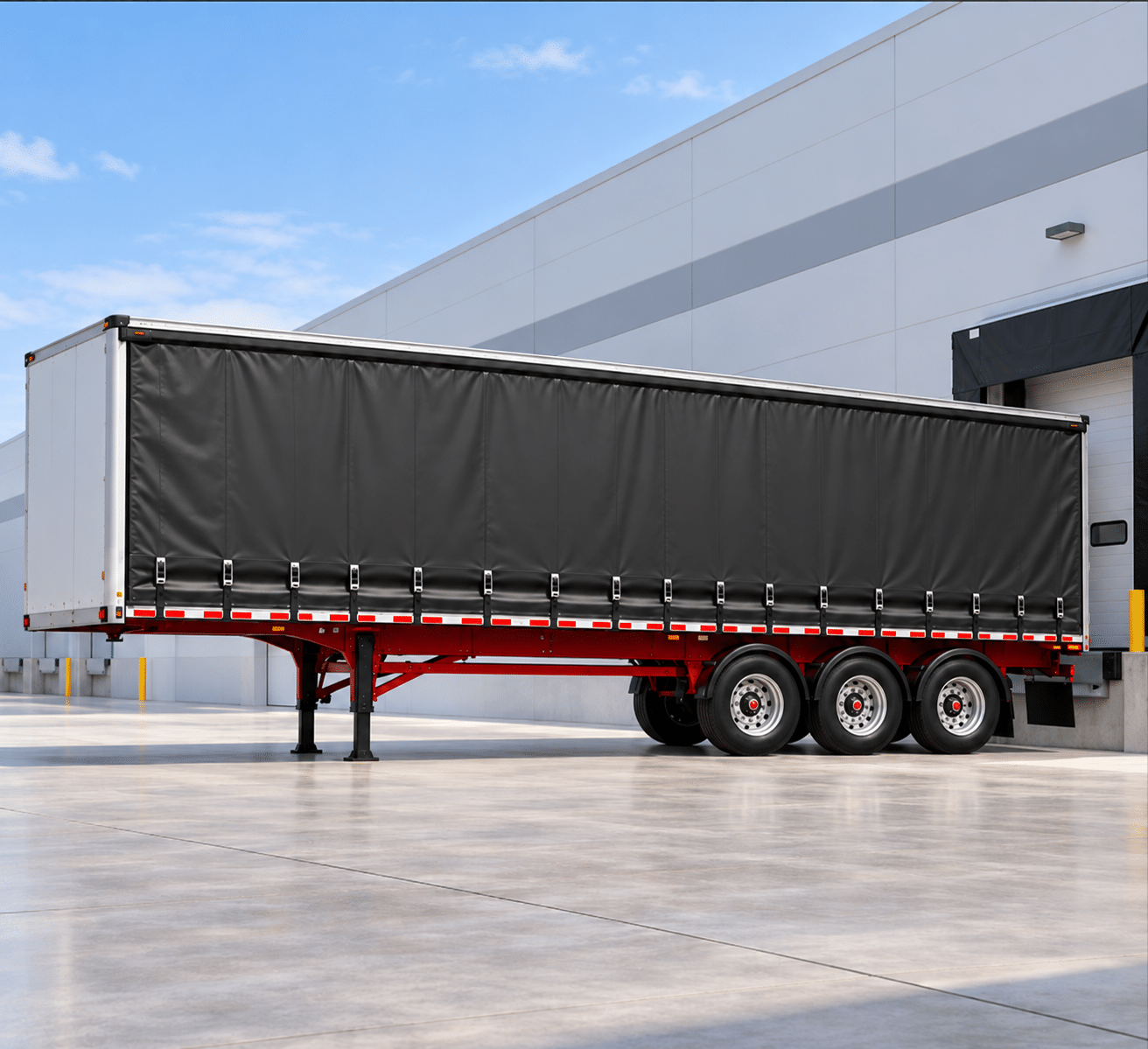
Curtainside trailers are enclosed trailers with a fixed roof, front bulkhead, and rear doors, while the solid side walls are replaced by retractable curtains.
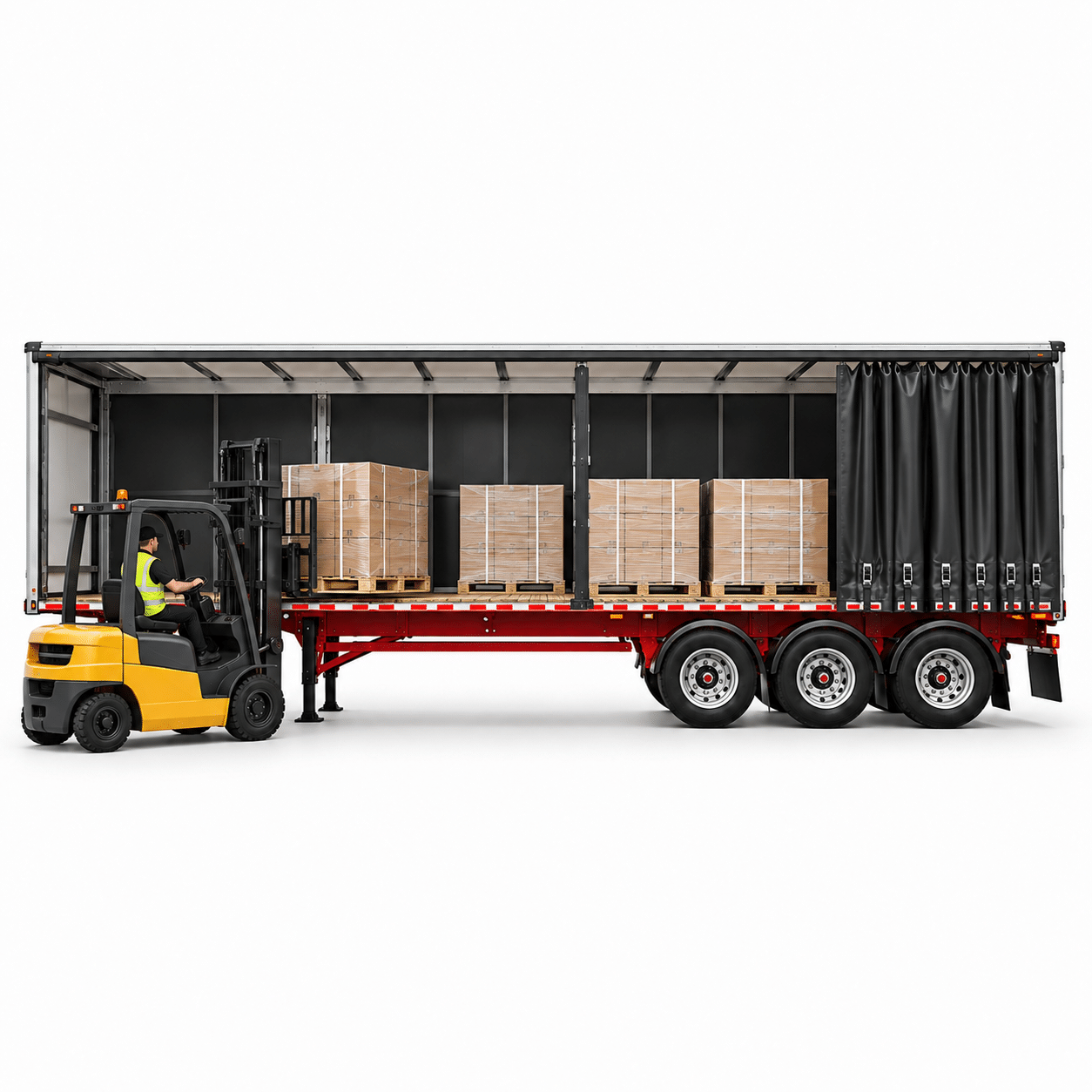
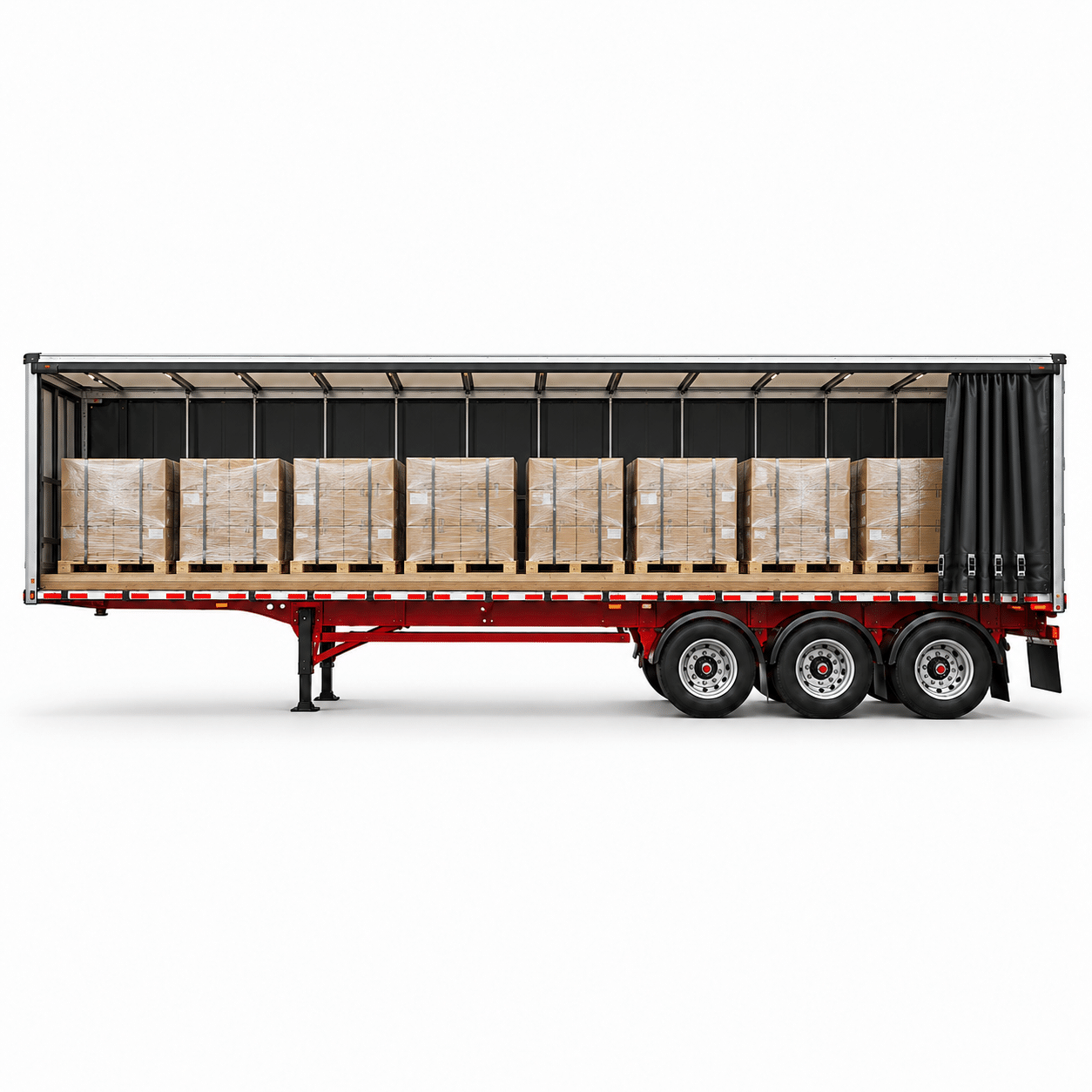
The curtains slide open to provide access along the sides of the trailer, allowing cargo to be loaded or unloaded with forklifts or other equipment without relying exclusively on rear-door access.
This combination gives Curtainside trailers the protection of an enclosed trailer with greater loading flexibility than a traditional Dry Van.
Key characteristics:
Retractable curtains on both sides
Fixed roof and front structure
Rear-door access
Full-length side loading capability
Enclosed protection during transit
Suitable for palletized, packaged, and irregularly shaped freight
Commonly available in 48 ft and 53 ft configurations
No active temperature control
Curtainside equipment typically uses a fixed roof with sliding side curtains, allowing access from both sides as well as through the rear doors.
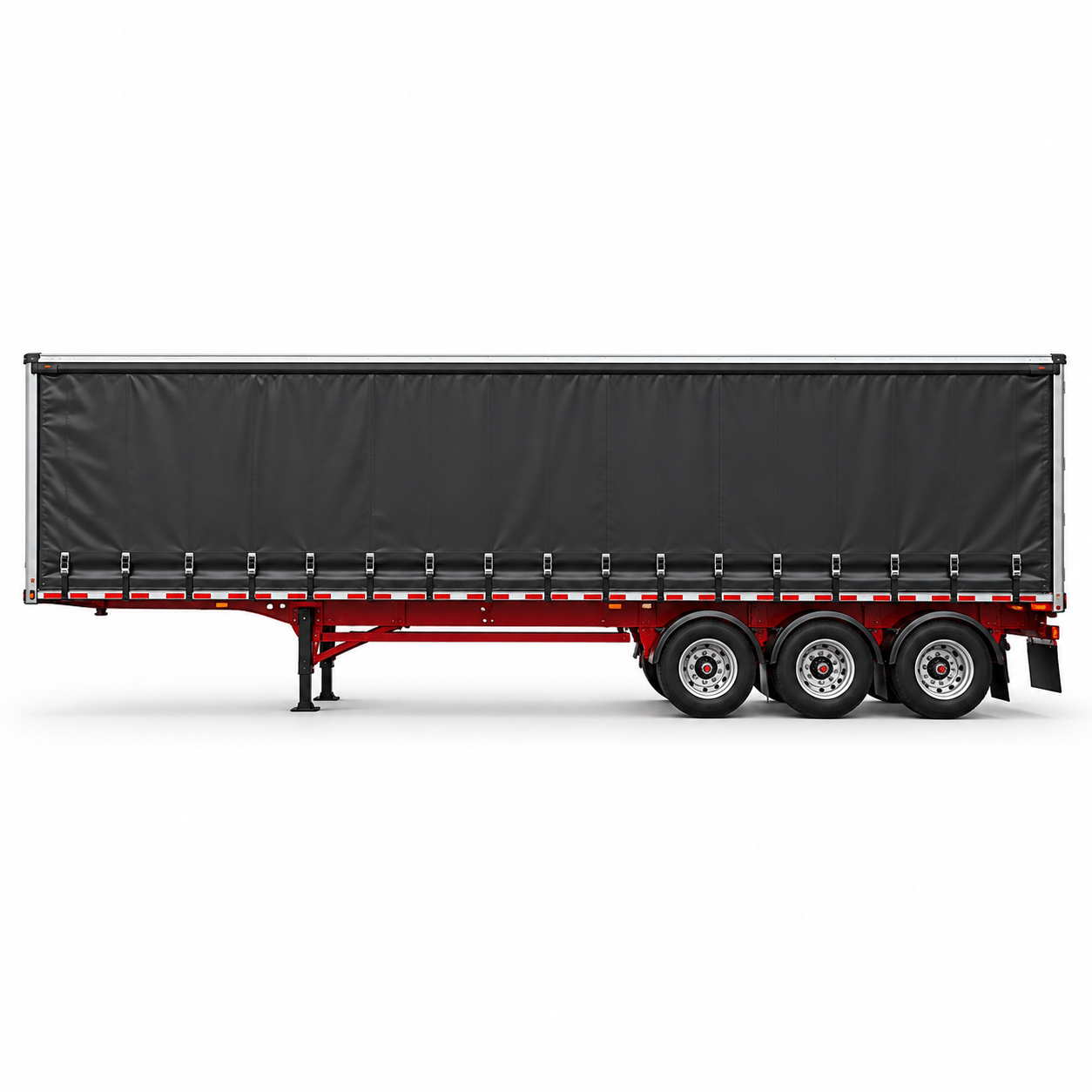
Curtainside Trailer Image Gallery
Available Sizes & Configurations
Curtainside trailers commonly used for North American freight include:
48 ft Curtainside
53 ft Curtainside
Available configurations may also differ by:
Curtain system design
Roof structure
Rear swing or roll-up doors
Trailer platform
Suspension type
Axle configuration
Interior height
Side-opening height
Current North American equipment examples include both 48 ft and 53 ft trailers, while 53 ft units are especially common for full-length freight applications.
The specific configuration should be confirmed based on cargo dimensions, loading method, facility access, and equipment availability.
Typical Dimensions & Capacity
Specification
Typical Range / Example
Trailer Length
48–53 ft
Exterior Width
About 102 in
Overall Height
Up to about 13 ft 6 in on common configurations
Interior Height
Approx. 96–106 in depending on equipment
Rear Door Opening
Varies by model
Side Opening
Extends along most of the trailer length
Payload Capacity
Varies by trailer, tractor, axle configuration, and applicable weight limits
One current 53 ft North American Curtainside example lists a 102 in exterior width, approximately 105.5 in interior height, and a side opening extending nearly the full length of the trailer. Note: Dimensions, usable interior clearance, curtain opening, and allowable payload vary by manufacturer, trailer configuration, equipment weight, tractor, axle setup, cargo distribution, and applicable weight regulations.
Best For / Not Ideal For
✅ Best For
❌ Not Ideal For
Palletized freight
Temperature-controlled cargo
Building materials
Extremely oversized freight
Metal products
Over-height cargo exceeding roof clearance
Packaged industrial products
Heavy machinery requiring ground-level loading
Cargo requiring side access
Freight exceeding enclosed trailer dimensions
Multiple delivery stops
Extra-long freight requiring extendable equipment
Freight needing weather protection
Cargo requiring unrestricted top loading
Curtainside trailers are particularly useful when freight requires enclosed protection and frequent side access.
Cargo that exceeds the fixed roof or interior dimensions may be better suited to a Flatbed, Step Deck, or other open-deck configuration.
Industries & Typical Cargo
Curtainside trailers can support a wide variety of commercial and industrial freight.
Construction & Building Materials
Lumber
Doors and windows
Packaged building products
Finished construction materials
Manufacturing & Industrial
Metal products
Fabricated components
Industrial supplies
Packaged machinery components
Distribution & Warehousing
Palletized freight
Packaged products
Warehouse transfers
Multi-stop shipments
Retail & Commercial Freight
Consumer products
Packaged merchandise
Large products requiring side access
General commercial freight
Loading & Handling Considerations
Before booking a Curtainside trailer, confirm:
Total cargo weight
Number of pallets
Cargo dimensions
Interior height and width
Side-opening clearance
Rear-door clearance
Loading and unloading method
Whether side access is required
Cargo securement requirements
Weight distribution
Origin and destination facility access
Required trailer configuration
Keep note of the following when using Curtainside Trailers:
The curtains can be retracted to allow forklifts to access cargo from the sides, which can be especially useful when rear loading is impractical or when several parts of the load must be accessed independently.
Cargo must still be properly secured inside the trailer. The side curtains provide enclosure and weather protection but should not be treated as a substitute for required cargo securement.
Cargo dimensions should also be checked against the fixed roof height and internal structural clearance before loading.
When Should You Choose a Curtainside Trailer?
A Curtainside is usually a good option when your shipment:
Requires enclosed protection during transit
Requires side-loading or side-unloading access
Includes palletized or packaged freight
Needs easier access to different parts of the load
Can fit within fixed trailer height and width limits
Does not require temperature control
Cannot be efficiently handled through rear doors alone
A different trailer may be more appropriate when the cargo requires unrestricted top access, additional height clearance, additional deck length, ground-level loading, or temperature-controlled transportation.

FAQs
What is a Curtainside trailer?
A Curtainside trailer is an enclosed trailer with retractable fabric curtains replacing the traditional solid side walls. The curtains slide open to provide side access while the trailer maintains a fixed roof and rear doors.
What is the difference between a Curtainside and a Dry Van?
A Dry Van has fixed side walls and is typically loaded through rear doors. A Curtainside uses sliding side curtains, allowing freight to be loaded or unloaded from either side as well as through the rear.
What is the difference between a Curtainside and a Conestoga?
A Curtainside typically has a fixed roof with curtains on the sides, while a Conestoga uses a retractable frame-and-tarp enclosure that opens much more completely around the cargo.
What sizes are Curtainside trailers?
Curtainside trailers used in North America are commonly available in 48 ft and 53 ft configurations. Specific dimensions and interior clearances vary by equipment.
What type of cargo can move in a Curtainside?
Common cargo includes palletized goods, lumber, building materials, metal products, packaged industrial freight, doors, windows, and other cargo that benefits from side-loading access.
Can oversized cargo move in a Curtainside?
Only when the cargo fits within the trailer’s fixed roof, width, and internal structural clearances. Freight exceeding those limits may require Flatbed, Step Deck, or other specialized open-deck equipment.
How much weight can a Curtainside carry?
Allowable cargo weight depends on the specific trailer, tractor, axle configuration, trailer tare weight, cargo distribution, and applicable weight regulations. The specific equipment capacity should be confirmed before booking.
LAC coordinates Curtainside and other Ground Freight solutions across North America based on your cargo dimensions, loading requirements, route, timing, and equipment needs.
Learn from the experiences of those who matter most: our customers

This website uses cookies to improve your experience. We'll assume you're ok with this, but you can opt-out if you wish. Read our cookies policyACCEPT
Cookies Policy
Privacy Overview
This website uses cookies to improve your experience while you navigate through the website. Out of these cookies, the cookies that are categorized as necessary are stored on your browser as they are essential for the working of basic functionalities of the website. We also use third-party cookies that help us analyze and understand how you use this website. These cookies will be stored in your browser only with your consent. You also have the option to opt-out of these cookies. But opting out of some of these cookies may have an effect on your browsing experience.
Necessary cookies are absolutely essential for the website to function properly. This category only includes cookies that ensures basic functionalities and security features of the website. These cookies do not store any personal information.
Any cookies that may not be particularly necessary for the website to function and is used specifically to collect user personal data via analytics, ads, other embedded contents are termed as non-necessary cookies. It is mandatory to procure user consent prior to running these cookies on your website.