

 Request a Quote
Start shipping now
Request a Quote 
Start shipping now
Request a Quote
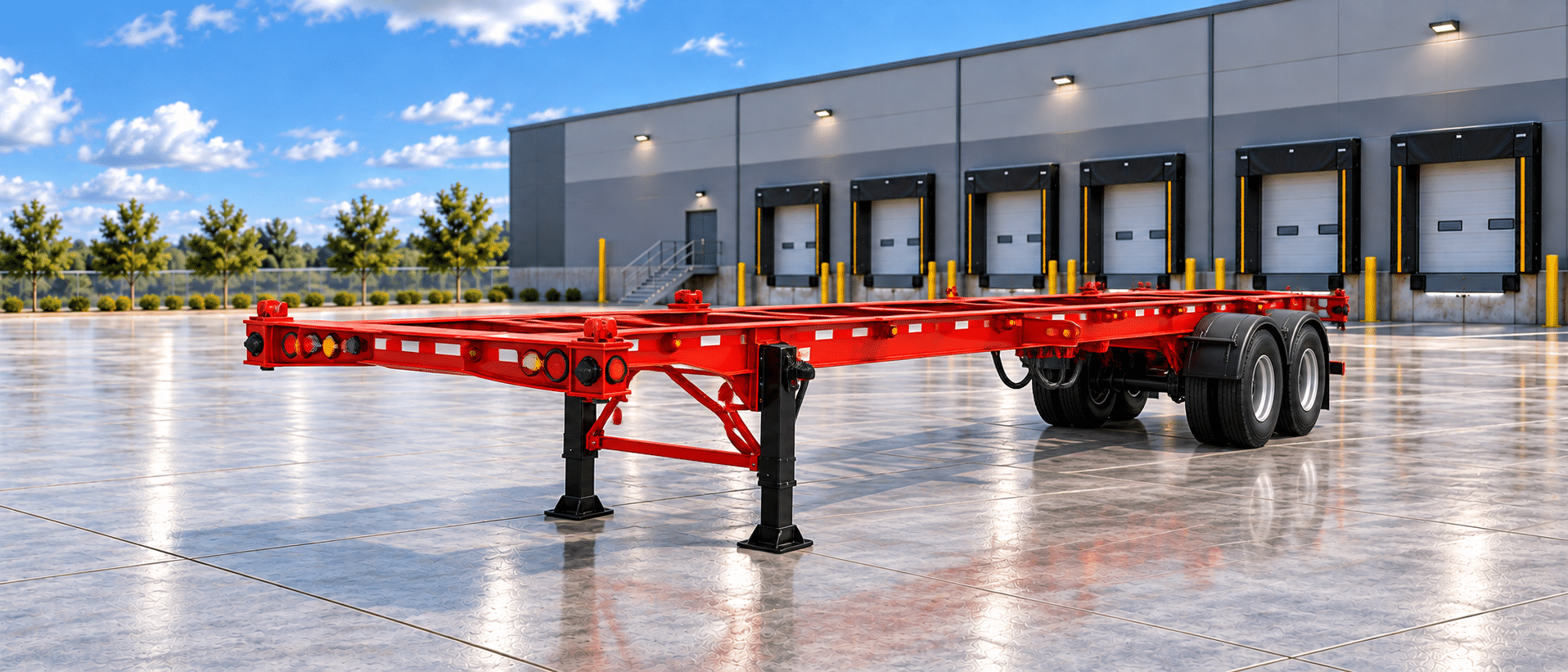
Container Chassis, also known as Intermodal Chassis, are specialized trailer frames designed to transport ISO shipping containers by road.
Unlike Dry Vans or Flatbeds, the chassis does not provide its own enclosed cargo space. Instead, the shipping container itself becomes the cargo unit and is secured directly to the chassis using locking points designed to engage with the container’s corner castings.
Container Chassis are commonly used for drayage and intermodal movements between ports, rail terminals, warehouses, distribution centers, and other inland facilities.
Current chassis manufacturers offer equipment for 20 ft, 40 ft, 45 ft, and 53 ft containers, with combo and extendable designs allowing one chassis to support multiple container lengths.
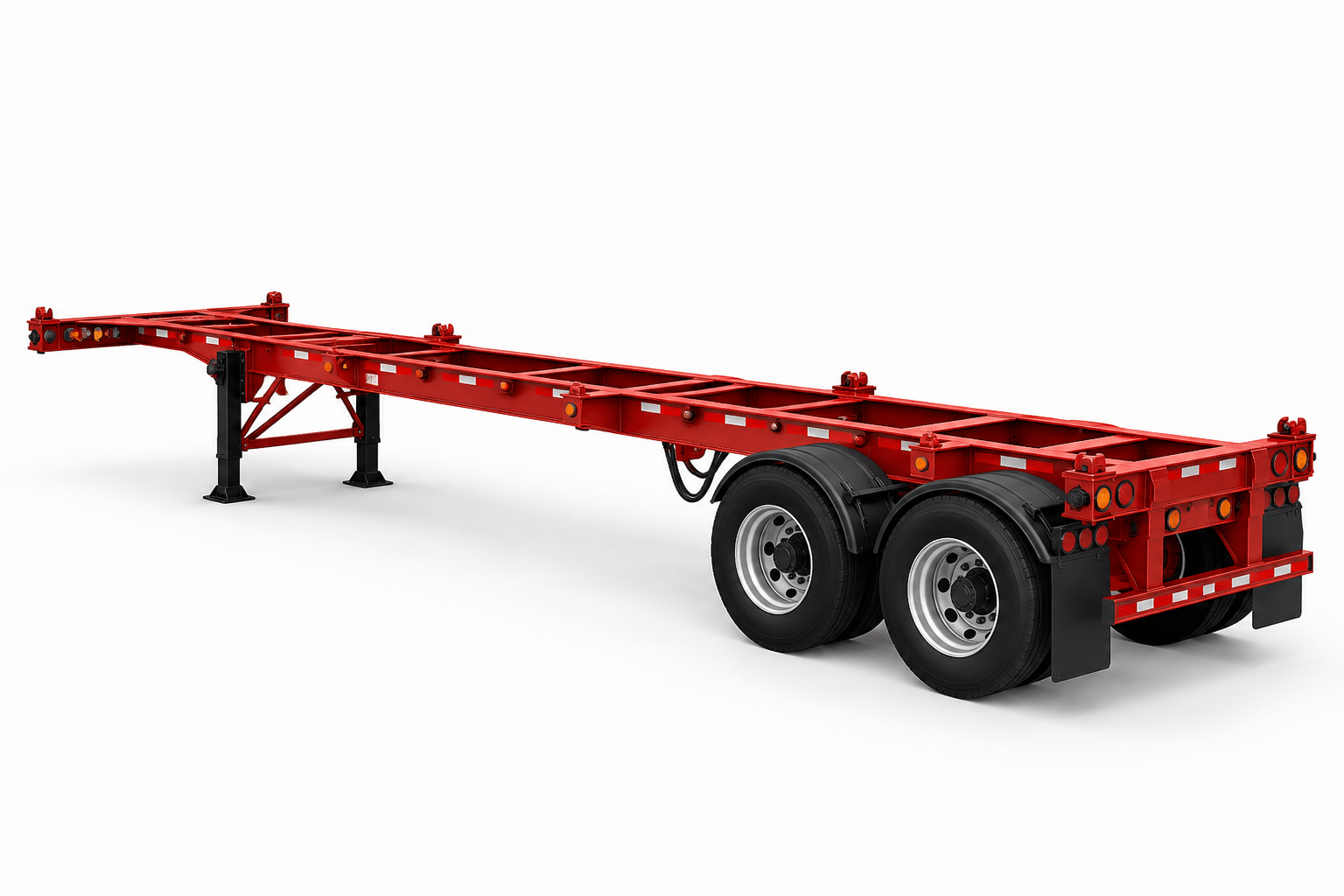
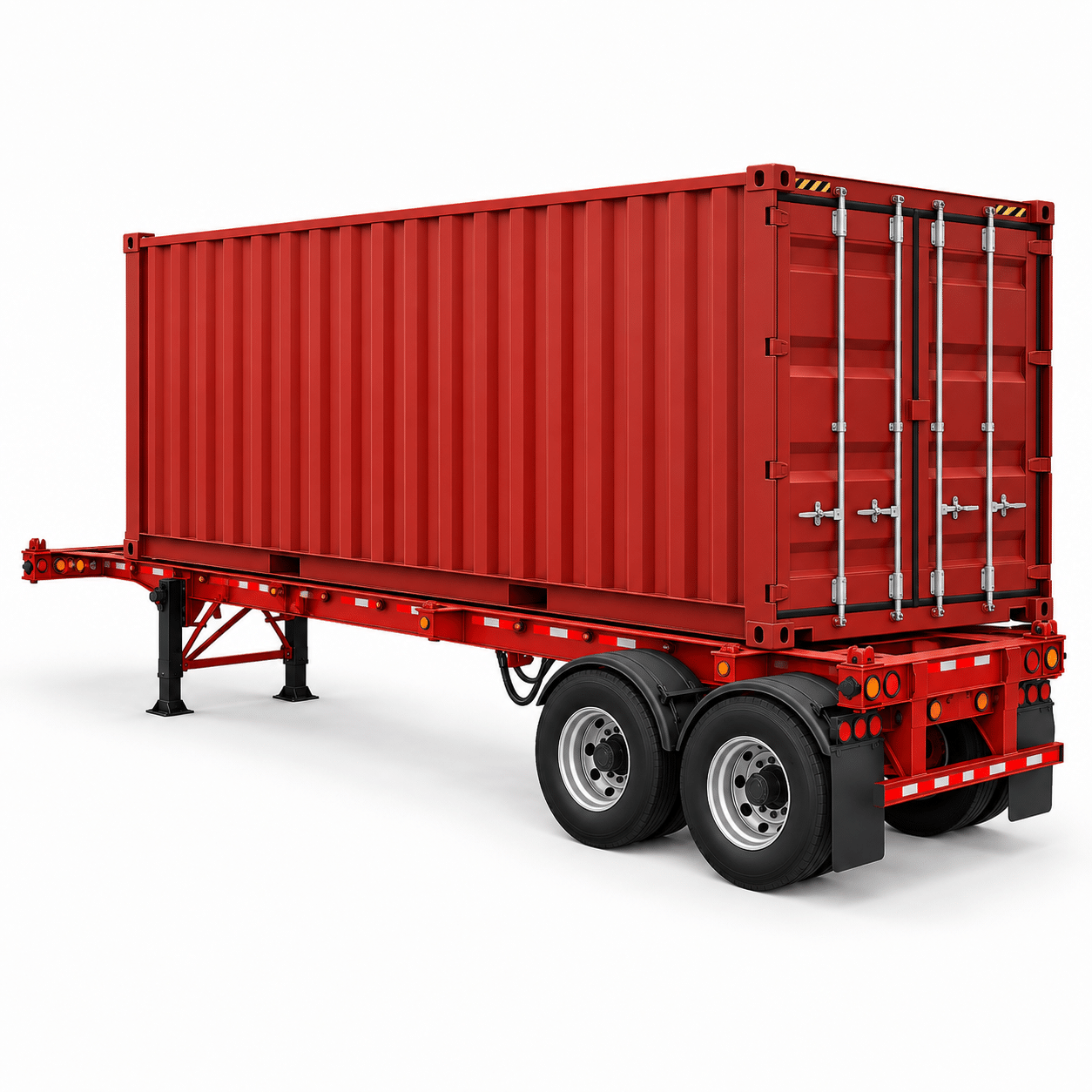
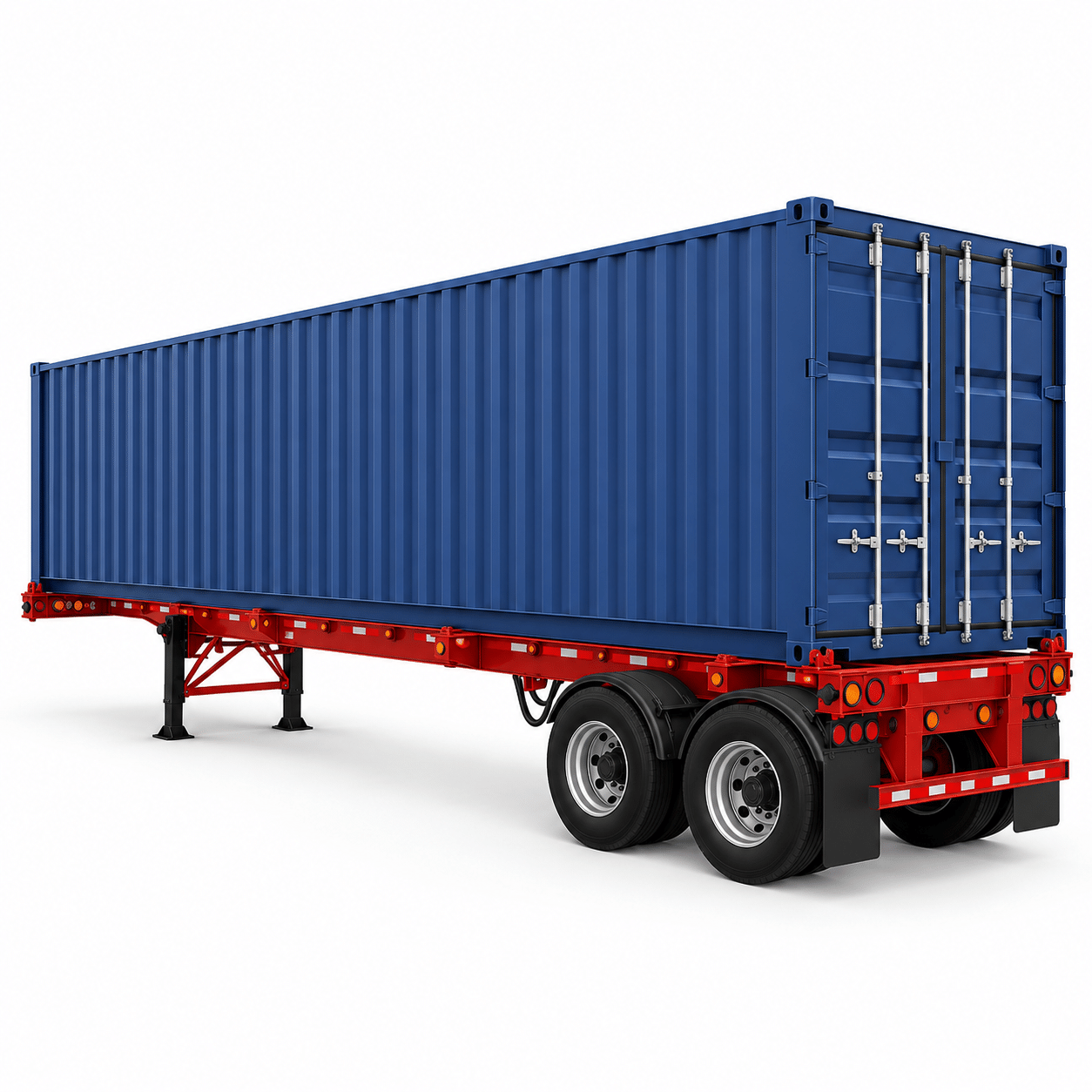
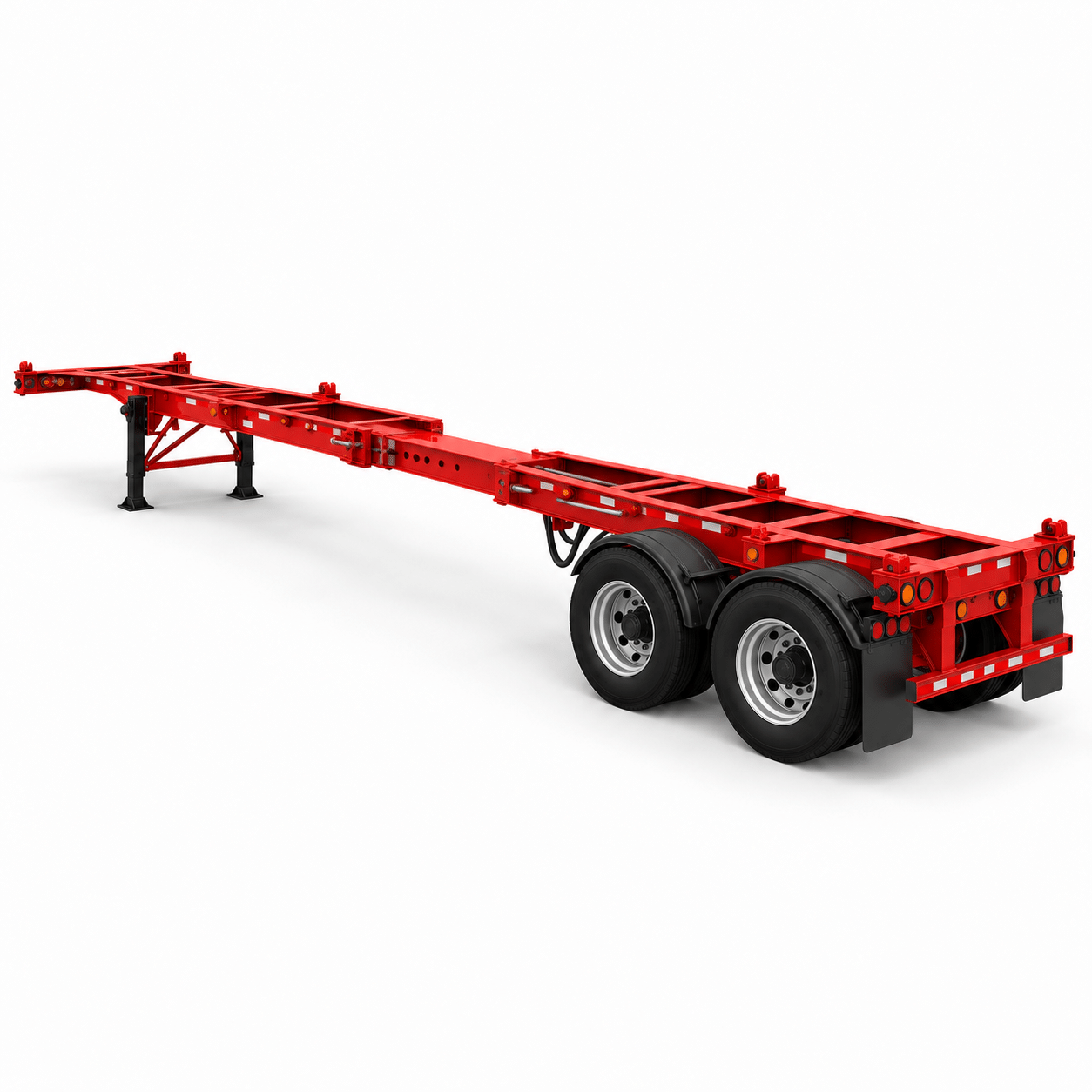
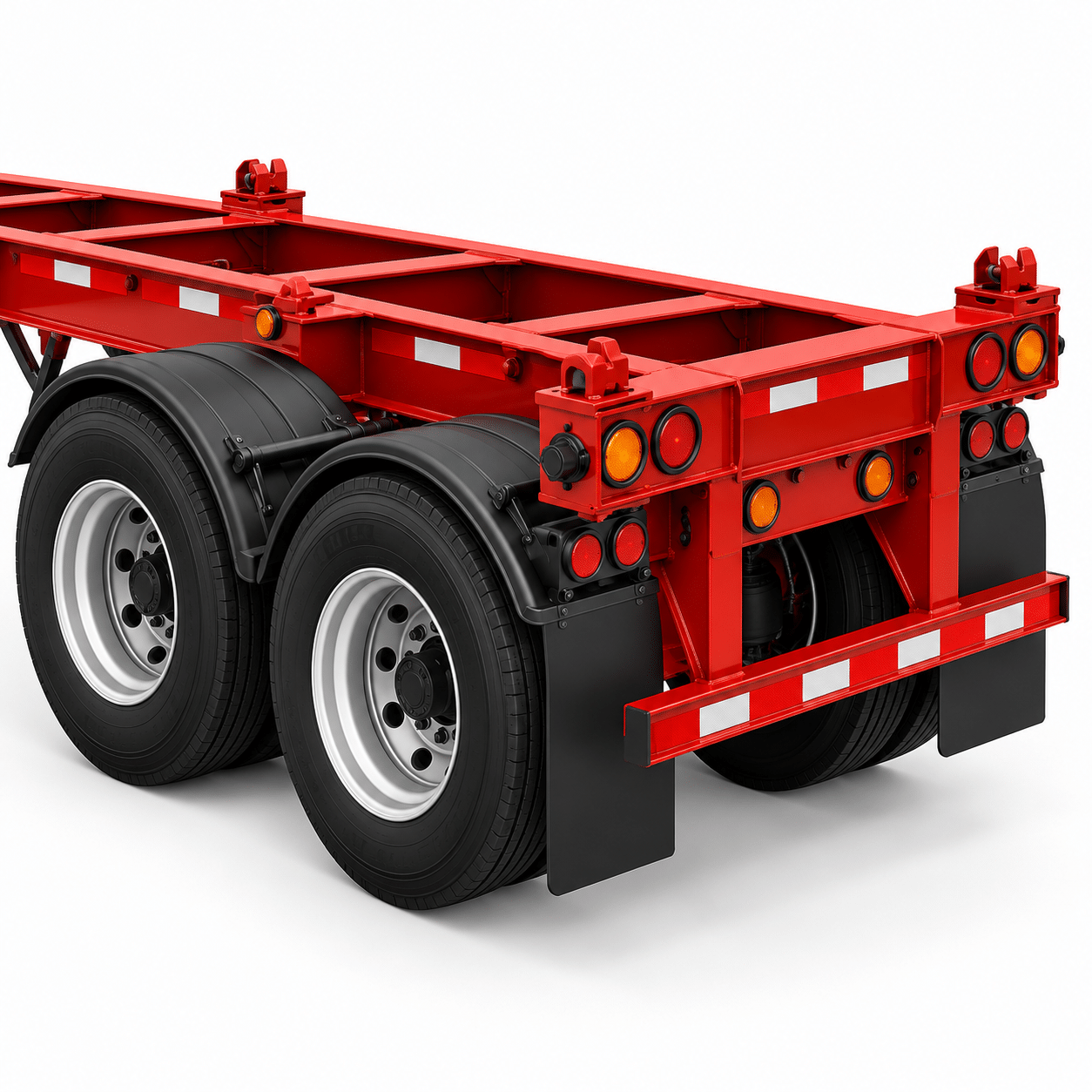
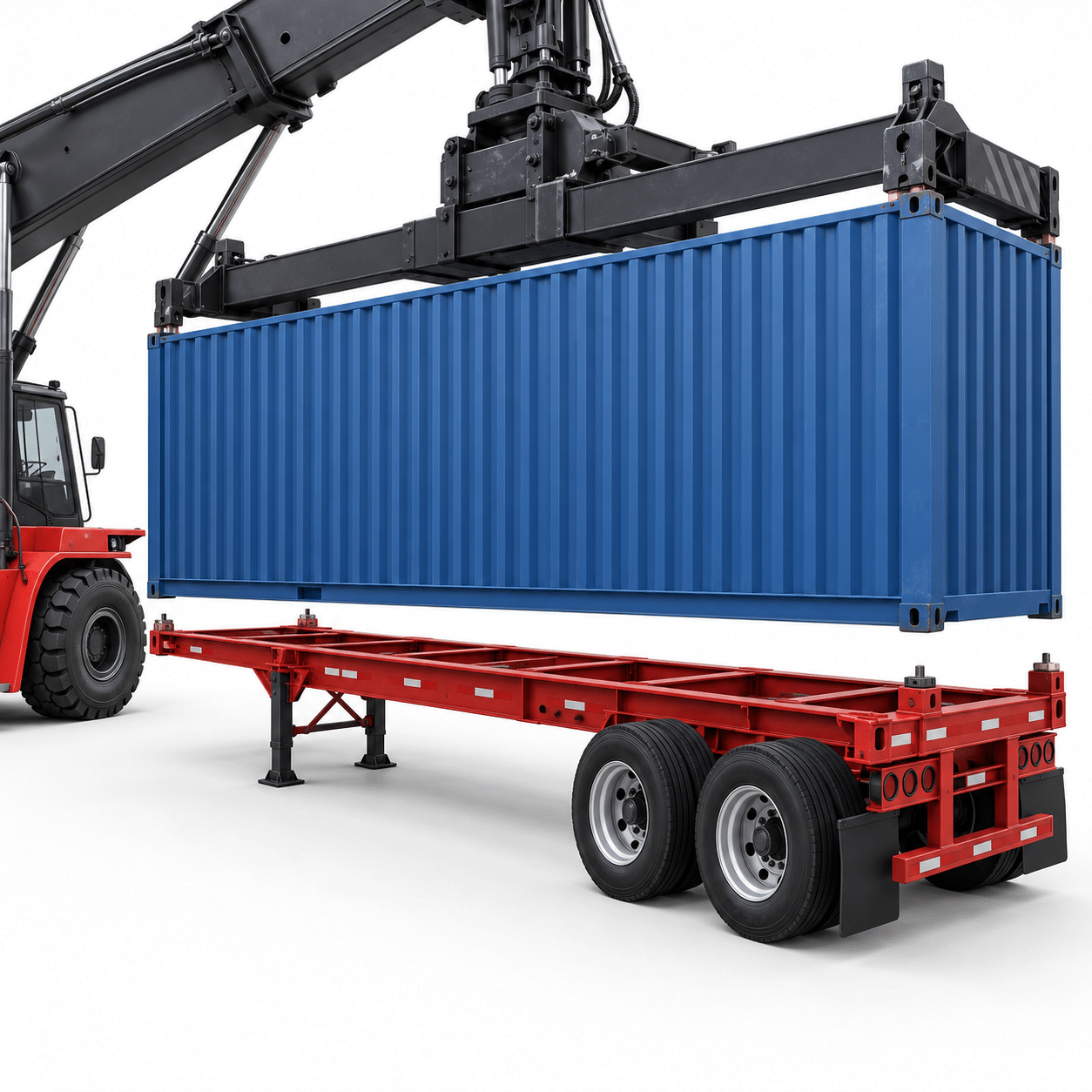
Container Chassis are available in several configurations depending on the container being transported.
Common configurations include:
For example, Hyundai Translead currently offers 20/40 extendable configurations capable of transporting either one 20 ft or one 40 ft ISO container, while its 40/45 extendable chassis supports 40 ft and 45 ft containers.
Some specialized chassis use additional axles or different frame arrangements when additional capacity or specific container configurations are required.
Because chassis dimensions are closely tied to the container sizes they are designed to carry, there is no single universal chassis length.
| Specification | Typical Example / Range |
|---|---|
| Supported Container Lengths | 20, 40, 45, or 53 ft depending on chassis |
| Overall Width | Approx. 96–102 in depending on model |
| Axle Configuration | Tandem or tridem / tri-axle |
| Chassis Length | Fixed or extendable depending on configuration |
| Container Connection | Twist-lock or pin-lock system |
| Rated Capacity | Varies significantly by chassis configuration |
One current Hyundai 20/40 tandem-spread chassis has a closed length of approximately 32 ft and extends to about 40 ft 6 in, with a 96 in overall width. Its rated carrying capacity differs depending on whether it is configured for a 20 ft or 40 ft container.
A tri-axle version of the same general configuration provides higher rated capacity than the tandem model.
Note: Chassis dimensions, axle configuration, tare weight, rated capacity, and allowable container weight vary by manufacturer, model, tractor, container configuration, cargo weight distribution, and applicable transportation regulations.
| ✅ Best For | ❌ Not Ideal For |
|---|---|
| ISO shipping containers | Loose freight without a container |
| Port drayage | Standard palletized freight loaded directly onto a trailer |
| Rail intermodal movements | Cargo requiring open-deck loading |
| Container pickup and delivery | Oversized freight extending beyond container limits |
| Inland container transportation | Machinery requiring ground-level loading |
| Ocean-to-inland connections | Freight requiring direct side or top access |
| Dry, Reefer, Tank, or other compatible container types | Cargo not compatible with containerized transport |
Container Chassis are specifically designed for containerized freight rather than cargo loaded directly onto the trailer itself.
The appropriate chassis configuration depends primarily on container type, length, weight, and applicable road requirements.
Because the chassis carries the container rather than the cargo directly, it can support many industries depending on what is inside the container.
Import & Export Freight
Manufacturing & Distribution
Temperature-Controlled Freight
Specialized Container Cargo
Before booking a Container Chassis, confirm:
Keep note of the following when using Container Chassis Trailers:
A Container Chassis is usually required when your shipment:
A different trailer may be more appropriate when the freight is removed from the container before inland transportation or requires specialized loading that cannot be performed while containerized.
Container Chassis and ocean containers work together as part of the same intermodal movement.
Explore our Container Types Guide to learn more about the different container types, dimensions, and cargo applications available for ocean freight.

LAC coordinates Container Chassis, drayage, and other Ground Freight solutions across North America based on your container type, weight, route, terminal requirements, and equipment needs.
Learn from the experiences of those who matter most: our customers








 LAC Blog
 Export Guides
 Transport Guides
 Logistics Glossary
 Container Types Guide
 Trailers Types Guide
 Incoterms 2020 Rules