

 Request a Quote
Start shipping now
Request a Quote 
Start shipping now
Request a Quote

Exporting to Mexico from the USA means meeting US filing rules and Mexican customs requirements. This Mexico export documentation guide explains what applies and how LAC™ helps coordinate the process.

Electronic Export Information (EEI) must be filed through the Automated Export System (AES) whenever a shipment’s value exceeds $2,500 per Schedule B number, per 15 CFR § 30.37 of the US Census Bureau’s Foreign Trade Regulations. Filing is also required when an export license applies, regardless of value. Understanding these AES filing requirements early keeps your shipment compliant.
The US Principal Party in Interest (USPPI) is responsible for the Electronic Export Information, though an authorized agent may file on the exporter’s behalf. The filer must be located in the United States and hold an Employer Identification Number (EIN). As a freight forwarder, LAC™ coordinates these export filings alongside our ground freight services, aligning the responsible party and agent to keep submissions accurate.
On the Mexican side, clearance depends on a Pedimento de Importación, a Spanish-language commercial invoice, and a detailed packing list. These documents must match one another precisely, because discrepancies can stall release at the port of entry. With 25+ years of experience coordinating cross-border documentation, LAC™ helps exporters prepare each piece correctly.

For most non-ITAR (International Traffic in Arms Regulations) shipments, you must transmit Electronic Export Information no later than two hours before export, per 15 CFR § 30.4 of the US Census Bureau’s Foreign Trade Regulations. Missing that two-hour filing window, or omitting a required filing entirely, can trigger civil penalties under US export law. Building the filing into your timeline, rather than treating it as an afterthought, protects both your schedule and your compliance record.
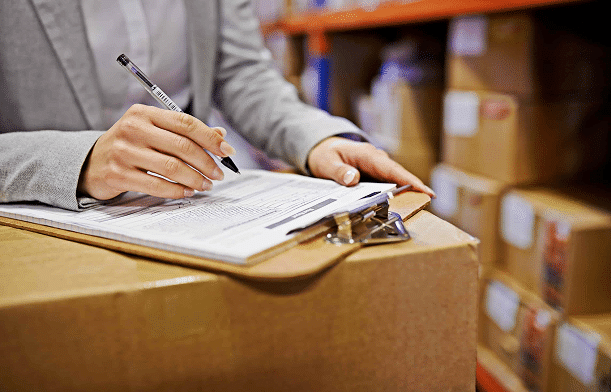
Mexico export documentation moves through clear stages: pre-pickup preparation, where paperwork is gathered and checked; border transfer, where documents travel with the shipment to the assigned carrier; and customs review, where Mexican authorities verify cargo against its declarations at the port of entry before release. Each stage depends on the accuracy of the one before it.
Most customs holds trace back to avoidable errors:
Precise descriptions and correct classification reduce the risk of delays and keep shipments moving through clearance.
LAC™ helps exporters manage Mexico export documentation across both sides of the border. Our bicultural, LATAM-focused team pairs 25+ years of experience with a working knowledge of US filing requirements and Mexican customs practices. LAC works with a network of carriers that hold memberships and certifications with trucking organizations such as the American Trucking Associations (ATA) and CANACAR in Mexico, and that follow Commercial Vehicle Safety Alliance (CVSA) inspection standards on both sides of the border. That network includes CTPAT-certified carriers, which typically benefit from faster, more predictable border processing.
Learn from the experiences of those who matter most: our customers








 LAC Blog
 Export Guides
 Transport Guides
 Logistics Glossary
 Container Types & Sizes
 Incoterms 2020 Rules