The 40 ft Standard container is one of the most widely used container types for general cargo, offering a strong balance of capacity and compatibility across ocean and inland networks. It is commonly selected for medium-to-large shipments of packaged goods, palletized freight, and boxed cargo. Specifications can vary slightly by manufacturer and container fleet, so always confirm the exact unit details when cargo has tight dimensional constraints.
Standard option for general cargo in global logistics
Good balance of internal volume and handling flexibility
Common for palletized and boxed goods
Used in typical flows: warehouse-to-port, port-to-warehouse, and distribution moves
Specs may vary by manufacturer / container fleet
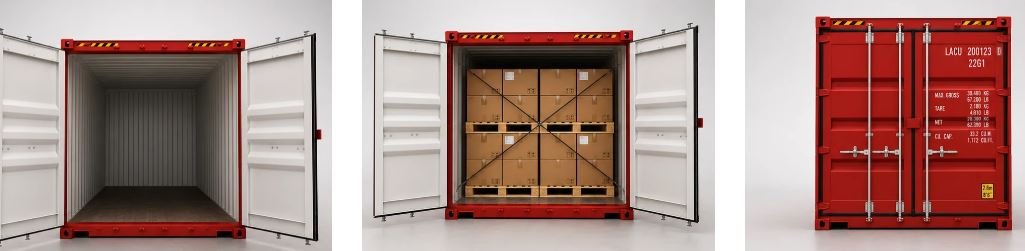
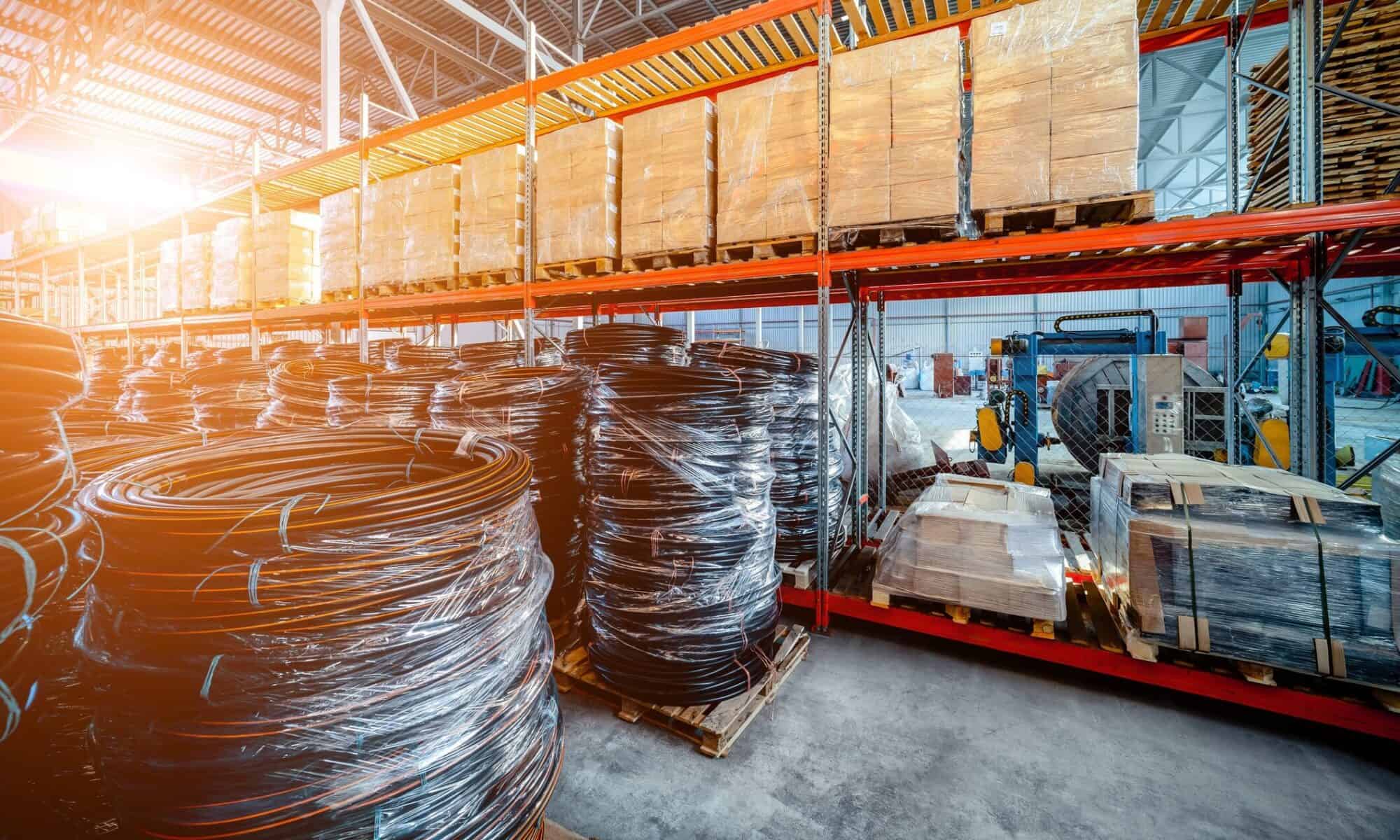
40 ft Standard Container Image Gallery
Best for / Not ideal for
Best for
Not ideal for
Palletized and boxed consumer goods
Cargo requiring active temperature control (reefer equipment is needed)
Retail/e-commerce shipments and consolidated freight
Light-to-medium density cargo where volume utilization matters
Oversized items that cannot clear the door opening (may need open top or flat rack)
Standard supply chain moves requiring broad equipment compatibility
Industries & typical commodities
Retail / Consumer goods: cartons, packaged products, textiles, home goods, and promotional materials.
E-commerce / 3PL: consolidated boxes, palletized freight, and distribution-ready goods.
Manufacturing: components, finished goods, machinery parts, and products packed in crates or cartons.
Automotive: packaged auto parts, components, and accessories.
Food commodities: packaged, non-temperature-controlled products such as canned goods, rice, beans, coffee, and cocoa.
Paper products: packaged paper goods, cartons, and other volumetric products.
Industrial goods: tools, spare parts, equipment, and non-perishable supplies.
General freight: palletized or boxed cargo where larger cubic capacity is beneficial.
Sizes & dimensions – 40ft Standard Container
Dimension
Metric
Imperial
Internal Length
12.03 m
39.48 ft
Internal Width
2.35 m
7.72 ft
Internal Height
2.39 m
7.85 ft
Door Opening Width
2.34 m
7.68 ft
Door Opening Height
2.28 m
7.48 ft
Capacity & weights – 40ft Standard Container
Spec
Metric
Imperial
Cubic Capacity
67.7 m³
2,390.80 ft³
Tare Weight
3,540 kg
7,804.36 lbs
Payload Capacity
28,960 kg
63,845.87 lbs
Max Cargo Weight
32,500 kg
71,650.24 lbs
How many pallets fit in a 40ft Standard Container?
Pallet capacity varies by loading pattern and pallet type. Use the estimates below as a quick reference:
US standard pallets: up to 21
Euro pallets: up to 24-25
Note: the actual number depends on the loading pattern, cargo height, and weight/overhang constraints.
Handling recommendations
Keep weight evenly distributed (avoid concentrating weight toward the doors or on one side).
“Heavy on bottom”: Place heavier cargo at the bottom and keep the center of gravity low.
Secure cargo with dunnage / straps / blocking & bracing to prevent shifting in transit.
Treat the door opening as the real constraint: some items may fit inside but still not pass through the door if they are too wide or tall.
If you plan to floor-load (no pallets), map your loading order and access lanes to avoid reworking cargo during unloading.
Reduce large voids using dunnage to minimize vibration and movement.
FAQs about 40 ft Standard Containers
What is a 40 ft Standard container used for?
A 40 ft Standard container is used for transporting and storing general cargo such as boxed goods, palletized shipments, and crated freight. Its popularity comes from strong compatibility across ports, carriers, and inland moves, making it a default choice for medium-to-large shipments. When cargo dimensions are close to the limits, it’s best to verify the exact container unit specs because measurements can vary slightly across manufacturers and fleets.
How many pallets fit in a 40 ft Standard container?
A 40 ft Standard container typically holds up to 21 US standard pallets or about 24–25 Euro pallets in a straight, single-layer arrangement. Actual capacity depends on pallet footprint, orientation, load pattern, and whether cartons overhang the pallet edges. If your cargo is tall or requires extra bracing, the usable floor count may decrease. Always confirm pallet height and securing needs to avoid last-minute rework during loading.
Is a 40 ft Standard container waterproof and sealed?
A standard container is designed to be weather-resistant for normal transport and storage, helping protect cargo from rain and external exposure. Still, “waterproof” is not absolute—sealing performance depends on door gaskets, panel condition, floor integrity, and maintenance history, especially for used units. For moisture-sensitive cargo, inspect door seals, check for holes or rust, confirm the interior is dry, and consider liners or desiccants to reduce humidity risk
When should I choose a 40 ft container vs a 20 ft container?
Choose a 40 ft Standard when you need more length and volume for cartons or pallets, or when consolidating multiple SKUs into one load improves cost efficiency. A 40 ft container may be preferable for dense cargo that hits weight limits quickly or when destination handling favors smaller units. In practice, the decision should be based on total cargo dimensions, total weight, pallet plan, and any door-clearance constraints for loading.
What cargo is not suitable for a 40 ft Standard container?
A 40 ft Standard container is not suitable for cargo needing active temperature control (reefer equipment), bulk liquids (tank containers), or items that cannot be loaded through the door due to oversized dimensions (often requiring open top or flat rack solutions). Suitability can also vary with cargo sensitivity: fragile or moisture-sensitive goods may require additional packaging controls, bracing, or protection materials beyond the container itself, depending on route and handling.
Don't Just Take Our Word for It
Learn from the experiences of those who matter most: our customers
This website uses cookies to improve your experience. We'll assume you're ok with this, but you can opt-out if you wish. Read our cookies policyACCEPT
Cookies Policy
Privacy Overview
This website uses cookies to improve your experience while you navigate through the website. Out of these cookies, the cookies that are categorized as necessary are stored on your browser as they are essential for the working of basic functionalities of the website. We also use third-party cookies that help us analyze and understand how you use this website. These cookies will be stored in your browser only with your consent. You also have the option to opt-out of these cookies. But opting out of some of these cookies may have an effect on your browsing experience.
Necessary cookies are absolutely essential for the website to function properly. This category only includes cookies that ensures basic functionalities and security features of the website. These cookies do not store any personal information.
Any cookies that may not be particularly necessary for the website to function and is used specifically to collect user personal data via analytics, ads, other embedded contents are termed as non-necessary cookies. It is mandatory to procure user consent prior to running these cookies on your website.


 Request a Quote










 LAC Blog
 Export Guides
 Transport Guides
 Logistics Glossary
 Container Types & Sizes
 Incoterms 2020 Rules