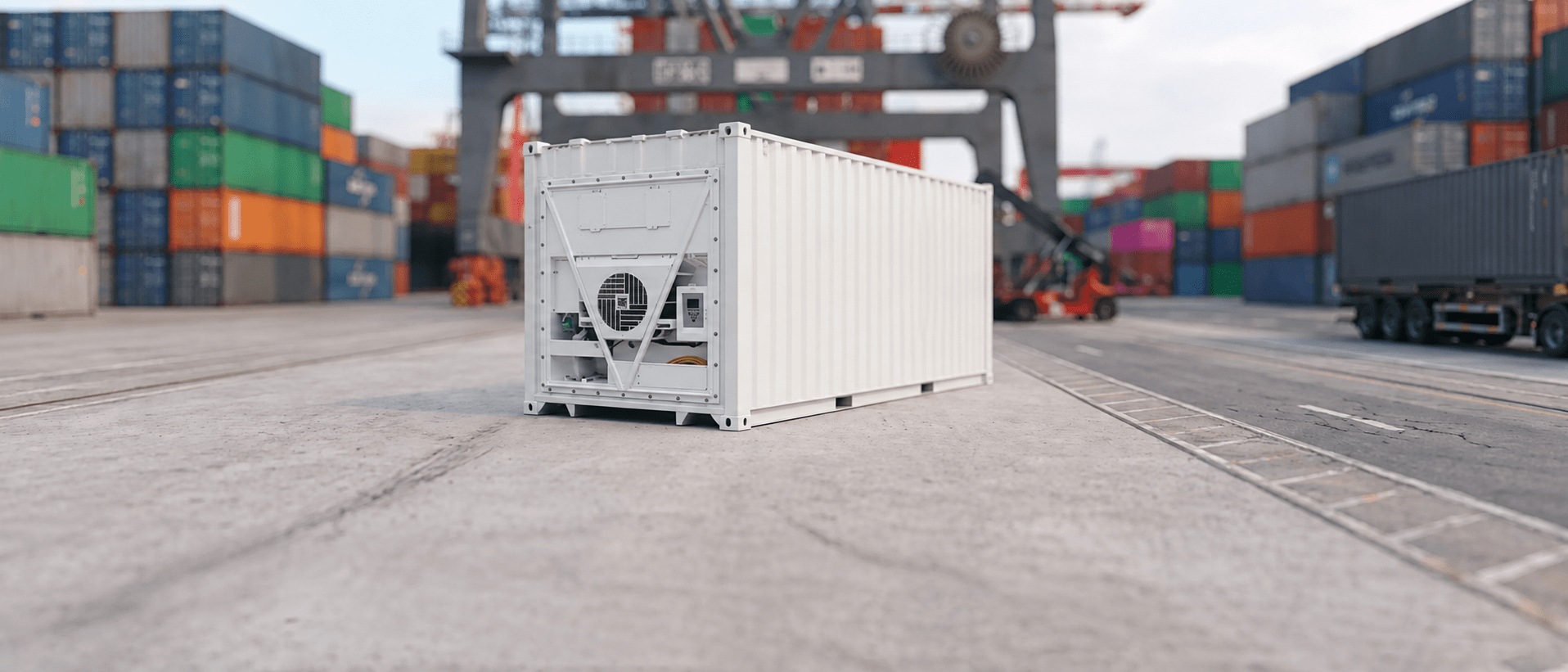
A practical guide to the 40 ft Refrigerated Reefer Container, including dimensions, capacity, suitable cargo, pallet fit, and handling recommendations.
The 40 ft refrigerated (“reefer”) container is a temperature-controlled unit used to transport cargo that must remain within a defined set temperature range during transit. Because reefers rely on powered refrigeration and controlled airflow, shipment performance depends on correct set point/ventilation settings, appropriate packaging, and loading practices that keep airflow paths open. Specifications can vary by fleet, so confirm the exact unit when clearances are tight.
Powered equipment for temperature-sensitive cargo
Requires correct airflow management (do not block air circulation)
Used for perishables, pharma, and other cold-chain commodities
Specs may vary by manufacturer / fleet
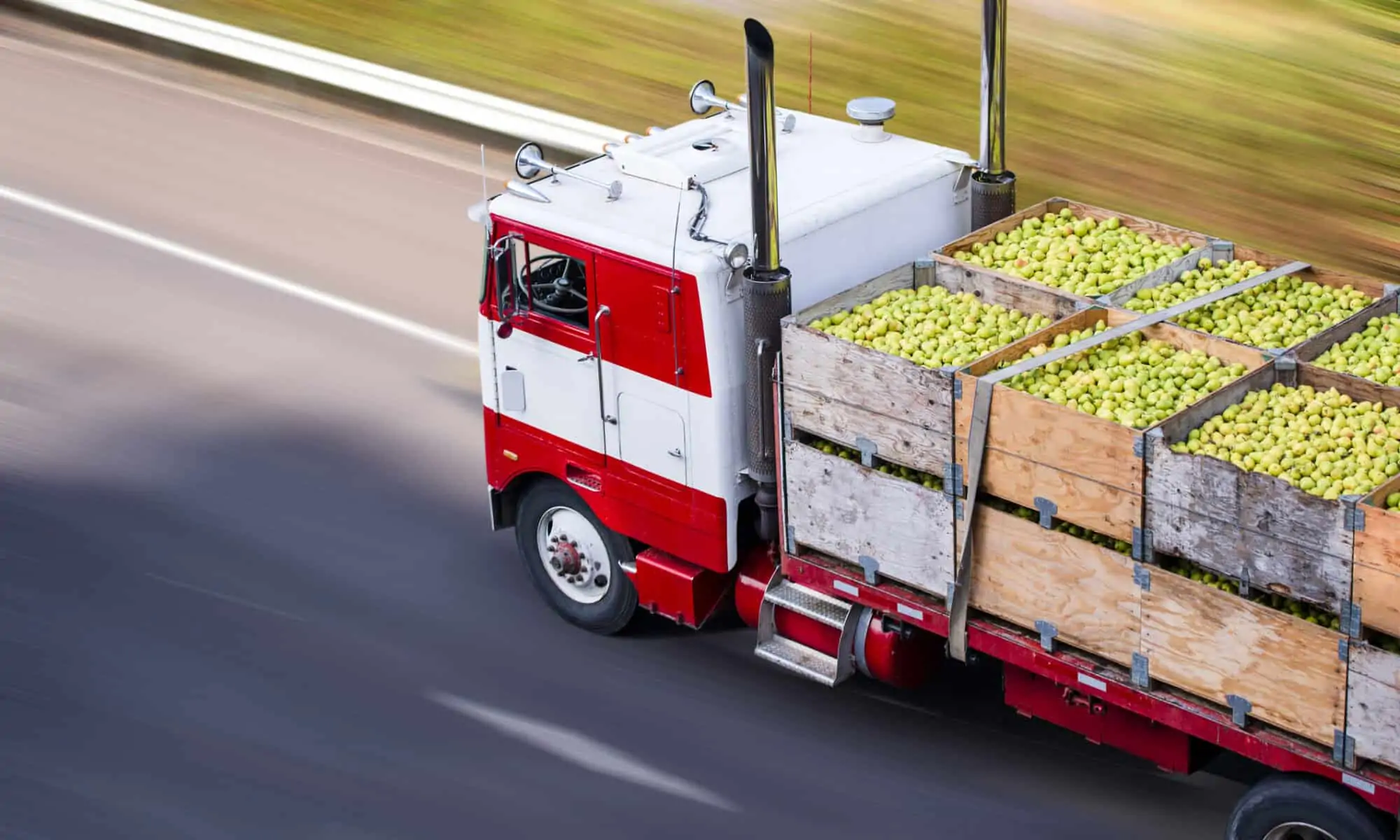
40 ft Refrigerated Reefer Container Image Gallery
Best for / Not ideal for
Best for
Not ideal for
Perishables (fresh/chilled/frozen foods) requiring controlled temperature
Loads that will block airflow (overstuffing, stacking above load line)
Pharmaceuticals and other temperature-sensitive healthcare cargo
Moves where power supply/genset planning is not feasible across the route
Pharmaceuticals and other temperature-sensitive healthcare cargo
Cargo that needs the wider internal width of a dry container for certain pallet plans (reefers are tighter)
Industries & typical commodities
Food & Beverage: fresh produce, dairy products, meat, seafood, frozen foods, and other perishables requiring controlled temperature.
Pharma / Healthcare: medicines, vaccines, and other temperature-sensitive healthcare products.
Chemicals: temperature-sensitive chemicals and materials when compatible with reefer equipment and shipping requirements.
Floriculture: flowers, plants, and other temperature-sensitive horticultural products.
Agricultural products: fruits, vegetables, and other perishables requiring controlled conditions.
Specialty products: other temperature-sensitive cargo requiring powered refrigeration and managed airflow.
How many pallets fit in a 40ft Refrigerated “Reefer” Container?
Pallet capacity varies by loading pattern and pallet type. Use the estimates below as a quick reference:
US standard pallets: up to 20
Euro pallets: up to 23
Note: reefers often have reduced usable width vs. dry containers and require airflow compliance, so actual results depend on loading pattern, cargo height, and airflow/overhang constraints.
Handling recommendations
Switch off the power unit during loading operations.
Load only clean, suitable packaging and protect airflow paths; do not block supply/return air circulation.
Do not stack above the load line; maintain clear airflow and avoid overstuffing.
Use dunnage to stabilize loads without obstructing airflow; avoid large voids that can cause load shift.
After loading: close doors properly, set correct temperature / ventilation / humidity as instructed for the commodity, then start the unit.
FAQs about 40 ft Refrigerated “Reefer” Containers
What is a 40 ft Refrigerated “Reefer” container used for?
A 40 ft reefer container is used to transport cargo that must remain within a specified temperature range throughout the journey, such as perishables and pharmaceuticals. It relies on powered refrigeration and controlled airflow, so shipment success depends on correct set point and ventilation settings plus proper loading that keeps airflow paths open. Because reefer specs vary by fleet, confirm the exact unit when your cargo is close to clearance or capacity limits.
How many pallets fit in a 40 ft Refrigerated “Reefer” container?
A 40 ft reefer typically fits fewer pallets than a dry container because internal width and airflow requirements can limit packing density. As a quick reference, many load plans assume about 23 Euro pallets or around 20 US standard pallets in a single layer. Actual capacity depends on pallet orientation, carton overhang, whether airflow lanes must be left open, and how much bracing or dunnage is required to keep cargo stable without blocking circulation.
Is a 40 ft Refrigerated “Reefer” container waterproof and sealed?
A reefer is designed to protect cargo during normal transport, but “waterproof” is not absolute and depends on unit condition and door seals. For many reefer shipments, the more common risk is condensation or temperature deviation caused by incorrect loading, excessive door-open time, or airflow blockage. To reduce risk, inspect door seals and cleanliness, keep doors closed as much as possible, and confirm correct temperature/ventilation settings immediately after loading.
When should I choose a 40 ft Reefer vs 40 ft Standard container?
Choose a 40’ reefer when cargo requires an active temperature-controlled environment or stable chilled/frozen conditions that a standard container cannot provide. A 40’ standard is better for general dry cargo and usually offers more usable space without power planning. For temperature-sensitive cargo, reefer selection should be driven by set point requirements, packaging, and your ability to load while maintaining airflow and staying below the load line to protect performance.
What cargo is not suitable for a 40 ft Refrigerated “Reefer” container?
A 40’ reefer is not suitable for cargo that blocks airflow or cannot be loaded in a way that respects the load line and maintains circulation through the unit. It can also be a poor fit for moves without reliable power planning across inland legs, or for cargo that is incompatible with the required temperature/ventilation conditions. If the commodity is odor-sensitive or needs tight humidity control, additional packaging and handling controls may be required.
Don't Just Take Our Word for It
Learn from the experiences of those who matter most: our customers

This website uses cookies to improve your experience. We'll assume you're ok with this, but you can opt-out if you wish. Read our cookies policyACCEPT
Cookies Policy
Privacy Overview
This website uses cookies to improve your experience while you navigate through the website. Out of these cookies, the cookies that are categorized as necessary are stored on your browser as they are essential for the working of basic functionalities of the website. We also use third-party cookies that help us analyze and understand how you use this website. These cookies will be stored in your browser only with your consent. You also have the option to opt-out of these cookies. But opting out of some of these cookies may have an effect on your browsing experience.
Necessary cookies are absolutely essential for the website to function properly. This category only includes cookies that ensures basic functionalities and security features of the website. These cookies do not store any personal information.
Any cookies that may not be particularly necessary for the website to function and is used specifically to collect user personal data via analytics, ads, other embedded contents are termed as non-necessary cookies. It is mandatory to procure user consent prior to running these cookies on your website.