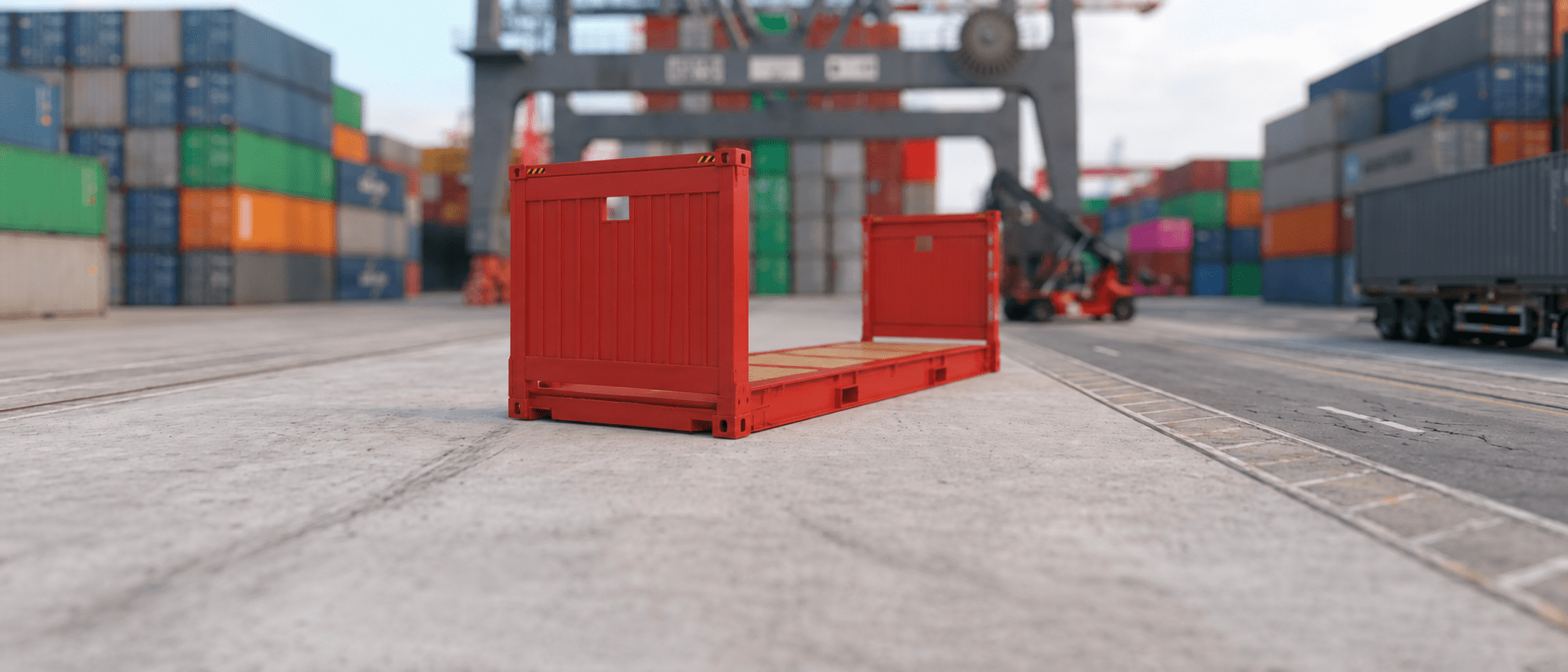
The 40 ft Flat Rack is special equipment built for heavy-lift and out-of-gauge cargo that cannot be shipped in a closed container. With an open deck (no side walls/roof) and strong securing points, it supports top and side loading and is commonly used for project cargo requiring crane handling and robust lashing.
Supports top/side loading for heavy or oversized cargo
Designed for out-of-gauge planning with strong securing needs
Open platform means cargo protection depends on packaging/covering
Specs are fleet examples and may vary by manufacturer
40 ft Flat Rack Container Image Gallery
Best for / Not ideal for
Best for
Not ideal for
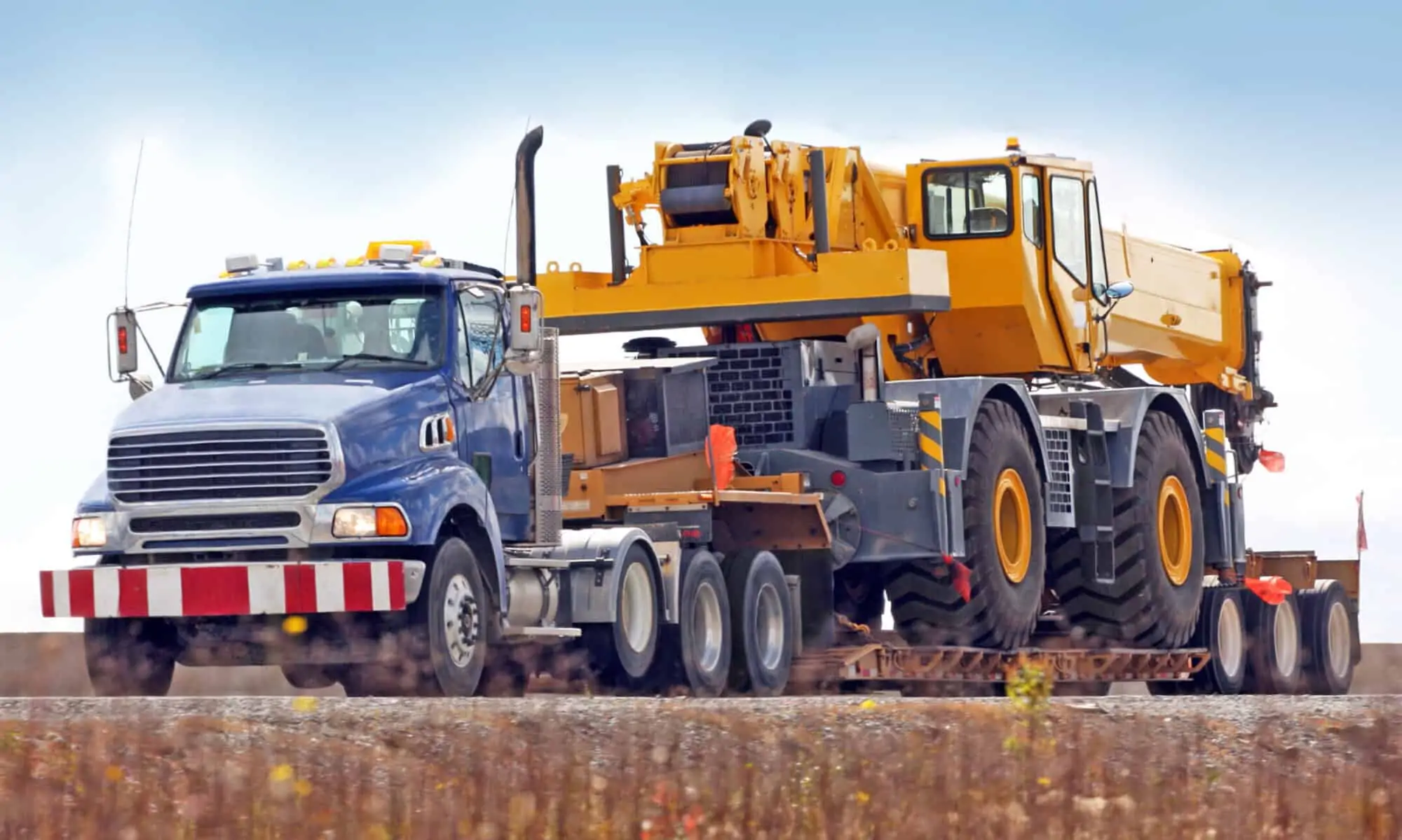
Heavy machinery, industrial components, and project cargo requiring crane access
Cargo needing full weather-tight protection without added coverings (open deck exposure)
Over-width / over-height cargo (subject to carrier planning and approvals)
Loose general cargo better suited for a closed dry container
Loads that require side access for positioning and robust lashing
Temperature-controlled cargo (reefer required)
Industries & typical commodities
Heavy machinery: construction equipment, industrial machinery, generators, and large heavy components.
Construction / Project cargo: pipes, structural steel, fabricated sections, and long or oversized project materials.
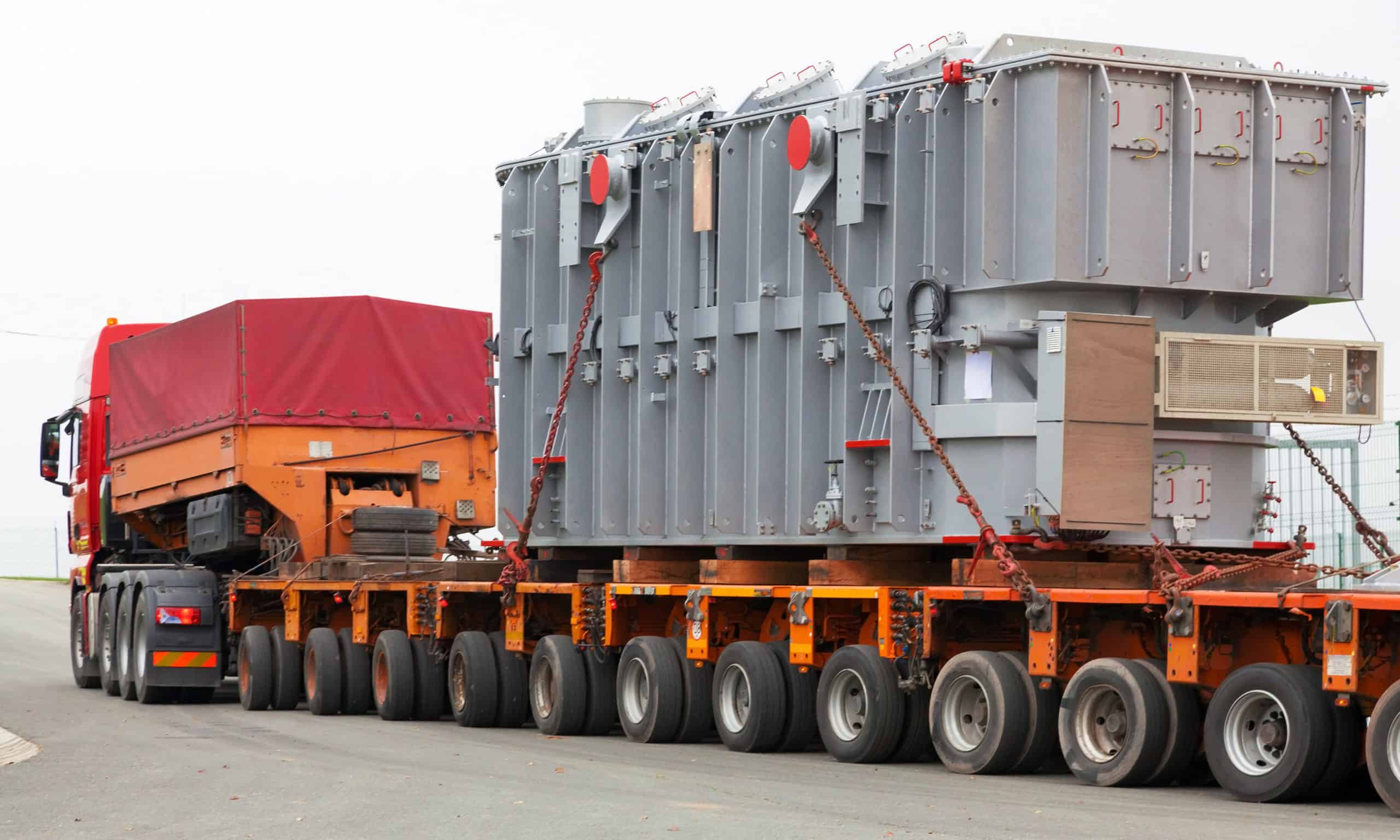
Energy / Infrastructure: transformers, turbines, generators, and large components requiring special handling and lashing.
Mining equipment: heavy machinery, large parts, and oversized components.
Manufacturing: large fabricated units, crated machinery, and industrial assemblies.
Vehicles and equipment: specialized vehicles or machinery that cannot fit inside a closed container.
Steel and metal products: beams, plates, coils, and other oversized metal cargo when properly secured.
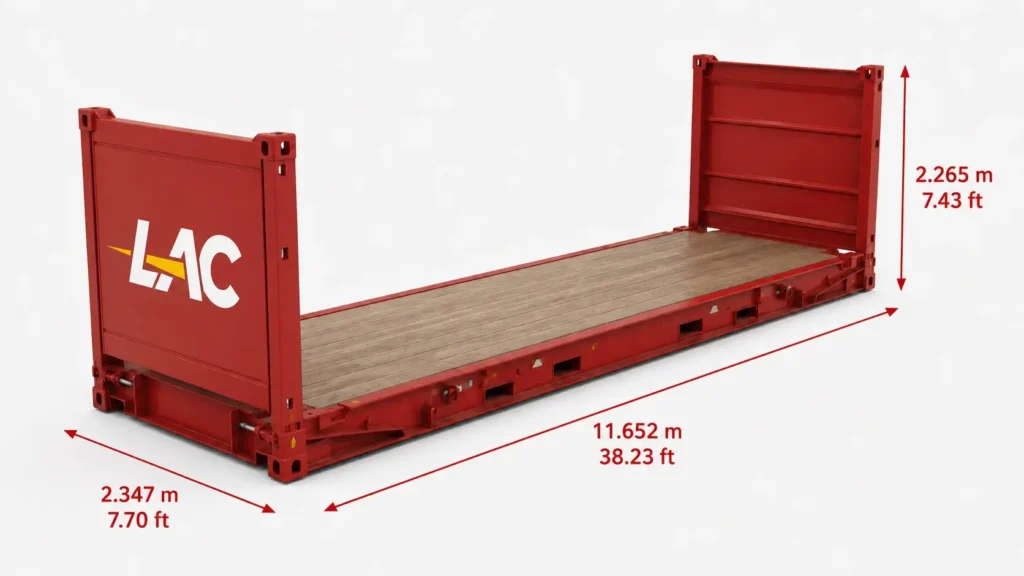
Sizes & dimensions – 40ft Flat Rack Container
Dimension
Metric
Imperial
Inside Length
11.652 m
38.23 ft
Floor Width
2.347 m
7.70 ft
Inside Width (min.)
2.245 m
7.37 ft
Inside Height
2.265 m
7.43 ft
Height (bottom)
0.648 m
2.13 ft
Capacity & weights – 40ft Flat Rack Container
Spec
Metric
Imperial
Max Gross Weight
55,000 kg
121,250 lbs
Tare Weight
5,900 kg
12,900 lbs
Max Payload
49,100 kg
108,350 lbs
How many pallets fit in a 40ft Flat Rack Container?
Pallet capacity varies by loading pattern and pallet type. Use the estimates below only as a quick reference:
US standard pallets: up to 21
Euro pallets: up to 24
Note: Flat racks are primarily used for heavy/oversized cargo, so pallet counts are not a standard spec and can change significantly depending on lashing, access lanes, and whether any overhang is allowed.
Handling recommendations
Keep weight evenly distributed and avoid eccentric loading that can twist the frame.
“Heavy on bottom”: keep the center of gravity low and place heavier cargo directly on the deck.
Secure cargo with blocking/bracing and lashing appropriate to the load and route; verify securing points and required strength.
Confirm carrier requirements for out-of-gauge stowage (often requires special planning/approval).
Protect cargo against weather exposure with suitable coverings/packaging where needed.
FAQs about 40 ft Flat Rack Containers
What is a 40 ft Flat Rack container used for?
A 40 ft Flat Rack is used to transport heavy, oversized, or awkward cargo that cannot be shipped in a standard closed container. Its open deck enables top and side loading, which is ideal for machinery, steel products, and project cargo requiring crane handling. Because the cargo is exposed, planning typically focuses on footprint, overhang approvals, and securing. Specifications can vary by manufacturer and fleet, so confirm the exact unit for tight clearances.
How many pallets fit in a 40 ft Flat Rack container?
Flat racks are not primarily defined by pallet count, since they are usually booked for out-of-gauge or heavy-lift cargo where lashing and access needs determine usable deck space. If palletized cargo is loaded fully within the end walls and without overhang, a rough 40 ft footprint estimate is around 21 US pallets or 24 Euro pallets in a single layer. Actual results vary with bracing, access lanes, and securing requirements.
Is a 40 ft Flat Rack container waterproof and sealed?
A flat rack is an open platform, so it does not provide weather-tight protection like a dry container. Cargo may be exposed to rain, spray, and sunlight unless you use proper coverings, wrapping, or specialized packaging. For moisture-sensitive freight, plan protection in advance and minimize exposure during handling. Protection requirements depend on route and terminal handling, so align packaging with the full journey and securing plan
When should I choose a Flat Rack vs Open Top container?
Choose a Flat Rack when you need side loading or have over-width cargo that cannot be accommodated by an Open Top. An Open Top is often preferred when cargo fits within container width but needs top loading due to height or handling constraints. The best choice depends on cargo dimensions, lifting method, lashing plan, and whether the carrier requires special approvals for out-of-gauge stowage and routing.
What cargo is not suitable for a 40 ft Flat Rack container?
A 40 ft Flat Rack is not suitable for cargo requiring full enclosure, strict weather protection without additional packaging, or temperature control (reefer). It can also be a poor fit for loose general cargo where a standard container would be safer and easier to secure. Suitability depends heavily on cargo geometry, lifting points, center of gravity, and the lashing plan, so confirm securing and handling requirements before booking.
Don't Just Take Our Word for It
Learn from the experiences of those who matter most: our customers

This website uses cookies to improve your experience. We'll assume you're ok with this, but you can opt-out if you wish. Read our cookies policyACCEPT
Cookies Policy
Privacy Overview
This website uses cookies to improve your experience while you navigate through the website. Out of these cookies, the cookies that are categorized as necessary are stored on your browser as they are essential for the working of basic functionalities of the website. We also use third-party cookies that help us analyze and understand how you use this website. These cookies will be stored in your browser only with your consent. You also have the option to opt-out of these cookies. But opting out of some of these cookies may have an effect on your browsing experience.
Necessary cookies are absolutely essential for the website to function properly. This category only includes cookies that ensures basic functionalities and security features of the website. These cookies do not store any personal information.
Any cookies that may not be particularly necessary for the website to function and is used specifically to collect user personal data via analytics, ads, other embedded contents are termed as non-necessary cookies. It is mandatory to procure user consent prior to running these cookies on your website.