

 Request a Quote
Start shipping now
Request a Quote 
Start shipping now
Request a Quote
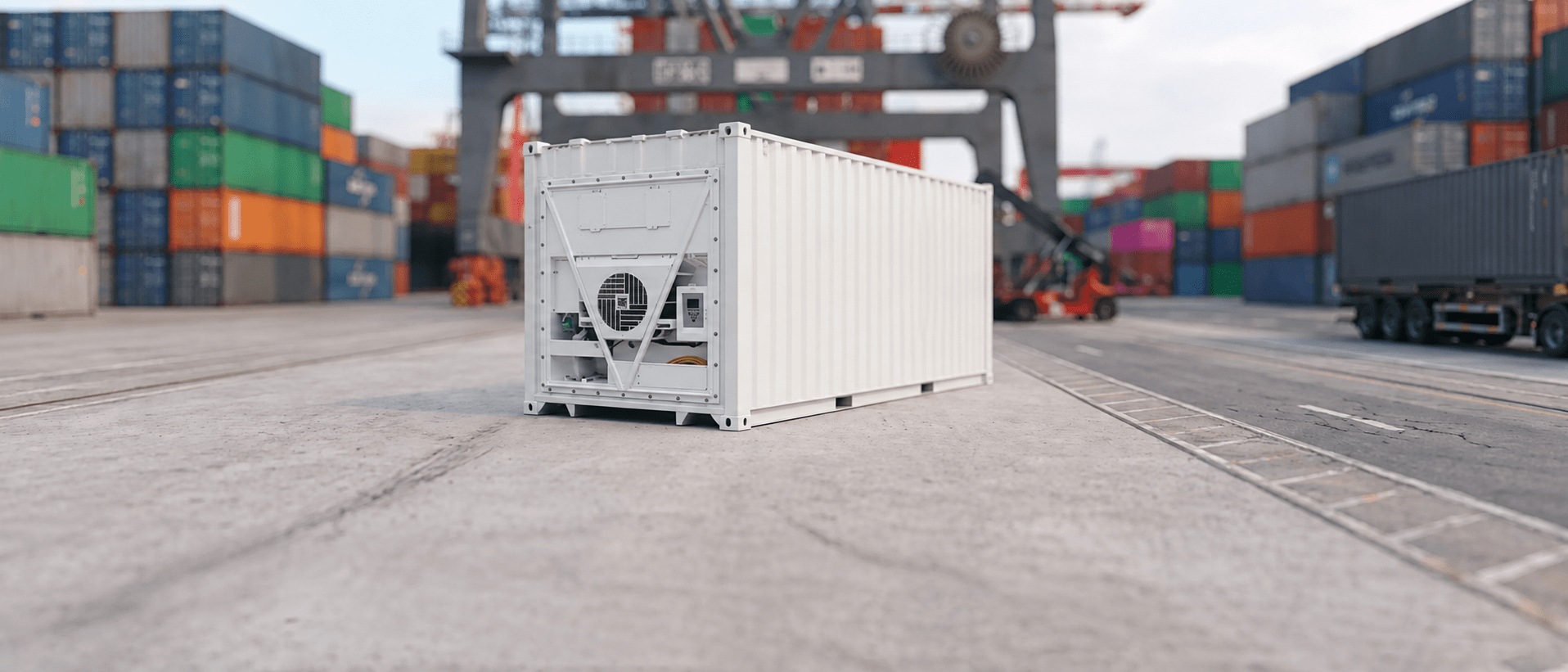

The 20 ft refrigerated container (also commonly known as 20 ft reefer container) is a temperature-controlled unit used to transport cargo that must stay within a defined set temperature range during transit. Because it relies on powered refrigeration and airflow management, successful shipments depend not only on the equipment specs but also on proper pre-loading practices, correct set point settings, and unobstructed air circulation around the cargo.
| Best for | Not ideal for |
| Perishables (fruit/veg, dairy, meat/seafood) requiring controlled temperature | Cargo that cannot tolerate powered equipment requirements (power supply / genset planning) |
| Pharmaceuticals and other high-value temperature-sensitive cargo | Loads that will block airflow (e.g., overstuffing, loading above load line) |
| Cargo requiring airflow management (avoid blocking supply/return air paths) | Cargo needing a wider internal width than reefers typically provide vs. dry containers (pallet plans may be tighter) |
| Dimension | Metric | Imperial |
| Internal Length | 5.44 m | 17.85 ft |
| Internal Width | 2.29 m | 7.51 ft |
| Internal Height | 2.27 m | 7.45 ft |
| Door Opening Width | 2.23 m | 7.32 ft |
| Door Opening Height | 2.10 m | 6.89 ft |
| Spec | Metric | Imperial |
| Cubic Capacity | 28.30 m³ | 999.41 ft³ |
| Tare Weight | 3,080 kg | 6,790.24 lbs |
| Payload Capacity | 27,400 kg | 60,406.66 lbs |
| Max Gross Weight | 30,480 kg | 67,196.90 lbs |
Pallet capacity varies by loading pattern and pallet type. Use the estimates below only as a quick reference:
Note: reefers often have reduced usable width vs. dry containers, and airflow/ventilation requirements can reduce usable space. Actual results depend on loading pattern, cargo height, and airflow/overhang constraints.
Learn from the experiences of those who matter most: our customers











 LAC Blog
 Export Guides
 Transport Guides
 Logistics Glossary
 Container Types & Sizes
 Incoterms 2020 Rules